Russian Scientists Double the Speed of Optical Fiber Production
Researchers in Russia have developed a new engineering tool that dramatically accelerates optical fiber manufacturing while sharply reducing defects.
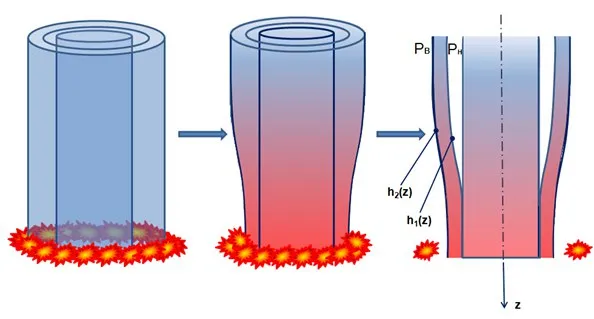
The new engineering tool cuts defect rates by 75 percent.
Scientists at Perm National Research Polytechnic University have created a universal tool that makes it possible to double the speed of optical fiber production while reducing the share of defective output by 75 percent.
The breakthrough removes one of the key technological bottlenecks in manufacturing the backbone of modern internet infrastructure, digital communications, and high-precision medical equipment.
Digital Twins of Key Process Stages
Traditional production is complicated by the need for perfect alignment between the dimensions of quartz blanks and machine parameters. Because raw materials always contain microscopic defects, technicians previously had to select processing modes manually, almost by eye, for each non-standard tube, leading to lost time and high defect rates. The Russian solution addresses this by providing precise calculations for any input material.
The core of the method lies in creating digital twins of key stages in the process. The researchers modeled the physics of heat and mass transfer during the cleaning, polishing, and fusing of quartz tubes, then converted complex calculations into easy-to-use production nomograms, graphical instruction charts.
An Open Scientific Base for the Entire Industry
The development is strategically significant. First, it makes domestic production of a component critical to digital transformation more efficient and cost-effective. Second, it breaks with the practice of keeping know-how secret by creating an open scientific foundation for the entire industry.
Adopting the technology strengthens Russia’s technological sovereignty in telecommunications and boosts export potential. The universal approach developed by the Perm researchers can also be applied to fine-tuning other high-precision manufacturing processes, from specialty glass melting to the control of chemical reactors.