Students in Grozny Turn Any UAV Into an Agri-Drone
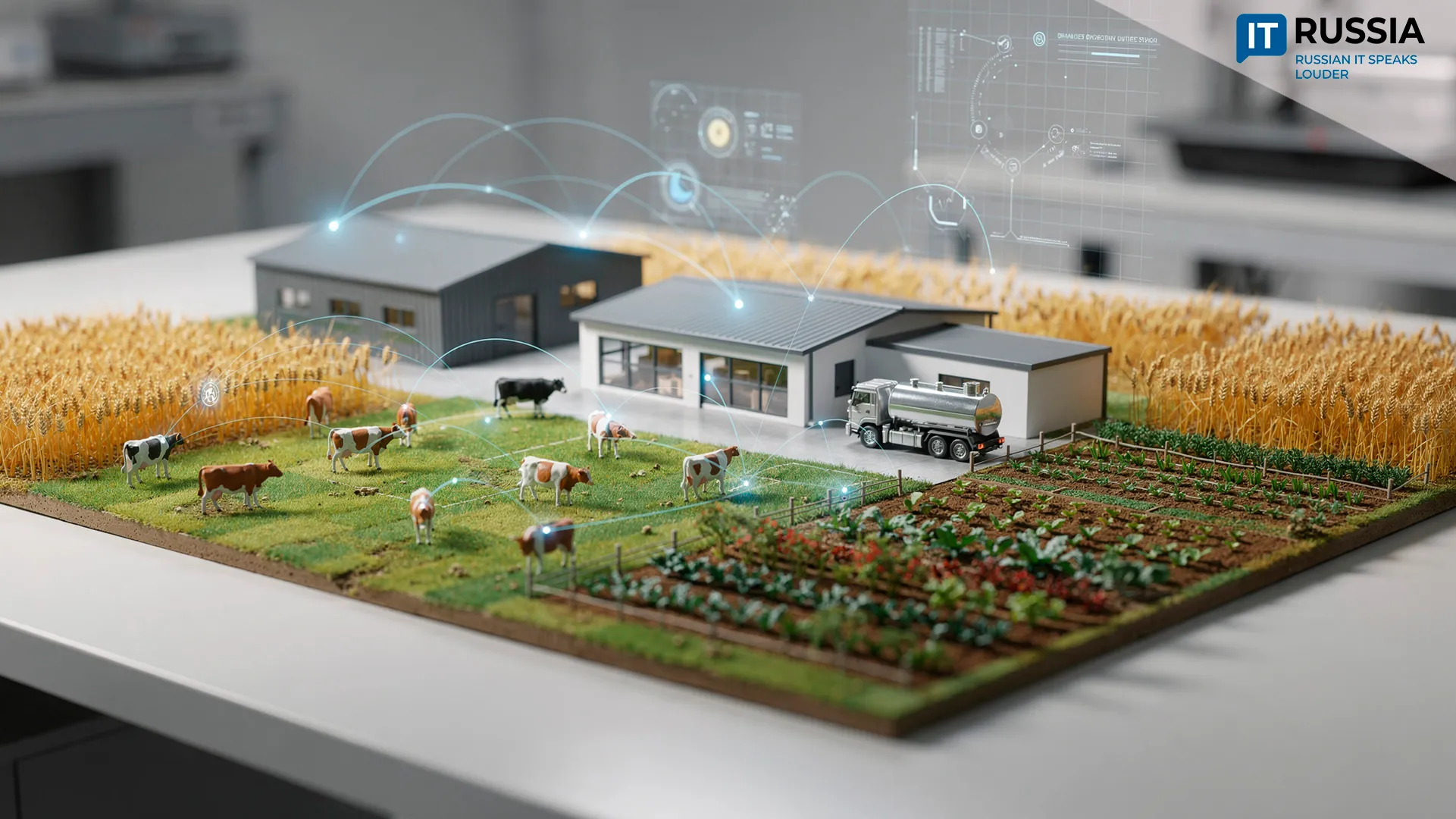
Future engineers from Grozny State Oil Technical University named after academician M.D. Millionshchikov have developed a smart module that enables drones to spray fertilizers with high precision in agricultural fields.
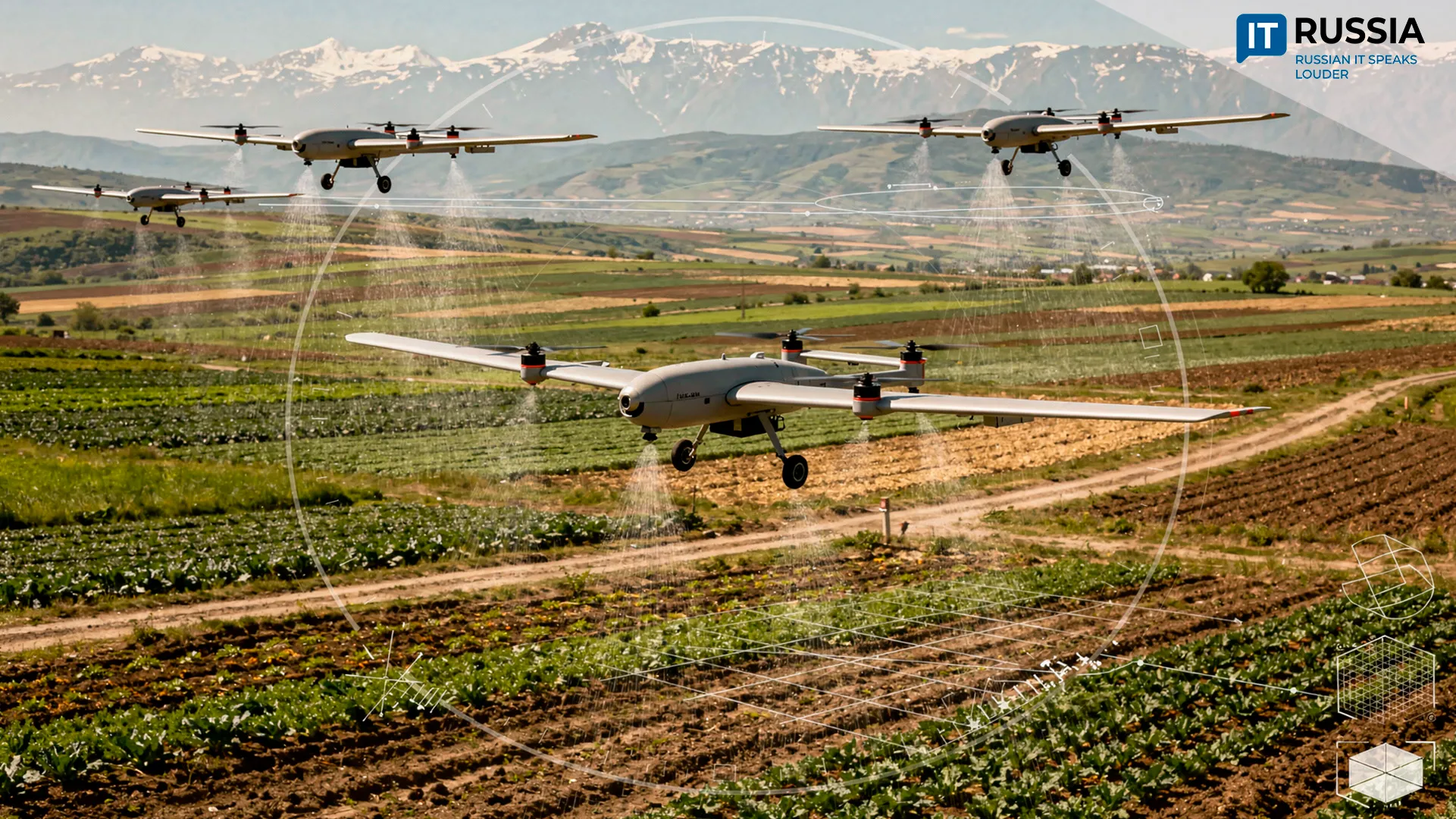
Russian developers continue to build domestic technology stacks for agricultural drone production. Importantly, alongside new aircraft designs, they are also developing payload platforms and hardware-software modules that control agri-drone operations. This approach allows for the creation of specialized UAVs capable of performing complex agricultural tasks.
A Module That Transforms a Drone
A team of students and postgraduate researchers from Grozny State Oil Technical University named after academician M.D. Millionshchikov has developed a new autonomous module for drones. It is designed to convert any heavy UAV into a smart spraying system.
The solution was created as part of the Kadry dlya BAS (Workforce for Unmanned Aviation Systems program), operated by Universitet 2035 (University 2035).
The system is a standalone 50-liter tank module equipped with a pump, nozzles, and a controller. It is designed to operate reliably in challenging climate conditions, including high humidity and heat. Its key advantage is precision and efficiency. A high-accuracy flow controller enables spraying of fertilizers and herbicides with precision down to 1 milliliter. The margin of error does not exceed 0.5%.
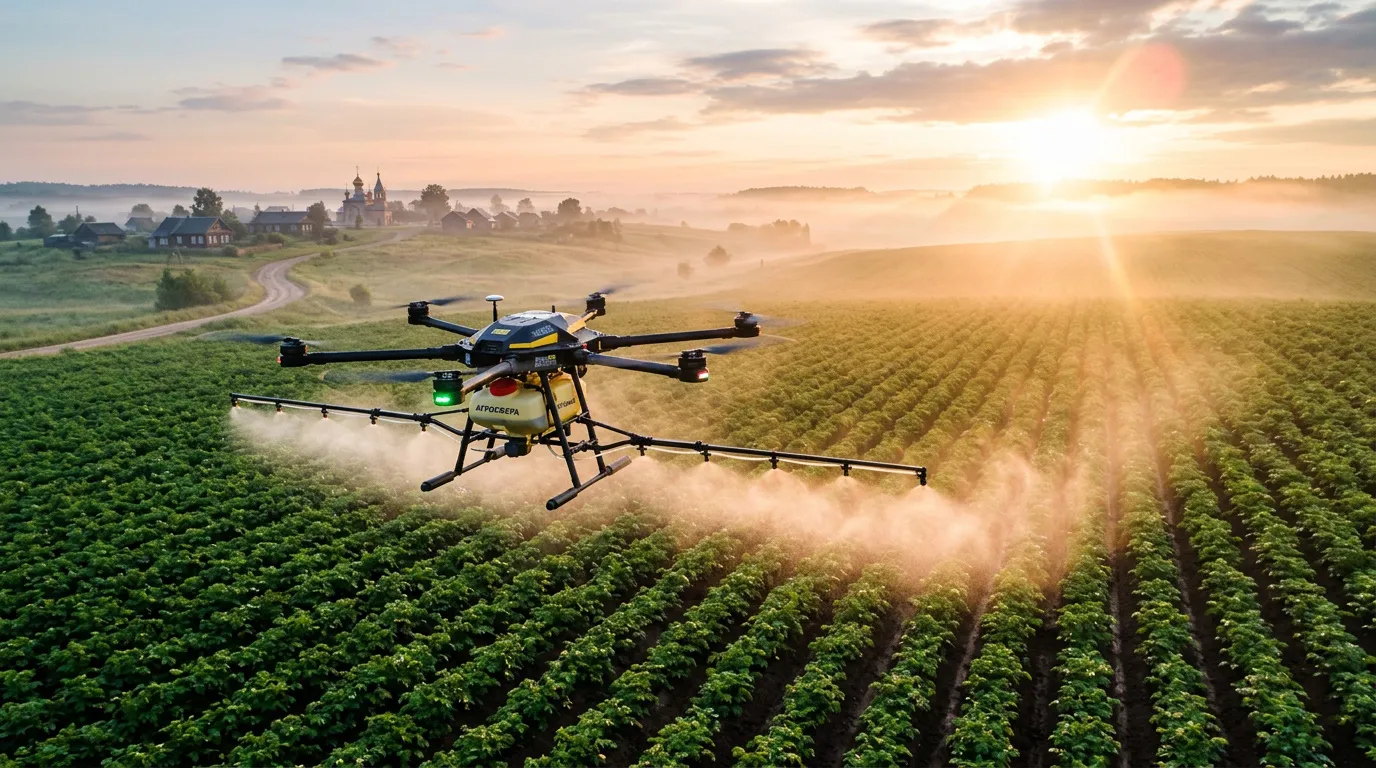
This level of precision allows farmers to reduce the use of fertilizers and herbicides by applying them exactly where needed. At the same time, the digital regulator makes it possible to treat crops that are highly sensitive to dosage and can be damaged or lost if overdosed, such as strawberries, potatoes, sugar beet, and sunflower. The regulator is controlled through open-source UAV software.
UAV Market Segmentation
The development by students in Grozny has no direct equivalent in Russia and has already attracted interest from industry players. A partner has been secured in the form of a resident company of the Chechen Republic’s research and production center for testing and competencies in unmanned aviation systems.
The project fits into a broader trend of expanding UAV use in agriculture. In 2025, Russia’s Ministry of Agriculture highlighted that drones are actively used for precision application of fertilizers and crop protection products, improving efficiency and reducing resource consumption.
At the same time, the UAV market is becoming more segmented and specialized. In Russia, drones are being developed to perform specific agricultural tasks, including applying crop protection products, monitoring crops, analyzing soil conditions, and treating individual plant types.
As early as 2023, UAVs in Chuvashia treated more than 5,000 hectares of farmland, applying fertilizers and performing targeted crop feeding. In 2024, Rosaviatsiya issued a type certificate for the S-80 agri-drone developed by Transport Budushchego (Transport of the Future). The UAV is designed for precision application of fertilizers and crop protection products and has a payload capacity of 40 kilograms.
In 2025, Maksim Labeyev, a graduate of Ufa State Oil Technical University, developed a hexacopter drone equipped with a spraying module, monitoring and autonomous control software, and a neural network for identifying affected areas. The system uses artificial intelligence to detect diseased crop zones autonomously, making it a one-of-a-kind solution.
Modular UAV Systems
Russia is building its own ecosystem of agricultural UAVs as part of a broader digitalization of the agricultural sector. The effectiveness of this process depends directly on the development and production of domestic universal components. This makes the Grozny project particularly promising. It introduces a modular approach, where the same UAV can perform different tasks depending on the attached equipment.
For farmers, reduced chemical usage and more efficient application can increase yields while lowering environmental impact. At the same time, modular technology supports wider adoption of UAV systems across the agricultural sector.
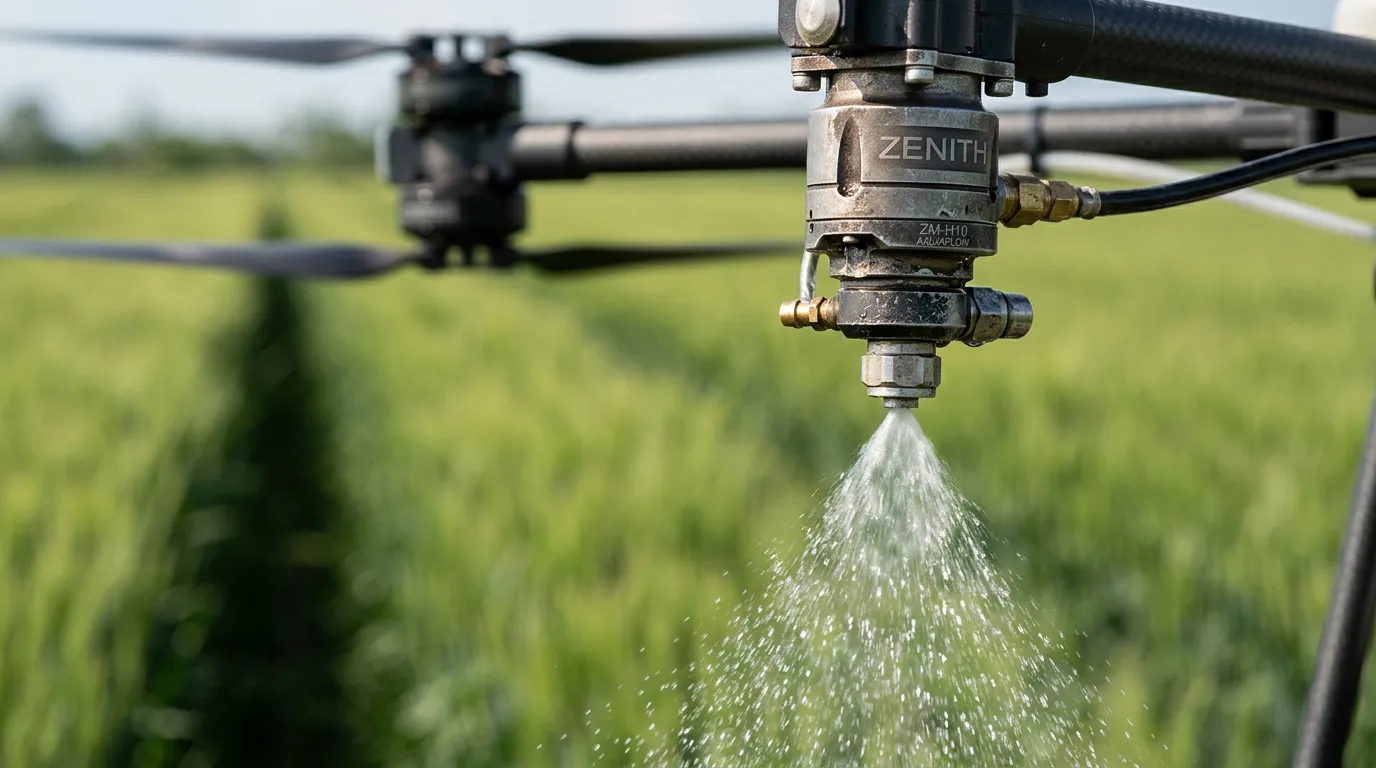
In the future, smart UAV modules could become part of full precision agriculture systems, including field mapping, identification of problem areas, targeted treatment, automated reporting, and integration with ERP platforms.
Solutions for Domestic and Global Agriculture
The development of agricultural UAVs is becoming a key driver of Russia’s digital industrial growth. New projects require electronics, controllers, telemetry systems, and control software. In the near term, advanced data analytics systems will also be needed. The cost and quality of these components directly affect the efficiency of agricultural operations and, ultimately, food production volumes.
Russian agri-drone technologies are also highly scalable and adaptable due to open software architectures. They are likely to be in demand across CIS countries with similar climates and agricultural structures. In developing regions in Asia, Africa, and Latin America, where smallholder farming dominates, adaptable drones with open software are also expected to find strong demand. Demonstrating reliability and economic viability in real-world use will be key to scaling these solutions internationally.