Ayteko Develops Ore Separation and Loss Analysis Model
Ayteko Group has developed a mathematical model designed to evaluate production losses during processing of heterogeneous ore streams. The system was tested on the Magistral MES platform.
Ayteko is a diversified high-technology group combining engineering, construction and IT expertise alongside custom software development capabilities.
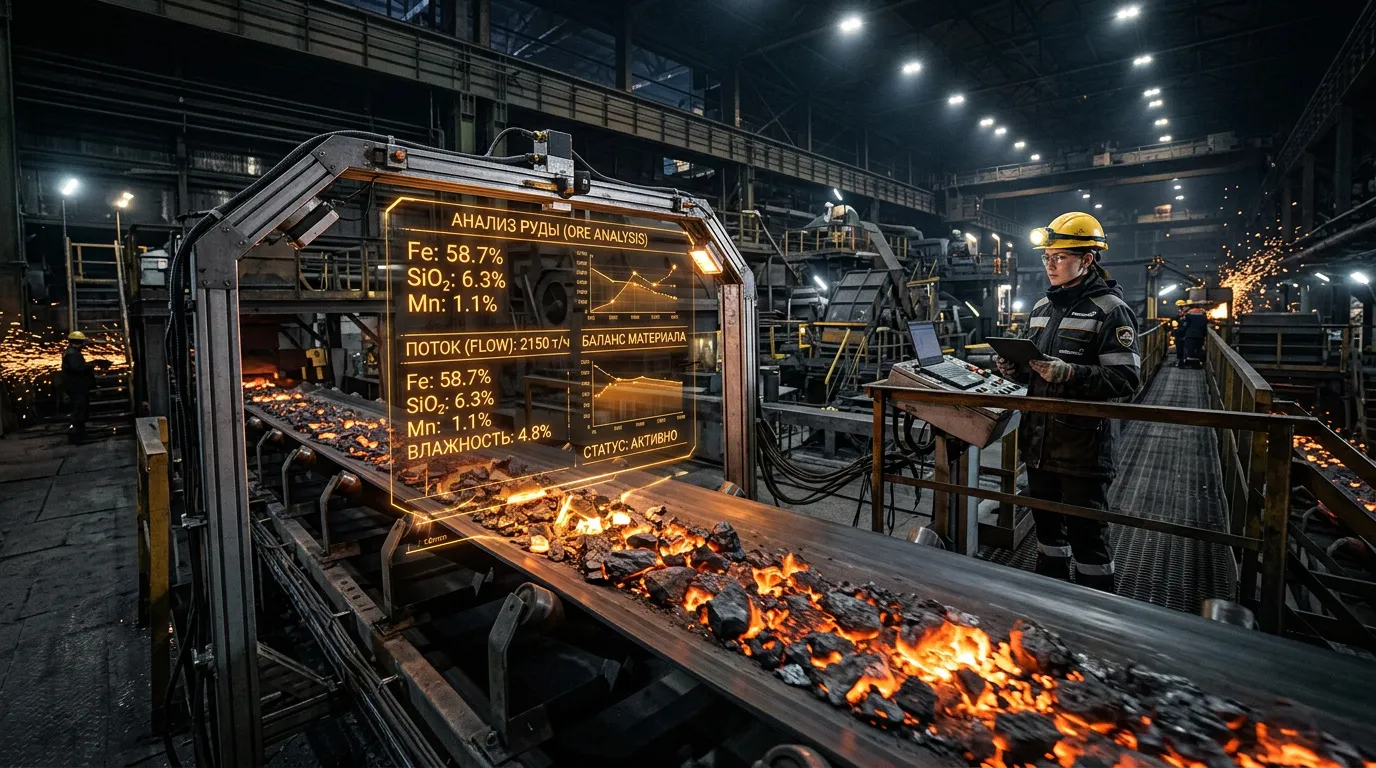
Among the company’s products is an algorithm for calculating material balance, or the relationship between incoming raw material volumes and finished output. The model can divide ore streams into commercially valuable and accompanying waste components with high precision and calculate the ratio between them using a concentration indicator, even when key characteristics of the source ore contain significant inaccuracies.
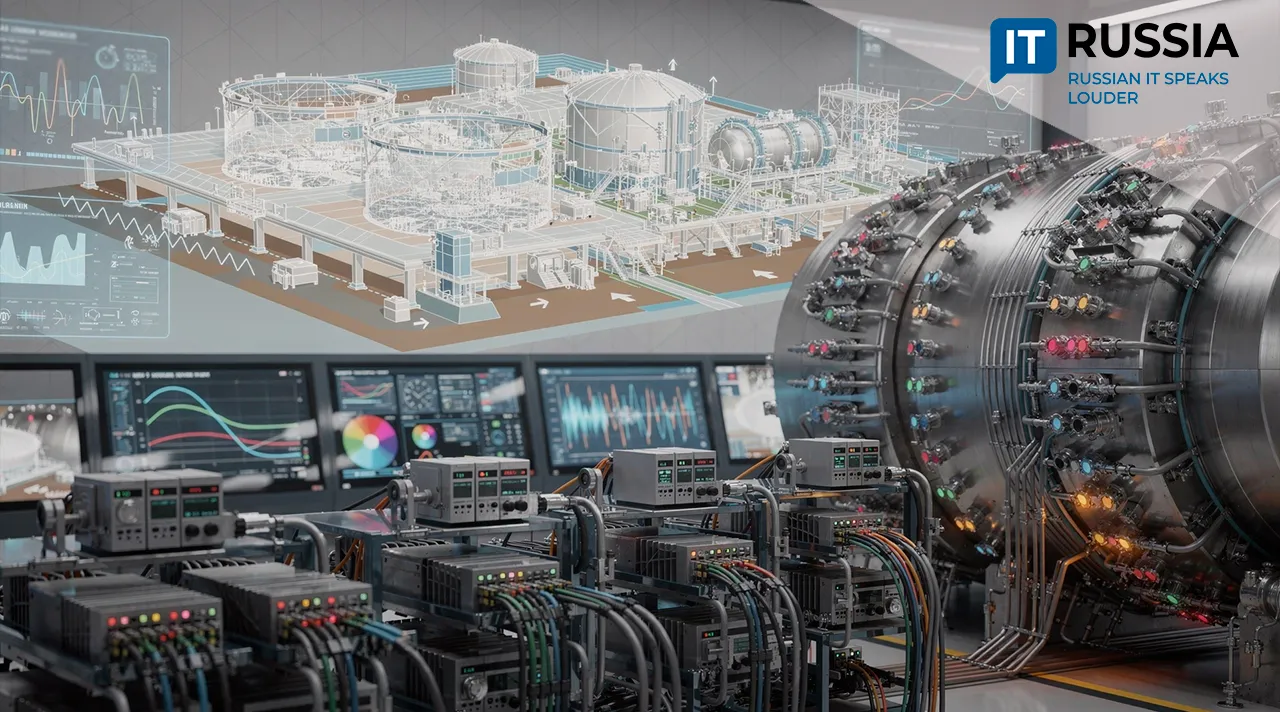
The applied IT solution operates at the intersection of mathematical modeling, MES systems, digital twins and industrial accounting. Its deployment addresses a specific production challenge: how to track raw materials, semi-finished products and process losses when ore characteristics are imprecise or change throughout the production chain. In mining and mineral processing, even small gains in accounting accuracy and mineral recovery rates can produce measurable economic benefits.
Following the exit of Western vendors, Russia’s mining and metallurgical industries increasingly require domestic platforms for production management, accounting, dispatch operations and analytics. At this stage, industry research indicates that 81% of mining companies are deploying digital technologies either selectively or in pilot mode, while integration platforms and MES systems remain among the most in-demand technologies in the sector.
The research has been published both by Springer Nature, one of the world’s largest scientific publishers, and by the journal of Moscow State University’s Faculty of Computational Mathematics and Cybernetics. The methodology accounts for real-world mining production conditions, including the absence of precise ore-quality data, and can be used to calculate incoming and outgoing material flows at individual sections of an industrial facility.

MES in Practical Deployment
In practical use, the system allows operators to track the movement of specific ore batches from extraction through finished-product manufacturing while also automating intermediate production reporting and operational data generation.
Recognition from both scientific and industrial expert communities is of high significance. Publication of the work by an international scientific publisher highlights the relevance of the approach and its applicability to industrial-scale challenges.
Going forward, the model is expected to be deployed as a functional module for industrial accounting and material balance reconciliation tasks. Testing was conducted using the Magistral multifunctional integration platform, which was also developed by Ayteko.
Magistral itself is included in the Russian Ministry of Digital Development’s domestic software registry. The platform is designed for industrial production management and combines applications and services that automate production processes, coordinate operations between divisions and optimize material flows. At the same time, Magistral supports multiple production models, including continuous, batch, cyclic and mixed manufacturing environments. The system integrates with existing enterprise infrastructure, reducing deployment costs. One notable implementation was carried out by the Polyus company, when the platform automated management of material and energy flows, improving both accounting accuracy and forecasting capabilities.
Outlook for Mining IT
Mining companies are increasingly seeking pragmatic digital solutions with clear economic returns. Industry research shows that most operators are not prepared to launch major new digital transformation programs. According to the data, 68% of companies are not planning significant investments in new projects and are instead concentrating on maintaining existing systems. In effect, the strongest prospects are likely to belong to modular technologies that can be deployed incrementally on top of existing infrastructure while delivering measurable improvements in accounting, planning and loss control.
The development is significant because it reflects a broader shift in Russian industrial IT away from general-purpose automation and toward highly specialized models addressing specific extraction and processing challenges. Production losses have traditionally remained one of the mining sector’s most persistent operational problems. Thus, the project is likely to attract substantial industry attention.