


Digital Dreams: How Technology Is Resshaping Art and Creating New Museum Formats
Hundreds of thousands of visitors across Russia have attended the immersive exhibition Sny Sibiri (Siberia’s Reveries). Presented in a digital format, it explores the past and present of Siberia and the Russian Far East.

Hundreds of Thousands of Visitors
In 2026, Russia will continue the large-scale exhibition project Sny Sibiri. The immersive show, positioned at the intersection of art, history, and information technology, has already drawn hundreds of thousands of visitors in Moscow, Vladivostok, Krasnoyarsk, and Novosibirsk. Public demand proved so strong that organizers repeatedly extended the exhibition by several days.
Sny Sibiri features a record number of artifacts – more than 100 unique objects, ranging from ancient masks dating back to the 2nd century BCE to works by contemporary Siberian artists. But its defining feature is not the rarity of the exhibits alone. The exhibition functions as a fully immersive environment, reimagined for each host city and designed to feel distinct and vivid rather than static.
The sense of total immersion relies on more than subdued lighting and unconventional spatial design. Digital orchestration plays a central role – region-specific soundscapes, olfactory compositions, documentary photo and video sequences dedicated to the history of the Trans-Siberian Railway. Together, these tools transform the visit from passive observation into an emotional journey, allowing visitors to experience continuity between eras and cultures.

Digital as Guardian and Storyteller
Many of the artifacts on display, including the renowned Tesin burial mask from Khakassia, had never previously left museum or research collections. Their physical fragility and uniqueness severely limit public access.
Here, digital technologies step in. High-resolution 3D scanning, virtual reconstructions, and online archives make it possible to preserve fragile originals for future generations while also opening access to researchers and audiences worldwide.

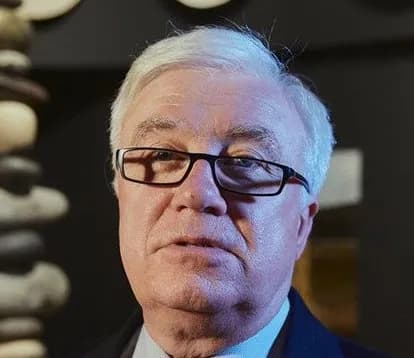
The project illustrates how technology can animate history. According to Andrei Krivoshapkin, acting director of the Institute of Archaeology and Ethnography of the Siberian Branch of the Russian Academy of Sciences, the exhibition offers more than academic knowledge – it invites visitors to imagine the people who created these objects. Interactive and multimedia formats act as a bridge between raw historical fact and emotional engagement.

For Future of Culture
The success of Sny Sibiri and similar initiatives highlights a broader shift in Russia’s cultural formats. Thoughtful integration of past and present has become a decisive factor. The future belongs to projects where history, archaeology, contemporary art, and digital technology operate as a unified system. This approach deepens audience engagement and generates entirely new cultural products.
Preservation is the second critical dimension. Developing and deploying high-precision digitization technologies is a strategic task for safeguarding national heritage, particularly archaeological collections.
The exhibition reinforces the idea that a modern museum is not just a repository but a director of experiences. Integrated sound, lighting, and multimedia design significantly amplify the message carried by each artifact.
As Vasily Novikov, head of projects at the Tavolga Foundation, notes, museum practice today allows for highly targeted storytelling. Technology has become a precise instrument capable of serving a specific curatorial idea, whether revealing the uniqueness of a single artifact or illustrating connections across historical epochs.

Such projects are gaining traction globally, not only in Russia. There is every reason to expect that Sny Sibiri will attract full halls abroad as well, showcasing not just Russia’s cultural and historical legacy but also a high level of technical and curatorial ambition. Sny Sibiri functions as a prototype of the museum of the future, where digital technologies become full co-authors alongside curators, historians, and artists.


