Digital Model Makes Drone Engines More Energy Efficient in Russia
Researchers say an intelligent control system has reduced energy consumption in unmanned aerial vehicle motors.
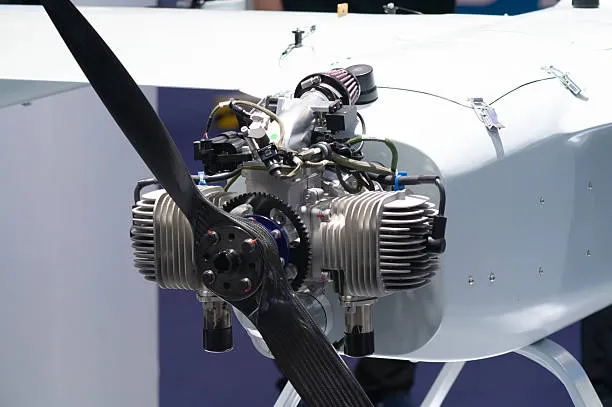
Engineers at Moskovskiy Aviatsionnyy Institut (Moscow Aviation Institute) have developed an energy-efficient control system for electric motors used in unmanned aerial vehicles. The solution allows drones to operate longer on a single charge without adding complexity to the design.
The system was created at Department 310, known as Elektroenergeticheskie, Elektromekhanicheskie i Biotekhnicheskie Sistemy (Electrical Power, Electromechanical and Biotechnical Systems). The department’s engineers focus on improving permanent-magnet synchronous motors widely used in UAVs.
A central component of the new system is the inverter and its control algorithm. The software logic determines the efficiency of the electric drive and the level of energy losses.
Project author Pavel Troshin, a postgraduate researcher at MAI’s Department 310, explained: “Our goal was to develop a method that significantly reduces energy consumption without complicating the system’s design or configuration. The system precisely regulates the phase relationship between current and voltage in the motor windings. This reduces energy losses and heat generation, making the motor more efficient. It also creates a uniform magnetic field, allowing the rotor to rotate smoothly, without jerks or unnecessary oscillations that typically waste energy. At the same time, the mathematical model underlying the system is relatively simple and does not require significant computing resources.”
Energy Savings Through a Digital Model
The system determines rotor position based on electrical parameters. In practice, this amounts to software-level optimization of the power unit. By precisely calculating phase and load conditions, the motor operates more steadily and consumes less energy. For drones, this translates into longer flight times.
Engineers are now testing the algorithms on a prototype model. After debugging is complete, the system will undergo trials to evaluate its energy performance and operational characteristics.