


First Rare Earth Cluster Facilities to Launch in Siberia in 2027
To secure a leading position in the sixth technological paradigm, Russia in late 2025 set out a large-scale industrial strategy focused on developing Siberia, with a new cluster designed primarily to unlock access to critical rare earth metals.

The Future Takes Shape Here
More precisely, the project is centered in the Angara–Yenisei macroregion. Its overarching goal is to build a sovereign, end-to-end industry for the extraction and processing of rare earth metals that is independent of China and the United States. The ambition goes beyond mining. The task is to establish a full production chain through to finished high-tech products. The total area of the cluster will exceed 3,000 hectares. Planned projects include energy storage production and related component manufacturing, multi-product additive materials plants, as well as factories and centers producing a broad range of high value-added products based on rare and rare earth metals.
Russia holds the raw material base needed to extract 15 of the 17 known rare earth elements. Currently, 18 explored deposits are located within the country, supplying elements critical for defense industries, automotive manufacturing, energy, and high-precision electronics. In absolute terms, Russia ranks second globally in reserves, with an estimated 28 million tonnes. However, it ranks only seventh in production, and until 2024, no domestic processing was carried out at all. All rare earths were imported, primarily from China, which currently supplies about 77 percent of global demand. For Russia’s long-term development and economic independence, success of this mega-project is therefore essential.

The First of the First
In practical terms, the project sits at the intersection of national security, economics, and science. The cluster is not envisioned merely as a showcase of advanced mining technologies. It is being designed from the outset as an integrated hub, where facilities logically build on one another to form a continuous innovation chain.

Among the first flagship projects is an artificial intelligence computing center to be developed by Rusal, with commissioning planned for 2032. Another early-stage initiative is a lithium hydroxide production facility based on concentrate from the Tastyg deposit, scheduled for completion by Elbrusmetall by 2030. By that time, a small-scale specialty chemicals plant producing a wide range of high-purity products will already have been operating on the cluster site for two years. That project is being implemented by Khimmed.
Resident companies within the cluster will be able to take advantage of incentives under three preferential regimes, including tax and administrative support depending on location. In Krasnoyarsk, the cluster will operate under the status of an Innovation Science and Technology Center. In Minusinsk, it will fall under an industrial park regime. In Sayanogorsk, a combined regime will apply, integrating an industrial-production special economic zone with Innovation Science and Technology Center status.

Thinking on a Global Scale
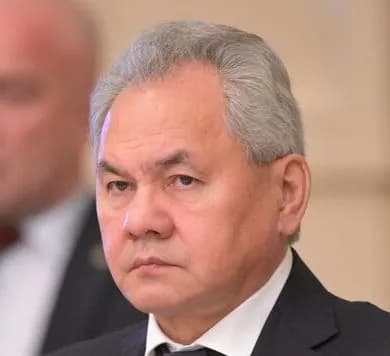
Funding required for cluster development has already been earmarked in the federal budget for 2026. Negotiations are currently underway to attract additional partners, including from key Global South countries. The launch of Russia’s broader “Siberianization” initiative was announced by Sergei Shoigu, Secretary of the Russian Security Council, during a working visit in November. “At the core of the new economic model replacing the free-market approach of the 1990s are centers of knowledge that are closely linked to production,” Shoigu said.
In 2027, the cluster will see the launch of its first research and engineering center. One year later, a research and development center focused on new materials for energy storage systems is set to begin operations. An engineering center dedicated to extraction and production technologies for heavy rare earth metals will also be established. Several additional centers and laboratories focused on artificial intelligence are planned. Proposals from regional authorities and businesses in Krasnoyarsk Krai and Irkutsk Region are also under review. Irkutsk Region alone hosts 11 large deposits, including niobium and tantalum.

A critical element of the project is its integration with logistics and transport infrastructure. These include the Central Eurasian Transport Corridor and the Northern Latitudinal Railway. Beyond freight delivery and shipment, these routes are expected to help attract skilled human capital by improving accessibility and living conditions.


