Fishing Fleet Moves Into a Digital Registry
Russia is advancing the digital transformation of fisheries management, with industry leaders proposing a unified system to track fishing vessels and improve long-term planning across the sector.

Russia continues to digitize the management infrastructure of one of its most important agricultural sectors – fisheries. Current priorities were discussed on March 24 at a meeting of the Public Council under the Federal Agency for Fisheries (Rosrybolovstvo).
Accounting for Every Vessel
Russia needs to digitize its fisheries assets, starting with fishing vessels. This proposal was put forward by the Association of Fishing Fleet Shipowners (ASRF) during the Public Council meeting at Rosrybolovstvo. The initiative would provide objective data on the state of the industry, enabling a more accurate assessment of both current capacity and the long-term potential of the existing fleet.
Stanislav Aksyonov, president of the Association of Fishing Fleet Shipowners, told participants that key information on fishing vessels is still missing – including their total number, distribution across fishing basins, and current condition. A digital registry is needed to close these data gaps.
“We would like everything to be transparent, especially at this stage of the 21st century,” Aksyonov said. As the ASRF head noted, long-term fleet development planning is not possible without full digital access to reliable data.

Digital Transformation of the Sector
The importance of the issue was also acknowledged by Andrey Mikhalevich, head of the economics and investment department at Rosrybolovstvo, who said the matter must be addressed. After further analysis of the details surrounding sector digitalization, the Public Council plans to hold dedicated hearings on the topic.
Work on digitizing Russia’s fisheries sector began in 2018, when digital document management and monitoring tools started to be developed and gradually introduced. In 2020, as part of the State Program “Development of the Fisheries Complex,” Rosrybolovstvo launched pilot testing of the Programmnyy kompleks Elektronnyy promyslovyy zhurnal (Electronic Fishing Log system). This allowed fishing companies to submit data electronically on catch volumes, reception, transshipment, transportation, storage, and production. Since December 1, 2023, the use of the Programmnyy kompleks Elektronnyy rybolovnyy zhurnal (Electronic Fishing Log system) has been mandatory for fishing, transport, and fish-processing vessels.
Today, Rosrybolovstvo identifies the full transition to the Electronic Fishing Log system and digital catch permits as a key milestone. Currently, 100% of catches are recorded through this system. Its introduction has significantly changed the control framework. According to the agency, the speed of generating management reports has doubled, while operational and administrative costs for market participants have decreased by 15%.
Opportunities and Challenges for the IT Sector
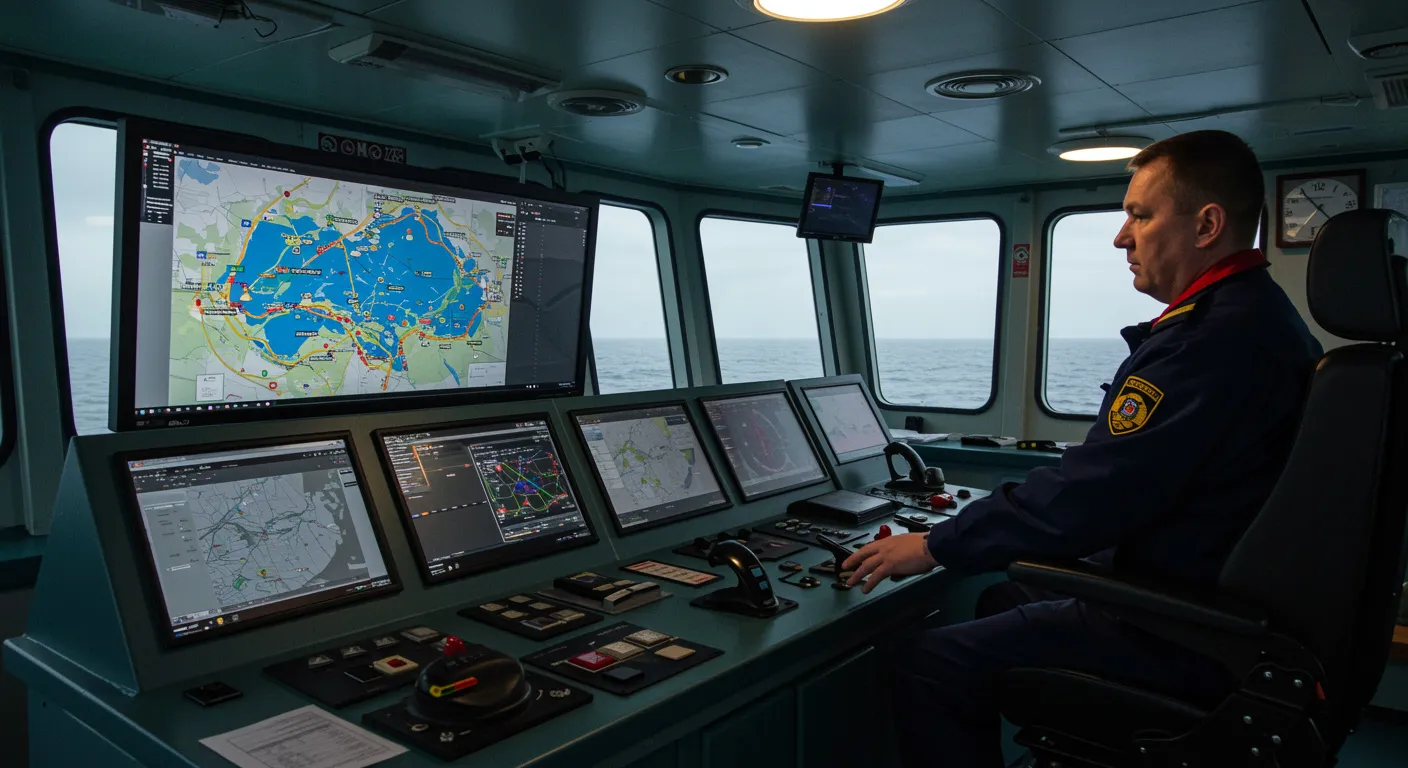
For Russia’s IT industry, the digitalization of vessel tracking represents both a challenge and an opportunity. Developers will need to meet demand for industry-specific solutions in asset monitoring, maritime logistics, fleet management, and analytics. These systems must also integrate with government information platforms and potentially with communication and video monitoring systems for vessel operations, which have long been under discussion. Software developers, satellite monitoring providers, and vendors of SCADA, ERP, and MES systems, along with integrators in both B2G and B2B segments, are likely to see increased demand.
The introduction of a digital vessel registry will mark an important step toward building a unified digital framework for fisheries management in Russia. This system will integrate data on vessels, permits, catch volumes, production, and logistics, creating full transparency across the sector. After digitizing individual processes, the next step will be to assemble a comprehensive digital model of the entire fisheries industry.
This will also support another key objective – expanding electronic interaction among sector organizations under the Ministry of Agriculture and gradually migrating government systems to the Edinaya tsifrovaya platforma APK (Unified Digital Platform for Agriculture). This transition is expected to help Russia achieve full digital maturity in its agricultural and fisheries sectors by 2030.

Production Growth and Technology Exports
In the long term, digitalization will enable more effective management of fleet development, investment flows, and export strategies. Russia has been working to modernize its fishing fleet since 2017. Under the investment quota program, 48 vessels have been built since 2019, including 13 launched in 2025 alone. However, this remains insufficient to meet the sector’s needs.
Russia has substantial marine bioresources that must be harvested and delivered to consumers efficiently. On October 29, 2025, President Vladimir Putin called for increased domestic consumption of fish and seafood. “We are currently at about 24 kilograms per person, and it should be higher,” he said during a government meeting on industry development. Achieving this goal will require, among other measures, continued end-to-end digitalization.
Higher catch volumes will also support export growth. In October 2025, Deputy Prime Minister Dmitry Patrushev noted that Russia ranks third globally in fish and seafood exports and has the potential to expand its market share. At the same time, a digital system for monitoring catches and vessel operations could itself become an exportable solution, particularly for countries in Africa and Latin America that are actively developing their fisheries sectors.