


Russia’s Agricultural Insurance Moves Into a Digital Era
All core workflows are set to be optimized, paper-based documentation will disappear, processing speeds will increase, and new insurance products will emerge.

Protection in a High-Risk Environment
Russia is entering a second technological transition in agricultural insurance. The first began about a decade ago with the introduction of satellite monitoring, which made it possible to insure fields anywhere in the country without on-site inspections. The second transition is set to reshape how insurers and farmers interact, a shift with broad implications for the entire agricultural sector.
In Russia, it is virtually impossible to develop agriculture, especially crop production, without an effective risk insurance system. The sector is highly dependent on natural conditions. Many farms operate in what is known as “high-risk farming zones,” where weather extremes can severely affect yields. Plant diseases and pest outbreaks pose additional threats.
For these reasons, farmers need fair and reliable protection against production-related risks. Agricultural insurance has been evolving, with digitalization of both agriculture and insurance services simplifying and accelerating processes. The importance of insurance mechanisms is growing further amid climate change and increasingly frequent weather anomalies.

At present, one of the main challenges is the paperwork required to apply for insurance coverage and to claim compensation for losses. Farmers must submit sowing reports, land area certificates, seed variety confirmations, and data on the timing of agrotechnical operations. Digitalizing data exchange is expected to resolve these bottlenecks.
Linking Three Federal Information Systems
The National Union of Agricultural Insurers (NUAI), the Agroanalytics Center of Russia’s Ministry of Agriculture, and industry representatives are preparing to use data from three key federal state information systems in agricultural insurance: the Grain system, the Seed Production system, and the Unified Federal Information System for Agricultural Lands. Together, these platforms collect comprehensive data related to crop production.

The Seed Production system contains information on which varieties and hybrids were sown, where, and when. The agricultural land system records field boundaries, land designation, and usage. The Grain system provides data on harvest volumes and quality at the commercialization stage. Integrating this information within the insurance process is essential.

A Digital Management System for the Sector
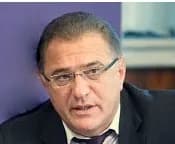
Mukharbiy Boranukov, executive director of the National Union of Agricultural Insurers, noted that digital integration of these systems will significantly simplify life for crop producers: “Transferring data from these systems at the insured farmer’s request will substantially reduce the list of documents that farmers must submit to insurance companies when insuring crops, signing contracts, and settling claims. Over time, this will make it possible to gradually move away from paper-based document flows.”
Integration of federal information system data for agricultural insurance is an important step toward the digital transformation of Russia’s entire agri-industrial complex. NUAI is currently working with the national meteorological service, Roshydromet, to develop a digital service called Info-Meteos. This platform will allow electronic access to official certificates on hazardous natural events across different regions. As a result, paper documentation can be eliminated entirely in favor of fully digital workflows.
This will mark the second technological transition, fundamentally changing operating principles across the sector. Full digitalization reduces administrative barriers, increases transparency, and improves both government support and insurance protection. It will also enable the development of near-custom insurance products for farmers and their rapid deployment. This, in turn, will help agricultural producers launch new and more complex projects.

These changes will also stimulate growth in the IT market by driving demand for data exchange systems, analytics platforms, integration, and automation solutions. As a result, they are expected to support broader economic development.


