Russian Scientists Create Ideal Materials for the Computers of the Future
The breakthrough could overcome the limits of modern microelectronics and accelerate the development of quantum systems.

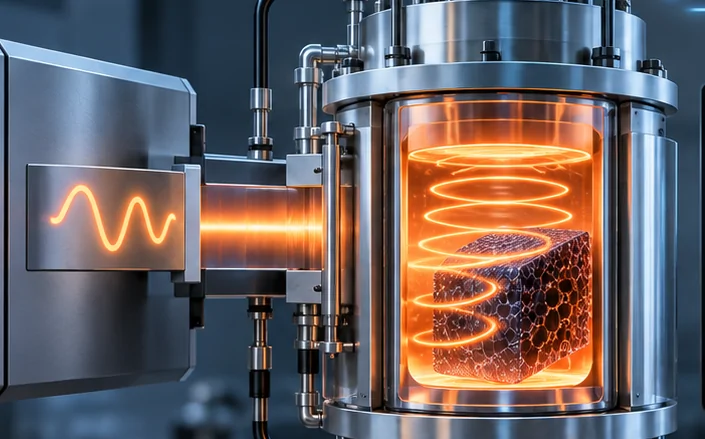
Scientists at Lomonosov Moscow State University have developed unique materials that open a path toward ultra-small, ultra-fast next-generation computers. Using chemical synthesis, the team created near-perfect nanostructures for spintronics — a field in which information is transmitted not by the movement of electrons, but by changes in their quantum states, the university’s press service told IT Russia.
Ordered, Defect-Free Structures
Spintronic devices make it possible to dramatically shrink component size while significantly increasing data-processing speeds — capabilities that are critical for quantum computing and high-performance memory. Until now, similar materials — heterostructures — were typically produced using physical deposition techniques, which often introduced defects and limited how thin the layers could be made.
A Foundation for a Digital Breakthrough
The development is described as strategically important for digital transformation and technological sovereignty, serving as a foundation for domestically produced components for quantum computers and ultra-fast memory systems.
Specialists from the Institute of General Physics of the Russian Academy of Sciences also took part in the study. The results were published in the scientific journal Journal of Materials Chemistry C.
Earlier, we reported that scientists from MSU’s Faculty of Physics had developed a prototype quantum computer based on neutral rubidium atoms, which ranked among Russia’s top three systems.