


When the Atom Heals: A Gift for the Future from Russian Scientists
Researchers at Rosatom are developing technologies spanning medical implants, tissue biofabrication, additive manufacturing, and the growth of blood vessels, pushing nuclear science into the heart of regenerative medicine.

Not a Fairytale, but Reality
If a mythical gift-bringer were to choose a New Year’s present that could truly save lives, it would likely be a technology capable of healing the human body itself. That gift already exists. It was not created in a fairytale, but in the laboratories of Russian scientists and physicians who are doing what once seemed impossible – teaching the atom to heal.
Rosatom, long known for nuclear power plants and reactors, is steadily moving into the front lines of medicine. Russian researchers are already growing blood vessels up to 2 centimeters long from a patient’s own cells, creating implants that structurally mirror natural bone tissue, and mastering the 3D printing of living tissues. This is not science fiction. It is a reality that is changing the rules of modern healthcare.
From Reactors to Regeneration: Why This Is Possible
At first glance, the connection between nuclear energy and medicine may seem far-fetched. But Rosatom concentrates enormous engineering, scientific, and manufacturing expertise. For decades, nuclear engineers have worked with high-precision materials, nanotechnologies, and extremely complex control systems. These capabilities have proven highly relevant in medicine, especially in regenerative approaches that focus on restoring tissue rather than merely treating disease.

The work on implants is particularly striking. Using additive manufacturing, researchers can produce structures that closely replicate the architecture of natural bone. Such implants are less likely to be rejected, integrate faster, and significantly shorten rehabilitation after surgery. This is a direct step toward more effective and humane medical care.
Blood Vessels Grown from Cells: A Breakthrough Worth Celebrating
One of the most notable achievements is the successful growth of blood vessels. Rosatom scientists, together with partners from 3D Bioprinting Solutions, MISIS, and the Burdenko Military Hospital, have already printed a functional blood vessel 2 centimeters long using a magnetoacoustic bioprinter. By 2030, they plan to extend this to 10 centimeters or more and eventually move toward printing entire organs, including the thyroid gland, kidneys, and liver.

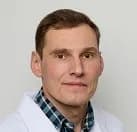
The key advantage of this approach is the absence of rejection risk. Because the tissues are grown from the patient’s own cells, there is no need for lifelong immunosuppressive therapy. This not only restores health, but also preserves quality of life.

Russia Among Global Leaders
Russia is one of the global pioneers in bioprinting. In 2015, Russian scientists printed the world’s first functional thyroid gland. In 2018, they conducted the first magnetic bioprinting experiment aboard the International Space Station. In 2023, they achieved another world first by printing tissue directly on a patient using an in situ method. These milestones are not just records. They form the foundation for a future medical transformation.
Sovereignty Without Isolation
In an environment of restricted access to imported high-tech medical equipment, Rosatom’s developments take on strategic importance. A full production cycle is being established, from medical-grade titanium to finished implants with customized geometry. This is not narrow import substitution, but the creation of an independent, competitive technological ecosystem designed for global leadership.
A New Generation for New Technologies
Equally important is the human dimension behind these advances. Alongside experienced researchers, young students are actively involved through a biomedical engineering master’s program at MISIS, supported by Rosatom. They are already designing next-generation bioprinters, studying the mechanics of cellular spheroids, and contributing to laboratory equipment development. This represents an investment not only in technology, but also in human capital.
What This Means for Patients
For many people, these developments may still sound distant. But within a few years, such technologies are expected to reach clinical practice. After an injury, there may be no need to wait for a donor – the required tissue or vessel could be grown specifically for the patient. After cancer surgery, lost bone fragments could be restored. Eventually, even whole organs may become available. This is not a dream, but a clearly defined trajectory.

Rosatom’s breakthroughs in medicine rank among the most significant scientific outcomes of 2025. They demonstrate that Russia is not only preserving, but expanding its scientific and technological capabilities under challenging conditions. Behind every medical advance stand dedicated scientists, physicians, and engineers working to deliver a healthier future.


