Khlebnikov-AI Quest Lets Visitors Talk to the Famous Poet’s Contemporaries
The Velimir Khlebnikov House Museum, a branch of the P.M. Dogadin Astrakhan State Art Gallery, has launched an “interactive guide” project called Khlebnikov-AI. Powered by artificial intelligence, the experience allows users to learn more about the poet’s work and even play a literary game inspired by his poetry.
The project’s technical infrastructure was developed by Astraway with support and technological partnership from Sber, using the GigaChat AI platform.
“Pavel” Talks Like the Family’s Neighbor Next Door
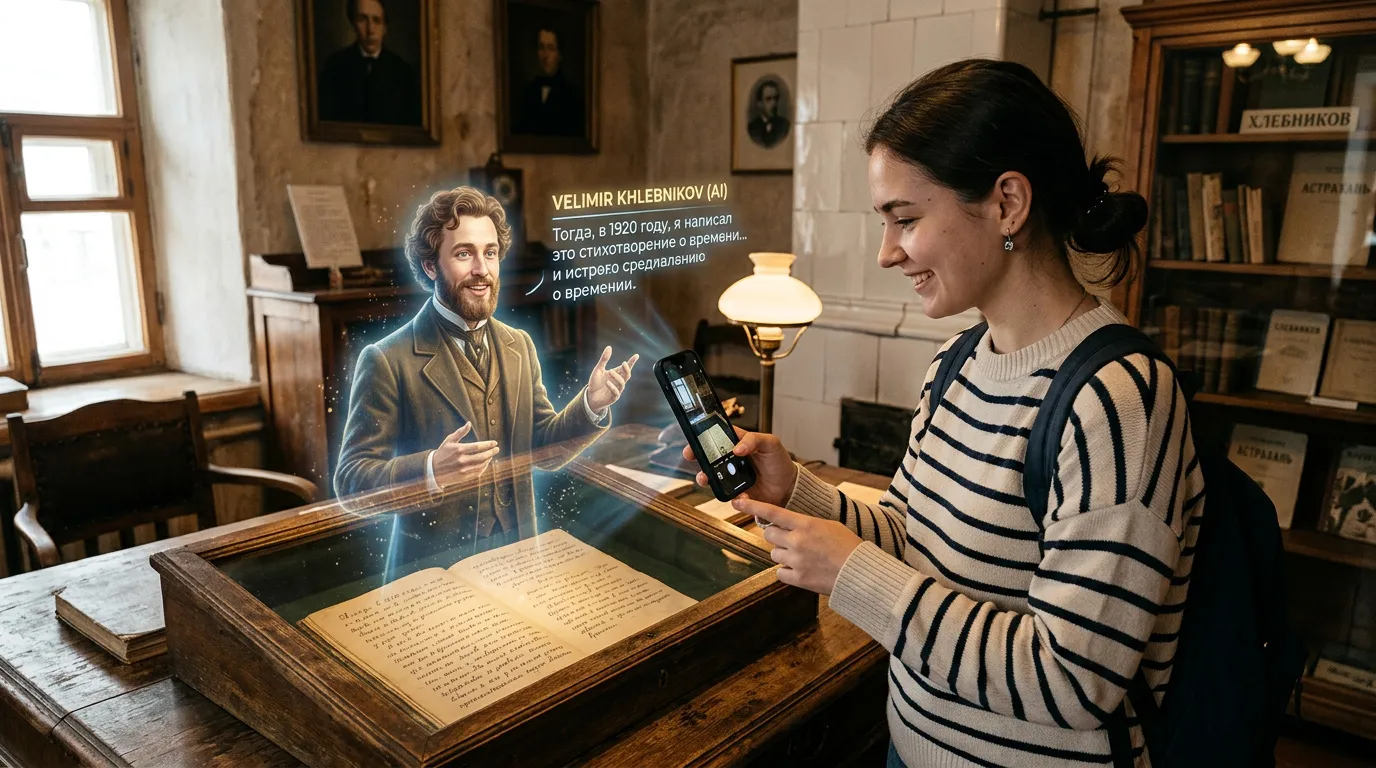
At its core, the project is a chatbot available free of charge to all users of the MAX messenger platform. A link to the bot is published on the museum’s website (https://dogadinka.ru/event/интерактивный-гид-хлебнииков/). Anyone can use it, not just museum visitors. The AI-powered conversational assistant interacts with users as Pavel Kazantsev, a fictionalized neighbor of the Khlebnikov family. “Pavel” talks about the poet’s life and literary work while answering questions about Khlebnikov in a live conversational format.
Users can also explore the project without asking questions directly. If someone does not know where to begin, they can choose the “Random Fact” option and receive either a famous or lesser-known detail from the poet’s life. Those interested only in the literary side of Khlebnikov’s legacy can select “Random Poem” to read a poem or excerpt from one of his works.
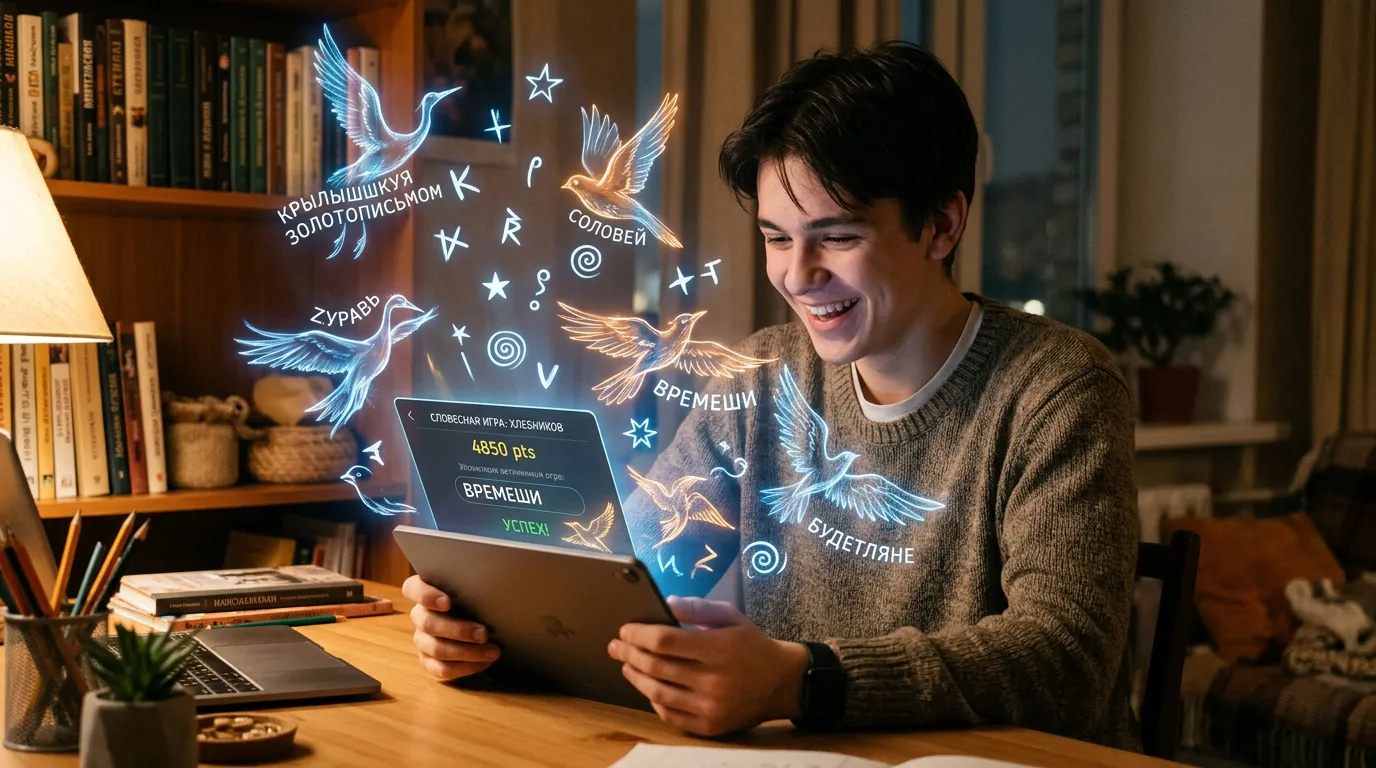
More adventurous visitors can try “Word Creation,” a language game inspired by Velimir Khlebnikov’s experimental poetic style.
All that is required to use the guide is a smartphone with the MAX messenger installed. Navigation happens through buttons inside the chatbot interface. This year, the Khlebnikov-AI project became part of the museum’s program for Russia’s nationwide Museum Night campaign.
AI Meets Cultural Education
The project brings together generative AI, a domestic large language model platform, and a Russian messaging service for educational and cultural outreach. One particularly notable aspect is the use of MAX, a mainstream messenger platform, as the foundation for the interactive experience. That decision dramatically expands the audience reach. Instead of remaining a regional Museum Night attraction, the initiative becomes a permanent digital project available to poetry lovers and curious readers everywhere.
Recently, AI tools have become increasingly popular for promoting cultural and educational initiatives. Much of the appeal comes from their ability to engage younger audiences that often respond less enthusiastically to traditional formats.
Russian regions have already been using Sber’s GigaChat platform to attract visitors, especially during Museum Night events. In May 2025, for example, an exhibition in Tyumen titled Cultural Layer introduced an AI-powered guide built on GigaChat. Visitors scanned a QR code at the entrance to receive a personalized tour of the exhibition. That project demonstrated how GigaChat could function as a digital museum companion. The Astrakhan initiative expands the idea into the literary sphere at the intersection of educational technology, cultural digitization, and tourism services.
MAX users gain free remote access to museum content, something especially valuable for schoolchildren, university students, tourists, residents of smaller towns, and people unable to travel physically to Astrakhan.
A New Format: Conversations With Cultural Figures
The project also strengthens Astrakhan’s cultural identity by giving the city a modern digital tool for promoting Velimir Khlebnikov’s literary heritage. Here, technology serves not only entertainment, but also the popularization of humanities knowledge.
Experts believe the format tested by Khlebnikov-AI will attract interest from both regional and major metropolitan museums. The project shows how regional museums are beginning to shift toward a new type of digital interaction. Visitors are no longer limited to reading static descriptions or listening to standard audio guides. Instead, they engage in dialogue with a “character” from a cultural era. Equally important is the fact that the interaction happens not on a standalone museum platform, but inside the already established MAX ecosystem. Museums do not need to develop separate applications or ask visitors to download dedicated software – they can communicate with audiences directly through a platform people already use.
Over the next two to three years, similar AI-powered museum guides could appear in dozens of Russian museums, especially regional ones. The most in-demand scenarios are likely to involve school tours, tourism routes, Museum Night events, and inclusive educational programs. Still, AI only helps solve educational and outreach challenges. The real key to success remains the quality of the underlying content, knowledge base, and cultural storytelling.