Lighter, Stronger, Faster
Moscow Aviation Institute has developed a technology for designing and manufacturing structural components for unmanned aerial vehicles using 3D printing.
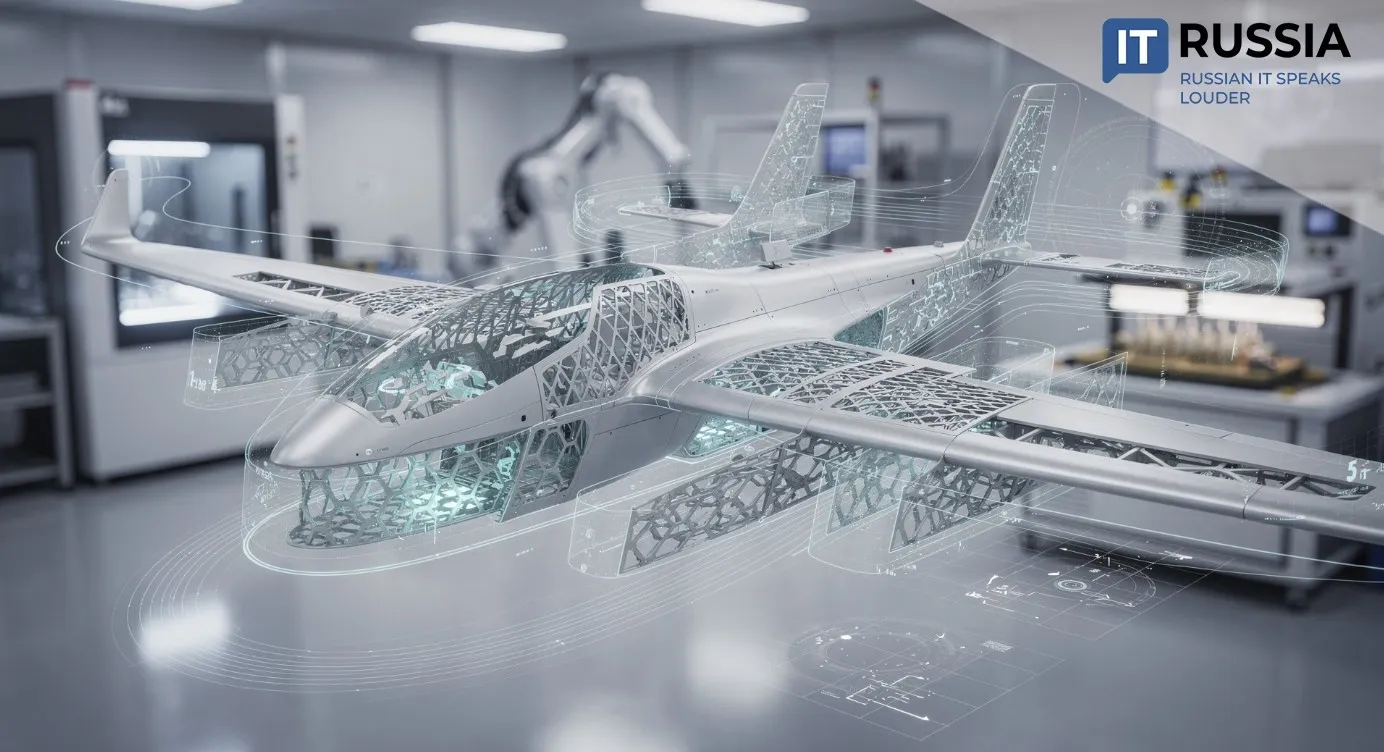
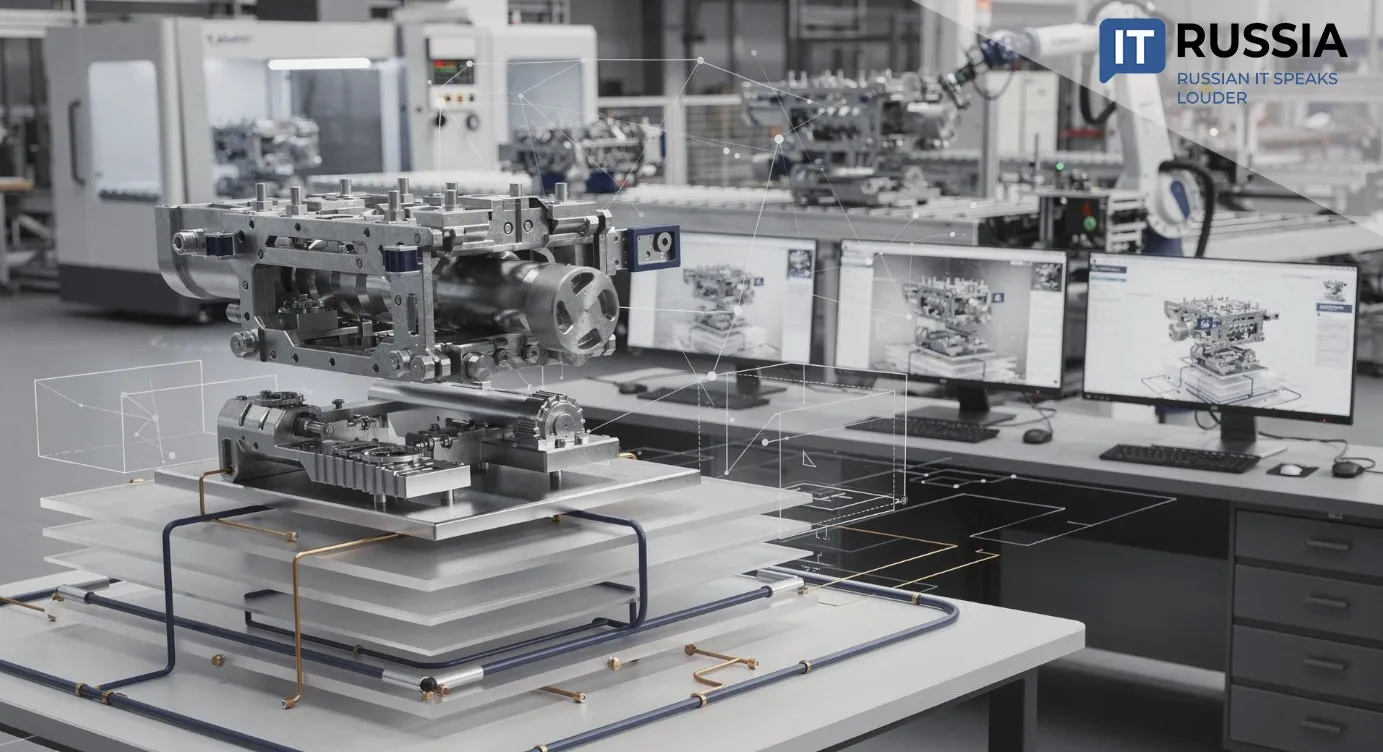
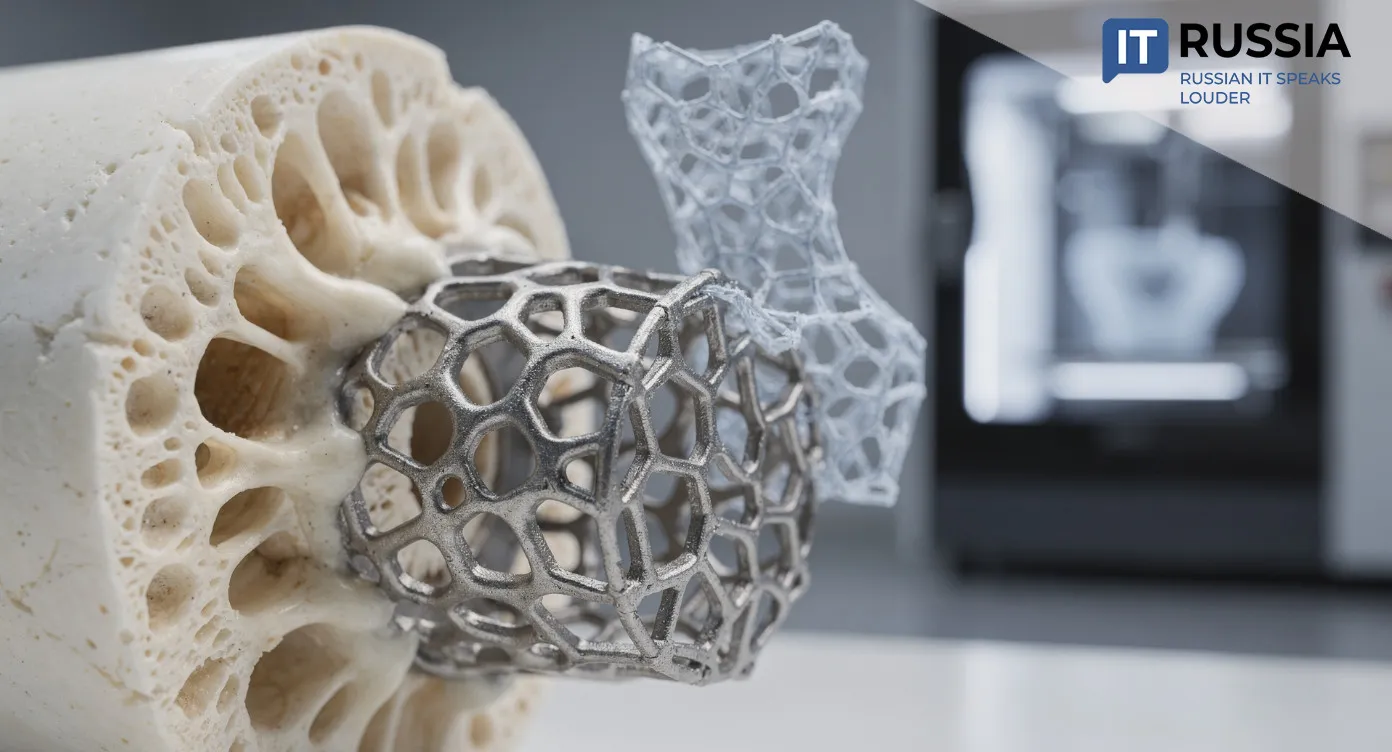
MAI has introduced a method for producing three-layer panels with an adaptive core: instead of a uniform cellular structure, cell size is adjusted to match actual loads in each zone of a component. To implement this approach, a dedicated optimization software suite has been developed. Prototype samples were produced on a 3D printer using a photopolymer composite, and their performance has been validated.
The performance gains are significant: a 20 – 30% reduction in component weight without loss of strength, along with shorter development timelines compared with conventional methods. This directly affects payload capacity, flight range, energy efficiency, and UAV production economics. The technology can be applied not only in unmanned aviation, but also in aerospace, space systems, and other sectors where weight and reliability are critical.
From Lab to Production
The export potential of the technology lies not in individual parts, but in the integrated stack: structural optimization algorithms, design software, and additive manufacturing of complex components. If MAI and its industrial partners achieve stable performance across a broader range of materials, the engineering methodology, simulation software, and digital design models could become competitive offerings in international markets.

For the domestic market, the outlook is even clearer. Russia’s aerospace and engine manufacturing sectors are already deploying additive technologies at scale: Rostekh reports serial production of additively manufactured parts in PD 8 and PD 14 engines, among other programs. MAI’s development fits into this trajectory and could become part of a broader technological transition.
Certification is the key gating factor. In 2024 – 2025, international organizations EASA and FAA held dedicated workshops on additive manufacturing, indicating that the discussion has shifted from whether the technology is viable to how to qualify it for certification and serial use.
Background
The development of additive manufacturing in Russia has been incremental but steady. In August 2025, MAI reported advances in 3D printing for aviation electric motors, achieving a 25% weight reduction in a UAV motor housing compared with conventional designs. Around the same time, Rostekh announced expanded use of additively manufactured components in serial gas turbine engines, including PD 14, PD 35, and GTD 110M. Earlier, in December 2024, a competence center for foundry production with integrated additive technologies was established at NAZ Sokol.

At the global level, the trend is even more pronounced. In June 2025, the UK government allocated more than £250 million to aerospace projects with a focus on additive manufacturing. NASA had already highlighted in 2024 the role of such technologies in reducing weight and accelerating production of aerospace structures. These developments indicate that MAI’s work aligns with a broader global shift.
Future of Lightweight Structures
MAI’s development is not just a laboratory exercise, but a step toward a mature engineering approach. It combines software, simulation, materials, and the manufacturing process into a unified system. Weight reduction in UAVs is not a marginal gain, but a core driver of platform performance.
In the near term, the technology will be tested on prototypes and integrated into pilot UAV projects. In the medium term, its application could extend to aerospace and space structures. If industrial deployment is successful, export opportunities may emerge through demand for software, engineering methods, and joint R&D projects.

If testing and certification milestones are met, what began as a university-driven development could evolve into part of a broader trend: the emergence of Russian capabilities in digital design of lightweight structures for aviation and unmanned systems.