Learning the Language of Ancestors: In Yamal, Kids Get Help Studying Indigenous Tongues
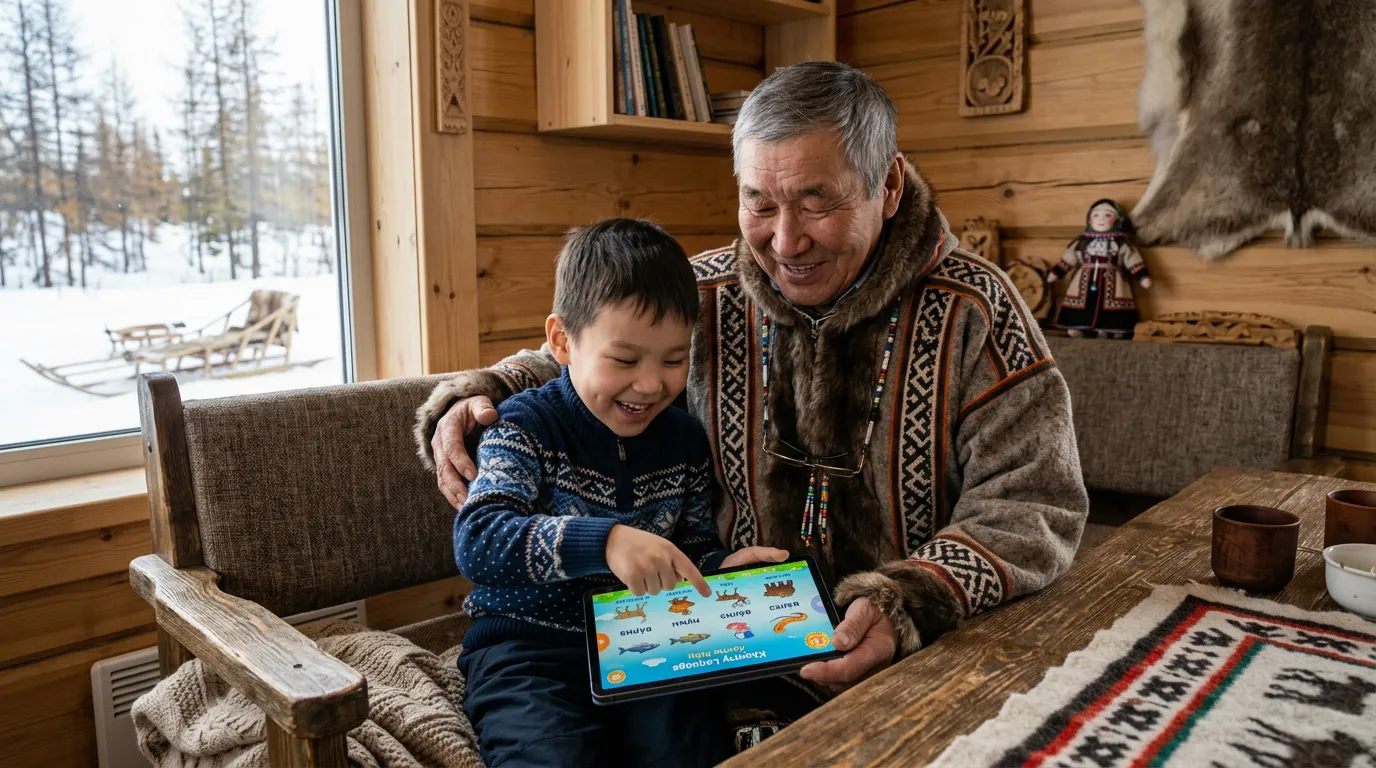
In Salekhard, developers have created a mobile app to learn the Khanty language. The app is called “Yalapkhantyposet.” The project is tied to the International Decade of Indigenous Languages, declared in Russia from 2022 to 2032.
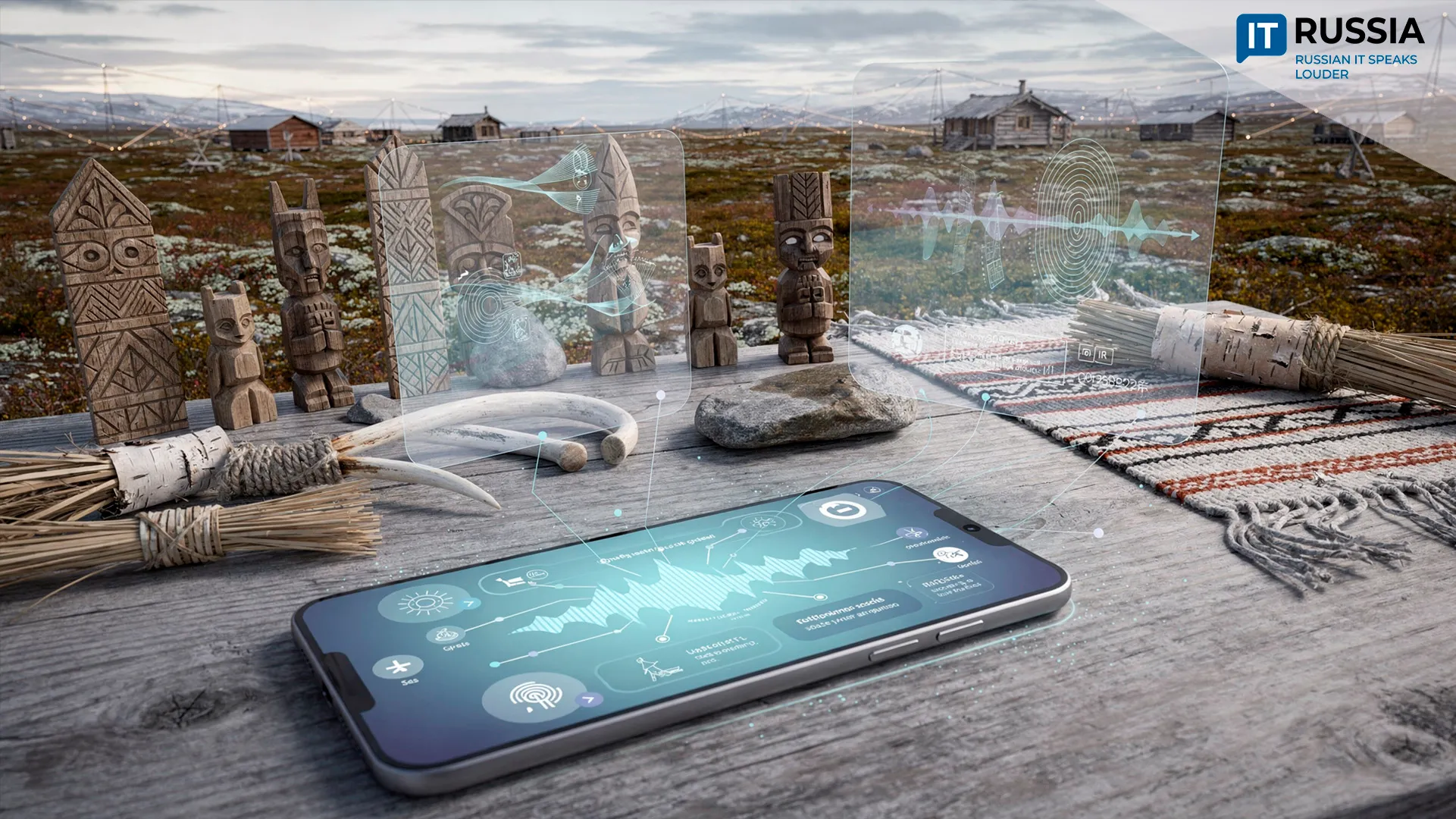
Surveys show that fewer representatives of Indigenous communities can speak their native language or pass it on to their children. Experts see this as a serious risk, one that could lead to the disappearance of both the language and the culture behind it. The nonprofit “Na yazyke serdtsa” (In the Language of the Heart) proposed a solution – a mobile app designed for both adults and children. The initiative was also driven by growing state-level attention to Indigenous cultures, with the period from 2022 to 2032 officially designated as a decade of Indigenous languages in Russia.
Built on Collected Folklore
A full team worked on the app. Its visual design was created by local artist Varvara Sermer.
The content was developed by Lyubov Vozelova, a researcher in the geoecology sector of the Earth Cryology Laboratory at the Arctic Research Center. She has long been involved in studying and preserving Khanty cultural heritage, spending years working directly with native speakers, including those who speak only Khanty.
In the Nadym district, the keepers of Khanty language and culture are people originally from the Shuryshkarsky district. Vozelova traveled there for several years on folklore and linguistic expeditions, recording how the language is actually spoken. Most of the recordings include Khanty songs and folktales. This material, collected over time, became the foundation of the mobile app.
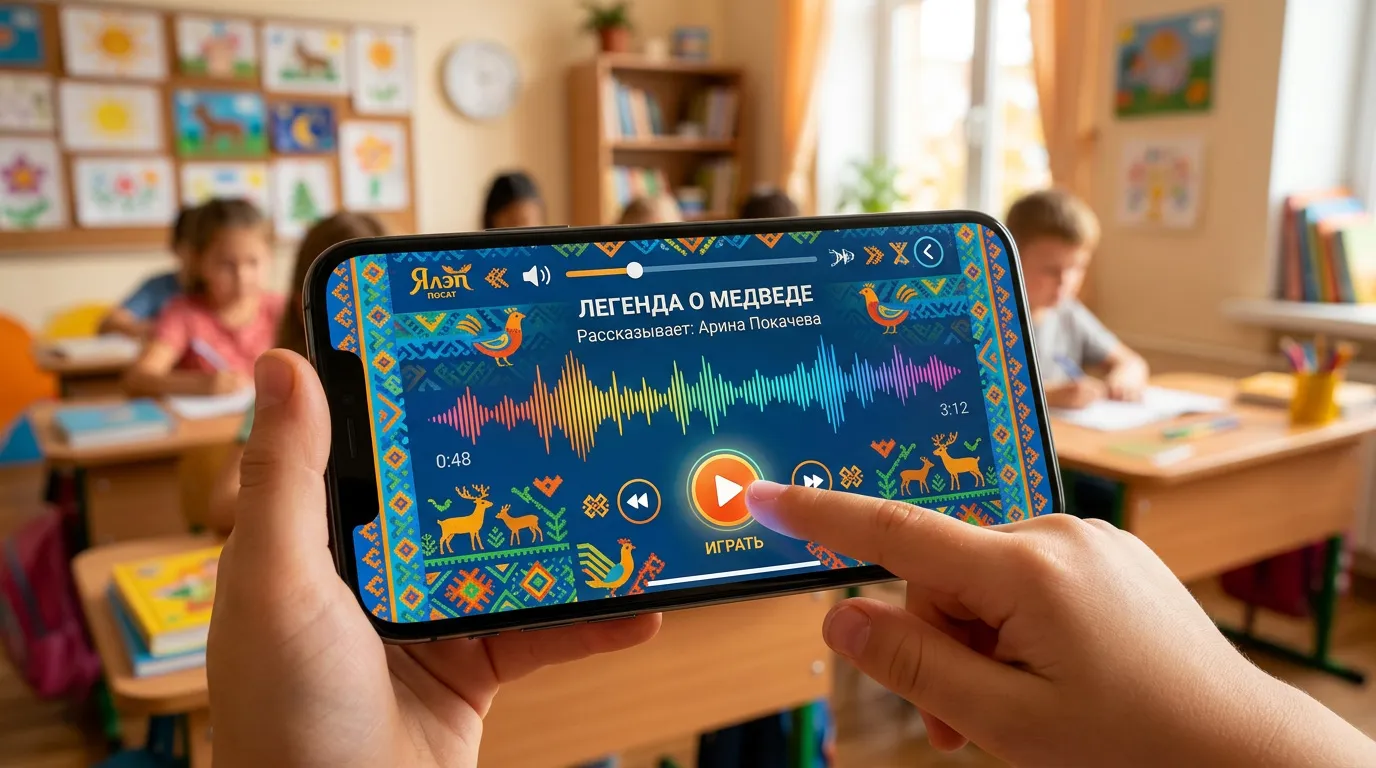
“I mostly spoke with older people, because younger generations often have a much lower level of language proficiency. Some older speakers use only their native language. I recorded their speech, stories, riddles, and songs,” said Lyubov Vozelova.
Based on these materials, the researcher created a digital folklore archive of Khanty culture that is now accessible to anyone interested.
Learning Without Classrooms
Learning Khanty is complicated by the lack of unified spelling and orthographic standards. However, there is an established alphabet for the Shuryshkarsky dialect, developed by researchers in Novosibirsk. It is scientifically grounded and already used in regions such as the Khanty-Mansi Autonomous Okrug.
The app’s creators believe that mastering the language foundation is key to preserving the culture itself. This is especially important for members of the national intelligentsia, many of whom do not speak the language but want at least a basic understanding. The app allows users to write words and sentences, read texts, and learn correct pronunciation. The app is expected to launch in the near future.
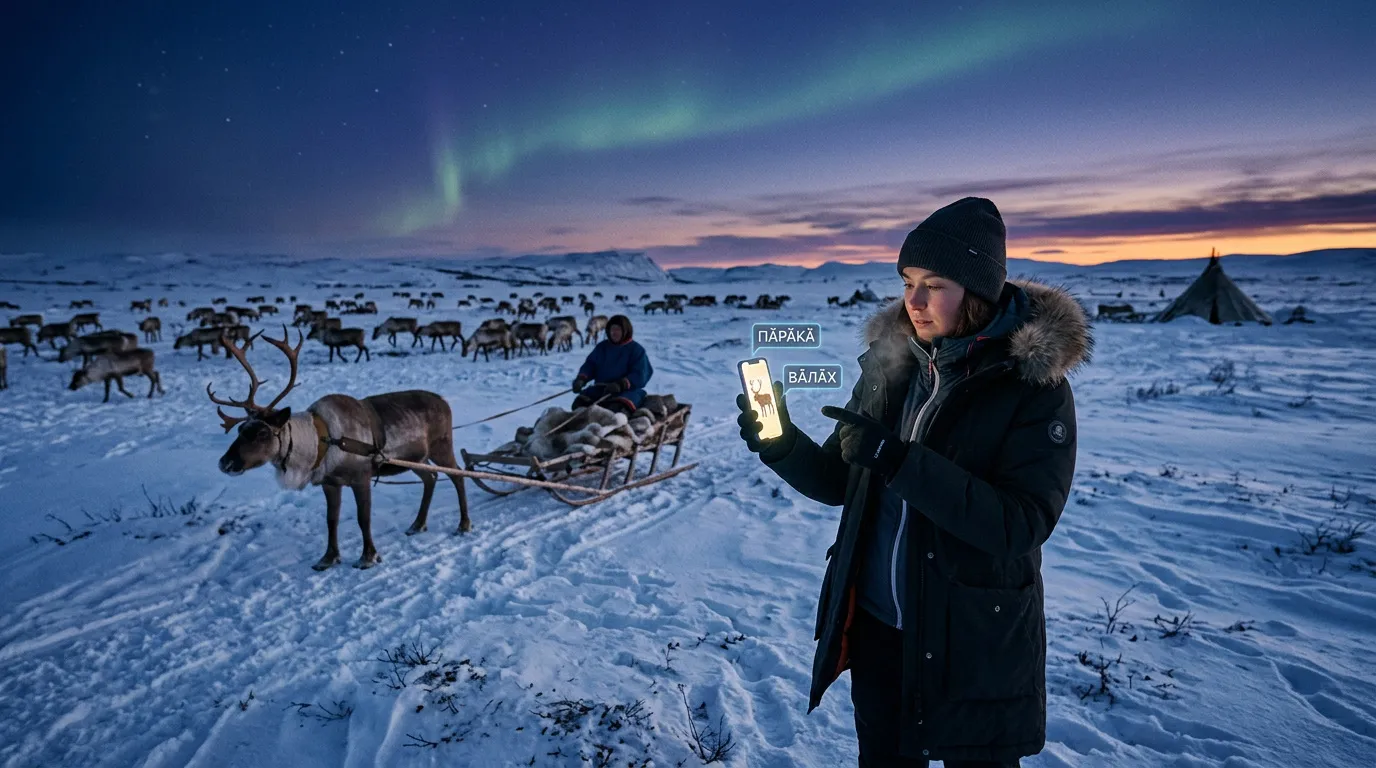
Experts say mobile apps offer a modern and flexible way to learn Khanty within families or independently, without relying on schools or formal classes. Technology removes barriers and makes it easier for anyone to engage with their cultural roots.
A National-Scale Task
Russia is home to 47 Indigenous minority peoples, and preserving their cultures is a matter of national importance. The Khanty language project serves as a strong sociocultural case study. It offers a model that other regions can adapt by building their own digital tools to preserve heritage and engage younger generations.
Interest in learning rare languages is growing across the country. In 2024, the RuStore app marketplace introduced Koryaktuyu, an app for learning the Koryak language developed by Kamchatka State University. In the Khabarovsk region, developers have created mobile apps for studying Oroch, Udege, and Negidal languages.
The market for such solutions is still small, but it is emerging as a distinct segment within Russia’s IT sector. Demand is expected to grow, and these platforms could evolve beyond language learning to cover broader cultural content, as each Indigenous group represents a deep and complex body of traditions and folklore.