


Put on REPEAT: How Rosatom and NSU Are Rebooting Engineering Education
Novosibirsk State University has launched Rosatom’s School of Modeling, a new training hub where future computational engineers learn to work on the Russian-developed REPEAT platform.

A Stage for the Next Generation of Engineers
The School of Modeling officially opened on February 16 at Novosibirsk State University, known as NSU. This is not another short-term course series. The initiative was created by AO ITTs Dzhyet (Jet, Center for Engineering and Technology), the digital division of the state corporation Rosatom. The team arrived in Akademgorodok with REPEAT – REal-time Platform for Engineering Automated Technologies – a domestically developed engineering simulation environment. That platform is the centerpiece of the project.
At NSU, the School of Modeling is designed as a bridge between academic theory and real industrial practice. Rosatom is not acting as a sponsor, but as an active architect of the educational process. The concept repositions students from passive learners to operators of complex digital engineering systems used in high-stakes industries.
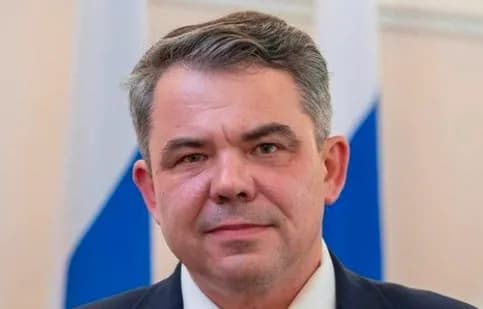
“Creating advanced industrial innovations, training top-tier specialists in technology and mathematics, and building competence centers – these and other objectives aimed at strengthening Russia’s technological sovereignty guide the development of our modeling school network,” said Sergey Bukreev, Deputy General Director for Digital Technologies at AO ITTs Dzhyet.

The project’s scope is both focused and ambitious. Students are trained as engineer-mathematicians capable of building digital twins. These are not simple 3D models. They are virtual replicas of real-world assets – from nuclear reactors to turbines – that allow engineers to simulate loads, stress, and failure scenarios without risking physical infrastructure.
A Ticket to the Engineering Future
At the core of the curriculum is REPEAT. It is a Russian CAE system for developing mathematical models of complex objects and processes. The platform calculates loads, fluid dynamics, temperature distribution, and structural strength. In the past, Western vendors dominated this segment. Now, Russian industry is prioritizing domestic technologies. The presence of Rosatom leadership and NSU administration at the launch event underscored that this is a strategic shift, not a pilot experiment.
For Russian families, the initiative represents a pathway into high-value careers. Instead of abstract theoretical training, students gain applied digital skills that can transform a recent high school graduate into a competitive, well-compensated engineer in advanced industries.

At a broader level, the project reflects an effort to align with global engineering and simulation trends while offering a distinct domestic platform. By investing in homegrown software and workforce development, Russia is reducing reliance on foreign tools and building engineering capacity tailored to national priorities.
The Dzhyet Network From Kazan to Siberia
AO ITTs Dzhyet has been building a distributed education network across the country. In 2022, the first School of Modeling opened at Kazan State Power Engineering University. That launch served as a proof of concept, testing whether deep integration between industry and academia could work at scale. Kazan became the starting point.

In 2023, the geography expanded southward. The fourth School of Modeling opened at Kuban State Technological University. This is not an isolated initiative, but a coordinated system. Rosatom and its digital division are creating a unified ecosystem. Students in Kazan, Krasnodar, Tomsk Polytechnic University, Moscow Power Engineering Institute, and now NSU are trained within the same digital twin framework built on REPEAT.
In parallel, Russian industry has experienced growing demand for digital twin technologies. Government digitalization programs have encouraged industrial plants and energy companies to adopt CAE solutions. The need for specialists who can design and operate such systems has multiplied. Combined with broader state support for STEM education, this created favorable conditions for launching the NSU School of Modeling after five years of active import substitution and workforce renewal efforts.
One Platform, One Rulebook
In the coming years, the list of Russian cities hosting modeling schools is expected to expand. Rosatom requires engineering talent nationwide, and regional training reduces the need to relocate students away from their local environments.
The labor market is also poised to shift. NSU graduates who complete the School of Modeling will leave not only with a degree, but with a portfolio of real projects completed in REPEAT. Today, the shortage of computational engineers is acute, and the school is explicitly designed to address that gap. Graduates are likely to be recruited by IT companies, defense enterprises, energy firms, and digital engineering centers.

Sergey Bukreev shares that outlook: “We believe that active and goal-oriented NSU students, future graduates of the School of Modeling, will strengthen the emerging core of professionals capable of solving nationwide strategic challenges.”


