Smart Control for Every Grain
Moscow Polytechnic University has begun developing an AI-powered control system for grain harvesters designed to reduce crop losses.
In agriculture, one of the most demanding and complex roles is that of the combine operator. It requires extensive experience and constant attention. At the controls of a grain harvester, a person must simultaneously manage at least a dozen operations.
Add to that the long working hours during harvest season, and it becomes clear that fatigue inevitably leads to errors, which in turn result in grain losses. These challenges are now being addressed by intelligent systems capable of analyzing data in real time and making decisions autonomously during operation.
Where Grain Losses Happen in the Field
Moscow Polytechnic University (Moskovsky Polytekh) has launched development of an AI-based control system for grain harvesters. The project is supported by a grant from the P. L. Kapitsa competition under the federal Priority 2030 program. The goal is to fundamentally reshape harvesting processes, with a primary focus on minimizing grain loss.
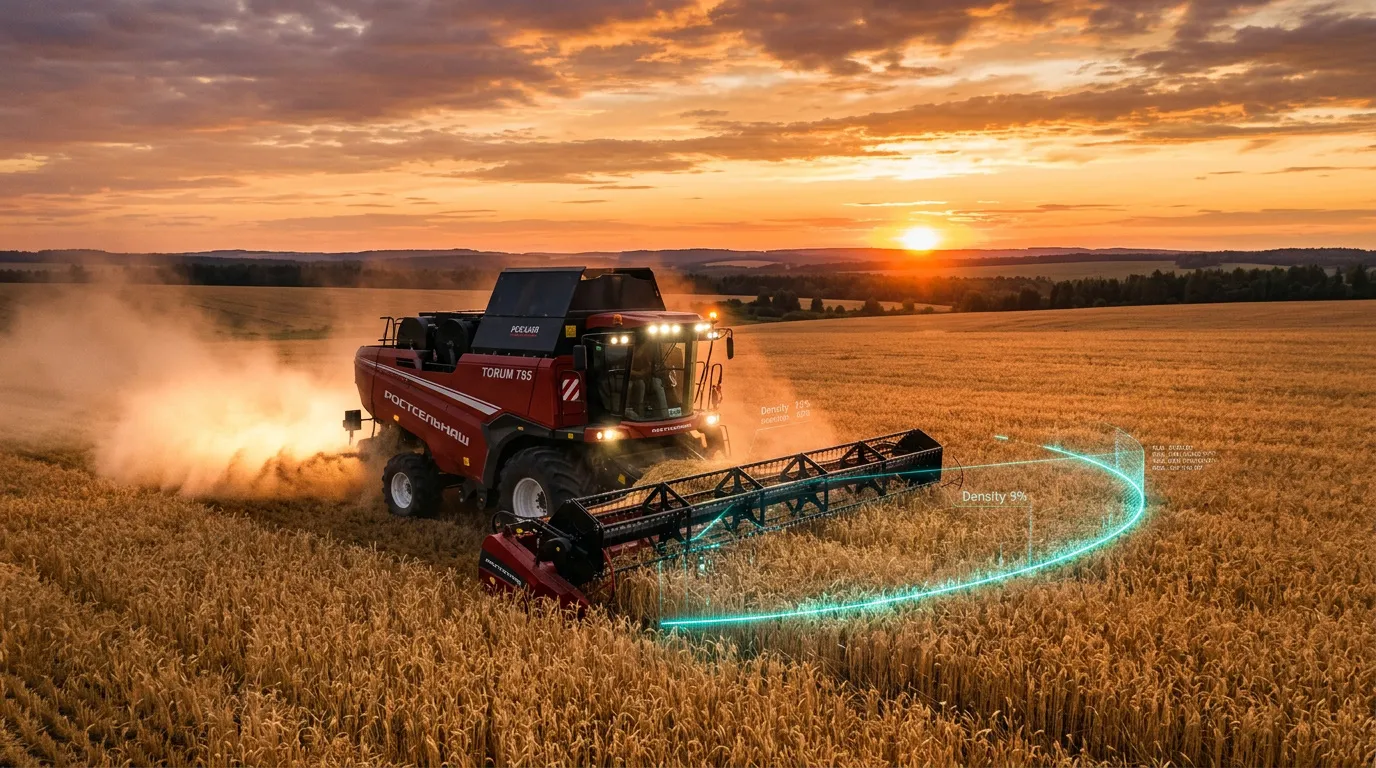
According to expert estimates, up to 6.6% of the total wheat harvest can be lost during harvesting. In practical terms, with yields of 40 centners per hectare, up to 2.5 centners can be left in the field on a single hectare. In regions like Krasnodar Krai, where yields are significantly higher, losses scale accordingly.
Most of these losses occur at the moment the cutting header contacts the crop. Grain heads grow unevenly, and terrain variations affect the machine’s tilt. Maintaining optimal settings at all times is extremely difficult. Even the most experienced operator cannot adjust parameters instantly. Decisions are often based on visual cues and intuition. Meanwhile, existing automated systems in commercial harvesters respond to changing conditions with a delay of three to six seconds, which remains too slow. In that time, the machine can travel about ten meters and lose grain. More advanced control technologies are clearly needed.
Automated Decisions in Fractions of a Second
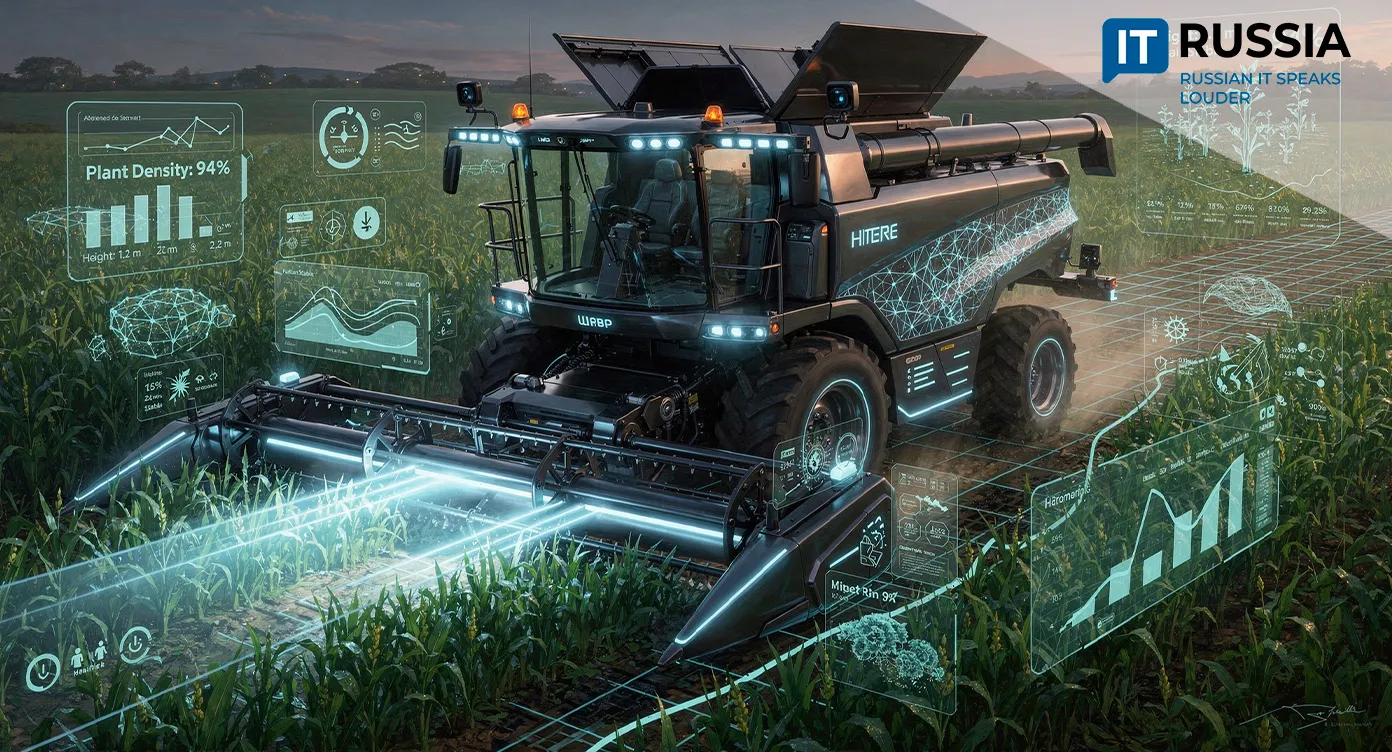
The system developed by Moscow Polytechnic is built on a neural network-based computer vision model. It processes data from an RGB camera and a depth sensor mounted on the harvester header. In real time, the system evaluates plant height, density, lodging conditions, and the volume of incoming crop mass. Based on this analysis, it generates control commands for the harvester’s mechanisms, automatically adjusting both the machine’s speed and the cutting unit’s operating frequency.
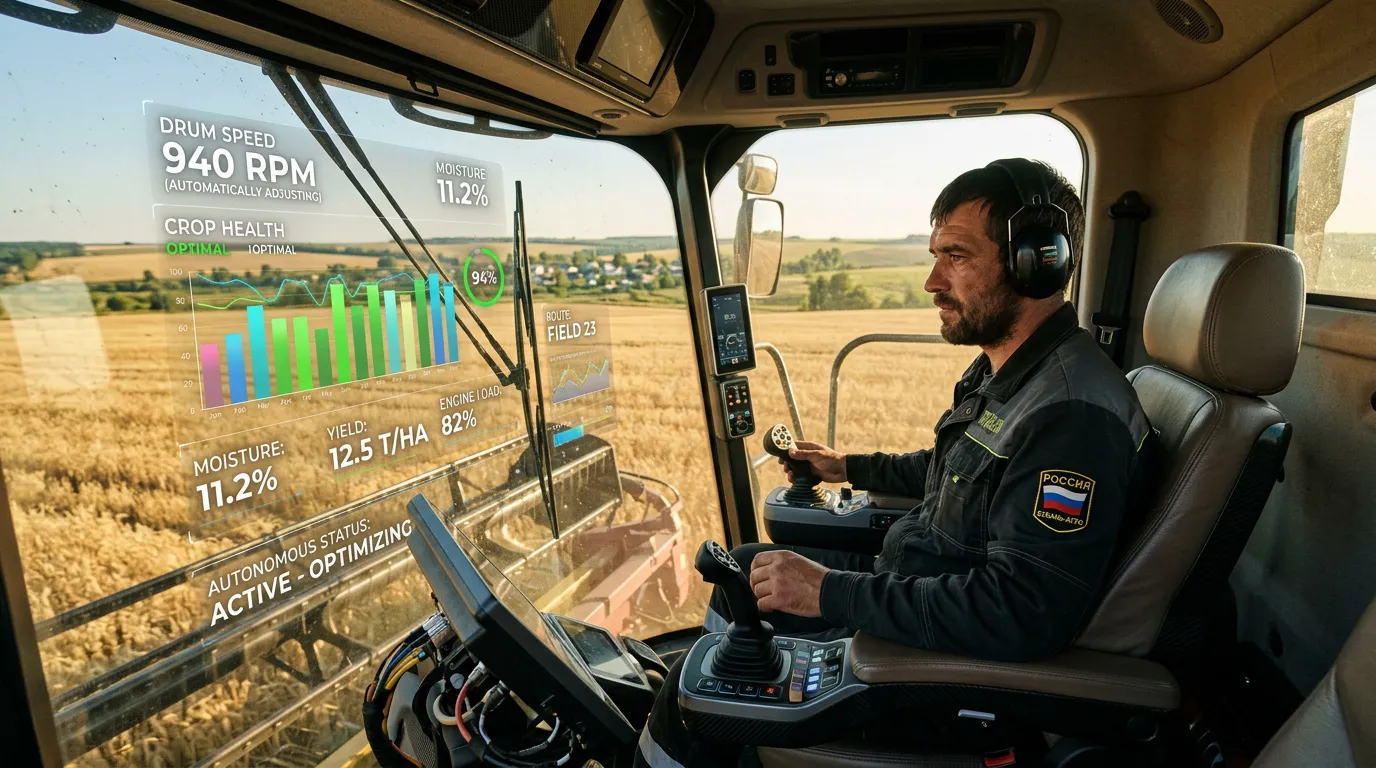
The AI system’s response speed is significantly higher than that of conventional equipment, with parameters updated multiple times per second. This reduces crop losses, minimizes grain damage, and prevents excess impurities from entering the grain tank.
The project is expected to be completed within three years. After developing mathematical and simulation models, the team will create a digital twin of the system. Following validation, a physical prototype will be built and tested on a conventionally configured grain harvester.
In the longer term, the project could serve as a platform for autonomous agricultural machinery. In practice, this means harvesters could operate around the clock without a human operator in the cab.
A New Phase of Agricultural Automation
Russia has been working on autonomous systems in agriculture since 2018. In 2019, CognitiveTechnologies, in partnership with Sber, deployed autonomous combine control systems in farms in the Tomsk region. Work on parallel driving systems is also ongoing.
Rostselmash supplies autonomous grain harvesters equipped with the RSM Agrotronic Pilot 2.0 system, designed for harvesting crops such as sunflower and soybeans without an operator in the cab. A simplified version, RSM Agrotronic Pilot 1.0, assists operators by taking over part of the machine control functions.
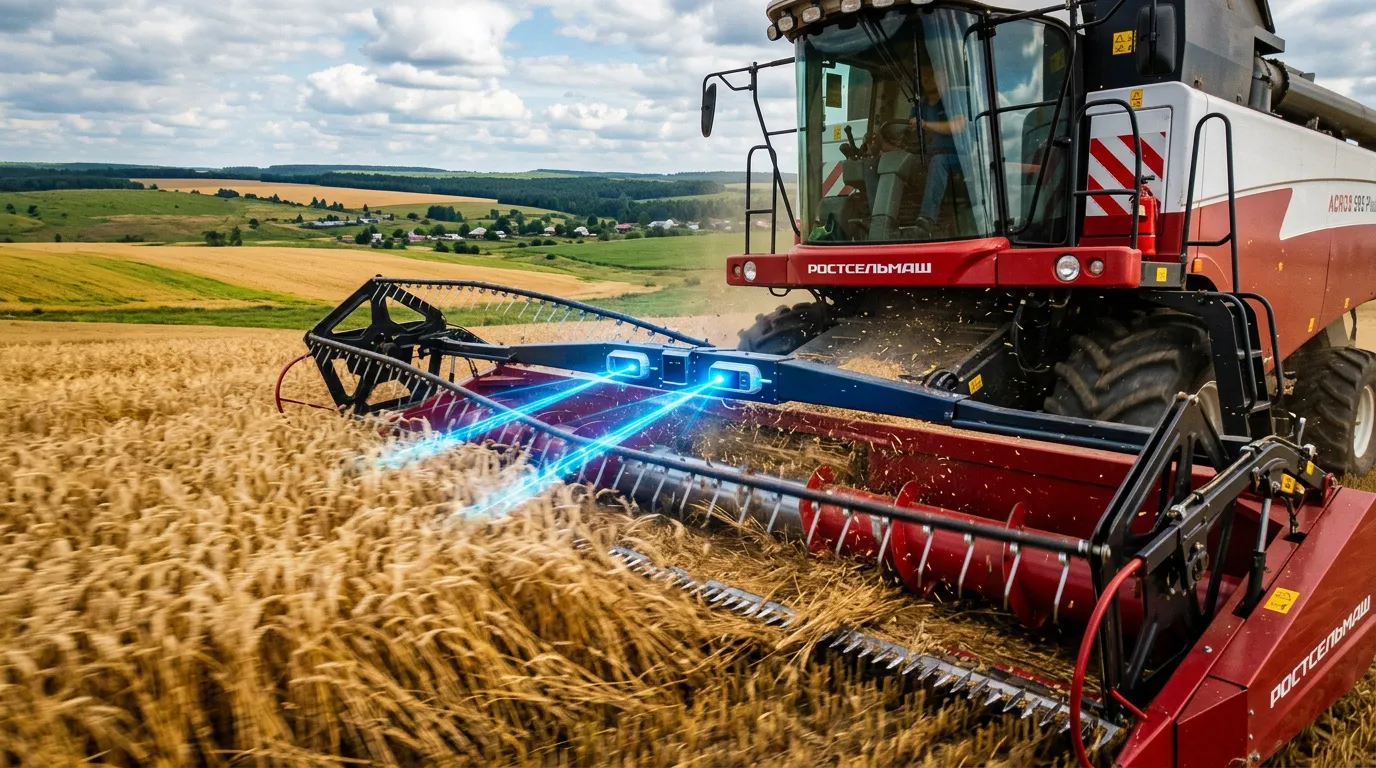
The Moscow Polytechnic system extends this technological trajectory. It enables farmers not only to guide machinery precisely across the field, but also to dynamically adjust harvesting parameters based on crop conditions. That distinction matters: harvesting efficiency depends not just on route accuracy, but on the state of the plants themselves. Russian agritech is moving beyond autopilot systems toward more advanced intelligent platforms that manage both machine movement and harvesting processes. These solutions rely on computer vision, machine learning, robotics, and industrial automation.
As a result, developers are demonstrating how AI can deliver measurable value in agriculture. The impact is straightforward to quantify: reduced losses, higher productivity, and lower resource consumption. This creates sustained demand for digital solutions across the IT sector, driven by vast farmland areas, labor shortages in agriculture, and the need for import-independent technologies.
In parallel, Russian digital control systems for agricultural machinery are already gaining traction internationally. Solutions from Cognitive Pilot have been tested in Belarus, Brazil, and South Africa. Proven AI platforms that can manage the entire harvesting process are likely to have even stronger export potential.