Classroom Control Panel: How the Moya Shkola Platform Is Navigating the Academic Year
In 2025, more than one million students in the Moscow region used the digital gradebook on the Moya Shkola platform, signaling that educational platforms in Russia have moved firmly into the mainstream.

In the School Day Flow
In 2025, the Ministry of Education of the Moscow Region summed up the results of implementing the Moya Shkola (My School) platform. More than one million schoolchildren across the region used the platform’s digital gradebook, turning the service into a mass solution rather than a tool “for advanced users only.”
“For a Russian language and literature teacher, digital textbooks on the Moya Shkola platform are an opportunity to breathe new life into classical texts and grammar rules,” says Yulia Baklanova, a Russian language and literature teacher at School No. 8 in the Stupino urban district.
The numbers behind everyday teaching confirm this scale: more than 14 million lessons conducted, 122.5 million grades recorded, and over 34 million homework assignments issued. A key indicator of real classroom adoption is that around five million homework assignments were completed in digital format. This volume shows that the platform is embedded in the daily rhythm of schools, taking over part of the routine, from recording grades to assigning work.

“A digital Russian language textbook with instant exercise checking frees up hours I used to spend grading notebooks. That time can now go toward individual work with students, deeper analysis of creative writing, or preparing engaging literature discussions,” Yulia Baklanova explains.
Will Be on the Exam
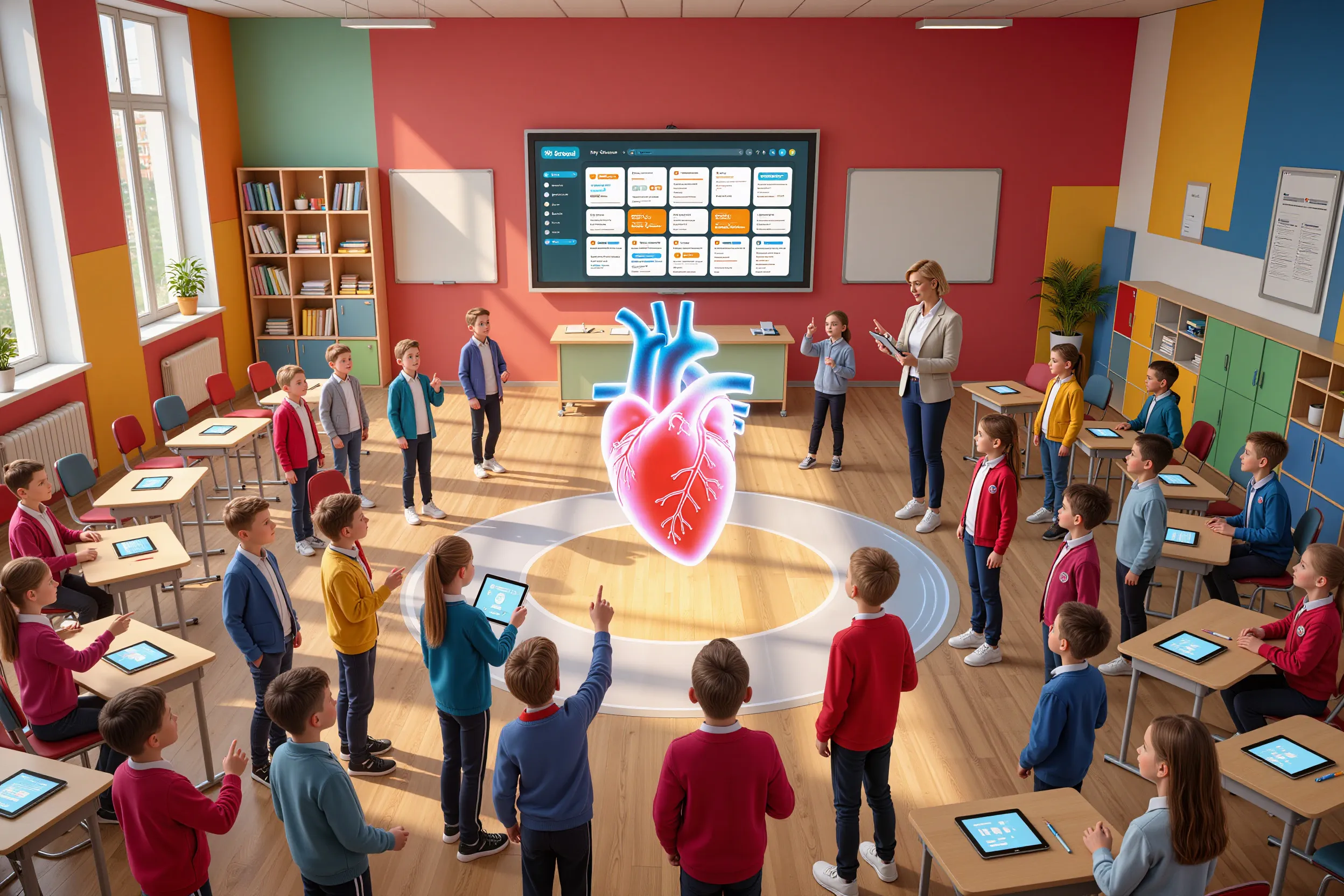
In 2025, the platform strengthened its academic content. The system now includes 41 digital textbooks for grades 5–9, featuring audio versions of chapters, video materials, and 3D illustrations. Over two years, access to digital textbooks exceeded 730,000 sessions. The most in-demand resources among teachers include Russian language textbooks for grades 8–9 and a basic-level biology textbook for grade 8. In the digital assignment section, biology and physics topics were selected most often. These textbooks are supplemented with interactive tasks, audio performances, and virtual field trips, a combination that makes lessons more visual while reducing preparation time.


The 2025 updates were targeted but significant. New icons, “Will Be on the Unified State Exam” and “Will Be on the Basic State Exam,” now highlight key topics for national assessments, making exam preparation part of a continuous path linking schedules, assignments, and topics, rather than a last-minute sprint. Parents also gained access to a “Final Grades” service, allowing them to review their child’s academic results from previous school years.

Toward a Single Window
The Moscow region arrived at its current model gradually. Since 2015, the region operated the School Portal, later announcing a transition to Moya Shkola, with full completion planned by September 1, 2024. Early system descriptions listed features that are now considered standard: a materials library with around five million instructional and methodological items, exam preparation video lessons, chats and video calls, electronic journals and gradebooks, automated content recommendations, school enrollment without in-person visits, and digital booking for school meal monitoring.
Viewed more broadly, recent years show parallel development of infrastructure and content. National development reports noted that by the end of 2021, nearly 6,500 educational institutions in 71 regions had received modern equipment, and all schools were connected to broadband internet. Large-scale resources such as the Russian Electronic School and the Sferum platform were also highlighted. On this foundation, regional solutions like Moya Shkola are no longer experimental but have become a working standard.
At the same time, more specialized products evolved. The Yandex Textbook service emphasizes materials for grades 5–11 and vocational students, offering interactive cards to reinforce theory. The Uchi.ru platform reports that 100,000 teachers actively use its tools in daily practice.
When a System Takes Root
Digital platforms in schools are becoming core infrastructure. Multimedia content, interactivity, and analytics make learning more tangible, while helping teachers spend less time on routine tasks and more on explanation and feedback. Moya Shkola has shown that such tools work not “for reporting purposes,” but in everyday use, from grades and homework to guidance on Unified and Basic State Exam topics.
Two next steps are increasingly clear: closer alignment between regional platforms through shared rules for data and content exchange, and the transfer of effective solutions into supplementary and vocational education. On the horizon is broader use of intelligent functions that can better match assignments to students and personalize learning pathways.