Smart Shape-Memory Bio-Scaffolds Developed in Russia to Aid Bone Regeneration
The biocompatible scaffolds with complex geometries are produced using 3D printing.
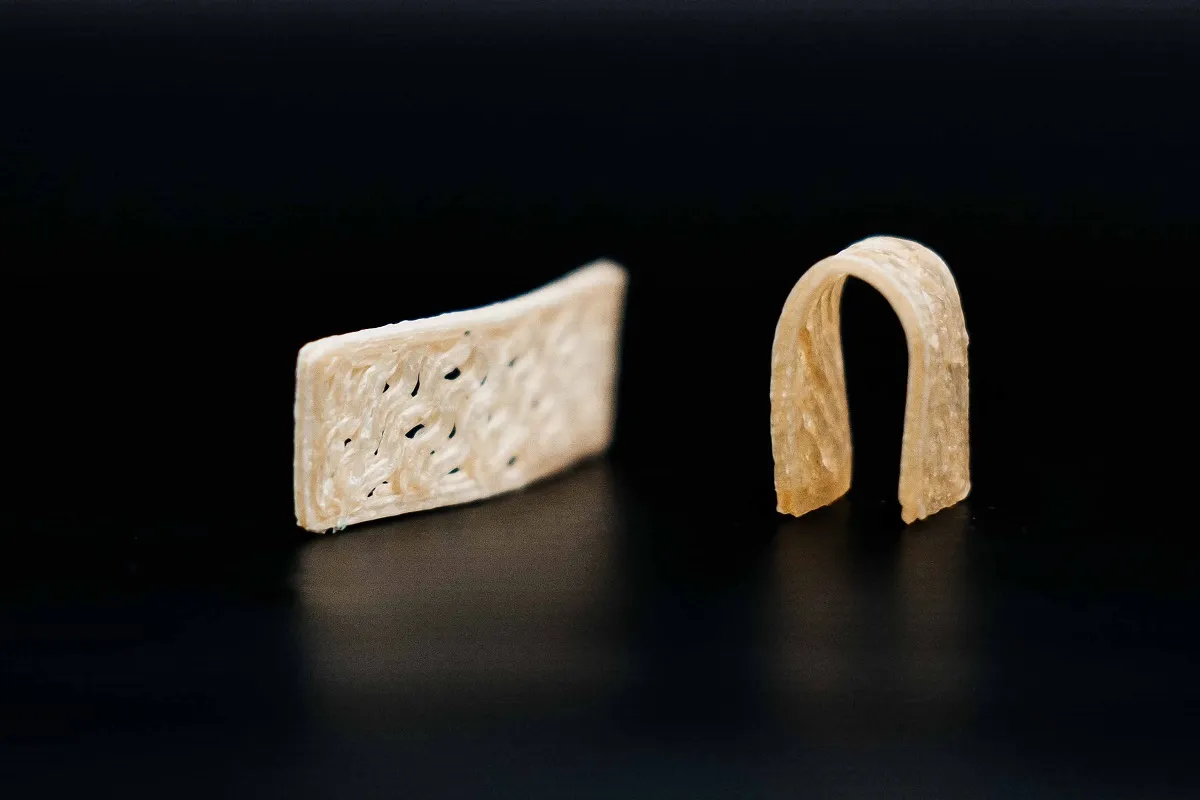
Scientists at Tomsk Polytechnic University, working with colleagues from other universities, have developed biomedical frameworks — scaffolds — with a shape-memory effect that activates at temperatures close to physiological levels.
This property makes the material promising for use in bone tissue engineering, enabling minimally invasive surgical procedures. The university’s press service told IT Russia.
“Self-Deploying” Implants
Polymer scaffolds are considered a promising material for regenerative medicine. Using 3D printing, researchers can create biocompatible frameworks with complex shapes that closely match living tissues in structure and mechanical properties. Such scaffolds support faster recovery and help maintain and restore the function of damaged tissues. In particular, they can be used as “self-deploying” implants to replace large bone defects.
Laboratory experiments showed that the scaffolds recover 97% of their original shape within six minutes at a water temperature of 40°C. This performance is enabled by the scaffolds’ specific composition and their porous gyroid structure, which ensures uniform heat transfer and water penetration, explained Abdulla bin Firoz, a research engineer at the same center.
Earlier studies were conducted at higher temperatures, as pure polylactide “remembers” its shape at around 60°C — a level unsuitable for contact with living tissues.
Memory, Strength, and Biocompatibility
Going forward, the researchers plan to study the mechanical and fatigue properties of the scaffolds under conditions that simulate loads on bone tissue, as well as conduct preclinical trials. This will help determine the optimal scaffold composition and structure, combining the shape-memory effect with mechanical strength and biocompatibility.
Earlier, we reported that an unusual orthopedic operation was performed in the Nizhny Novgorod Region, where part of a patient’s humerus was replaced with a custom-made titanium implant produced on a 3D printer, without the use of general anesthesia.