Voice Instead of a Joystick: How AI Is Advancing Russian Space Robotics
Russian engineers have developed an artificial intelligence system for the robot Teledroid, designed to perform tasks on the exterior of the International Space Station.
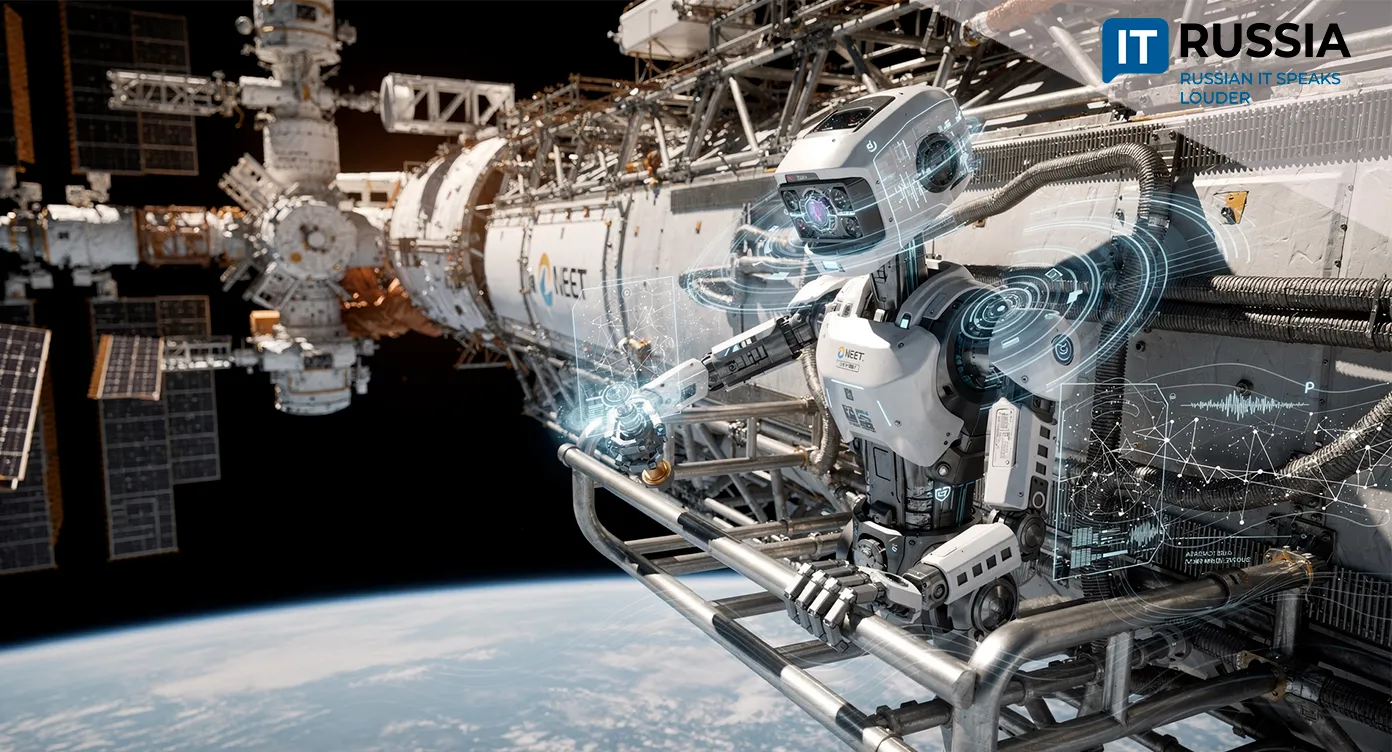
Russia’s space sector is taking a step that could reshape how humans work in orbit. Evgeny Dudorov, Deputy General Director for Production and Technological Development at Korporatsiya robototekhniki, said that an AI system has been developed for Teledroid. The humanoid machine can now process voice commands, interpret them and carry out tasks independently. Teledroid is a torso-type anthropomorphic robot, without legs, equipped with machine vision. It can operate in a mirrored mode, replicating the actions of a cosmonaut wearing an exoskeleton, or perform some tasks autonomously. A launch to the International Space Station is tentatively scheduled for late 2026.
This is more than a technical upgrade. It marks a shift from direct teleoperation to a hybrid system that combines autonomy with a natural interface. In the conditions of spacewalks, where every second outside the station carries risk, the ability to issue commands by voice and delegate routine operations to an intelligent system becomes a matter of both efficiency and crew safety.
From Fedor to Teledroid: An Evolutionary Path
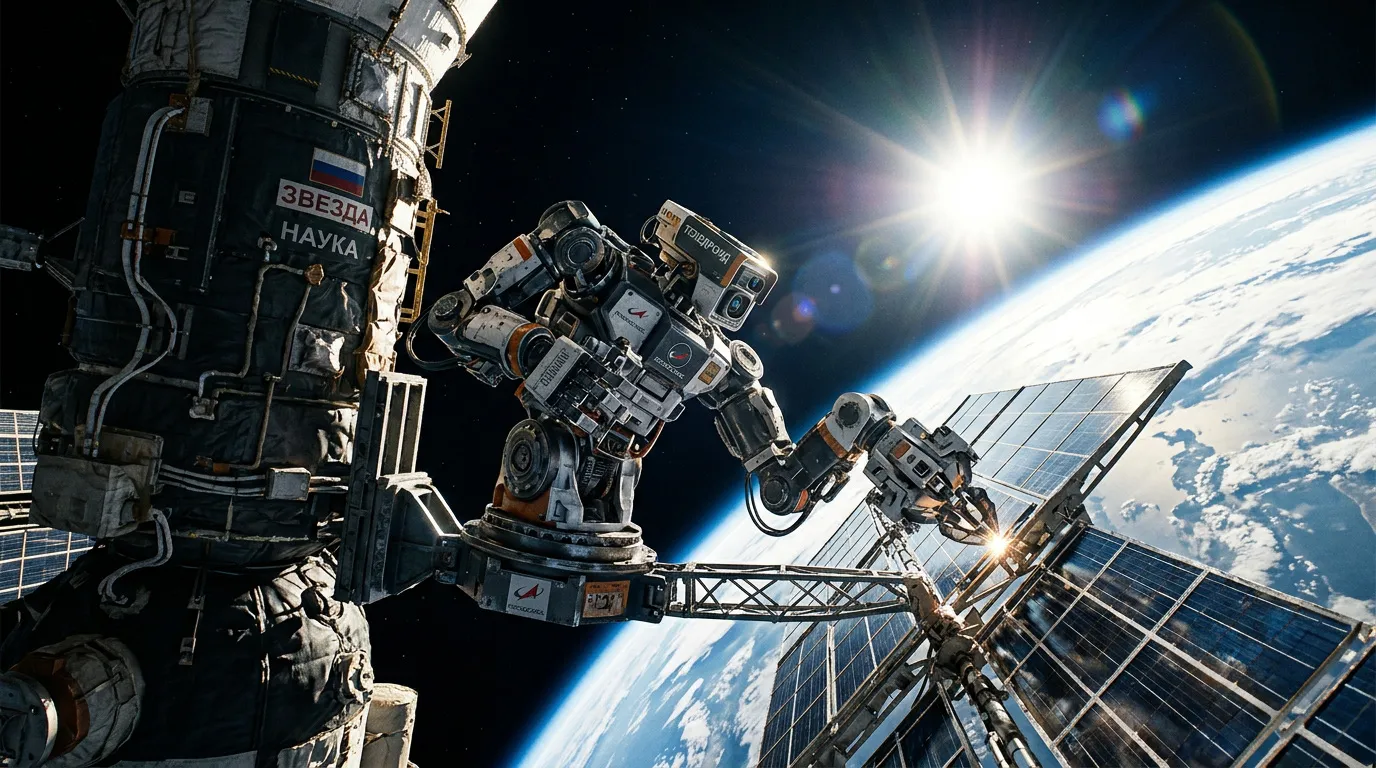
The project builds on earlier work. In 2021, Roscosmos announced plans to develop the first domestically built humanoid robot for operations in open space. At that stage, Teledroid was conceived as an “avatar” that mirrored an operator’s movements. The addition of AI extends that concept, shifting from remote control to a supervisory model in which the robot acts independently under human oversight.
An earlier precursor was the robot Fedor, sent to the ISS in 2019. Its experiments in motion replication and tool handling established a technical foundation for subsequent systems. Today, TsNIIMash and the Gagarin Cosmonaut Training Center are already training crews with a flight-ready Teledroid unit. The project has moved beyond concept into applied deployment.
Space as a Testbed for Terrestrial Technologies
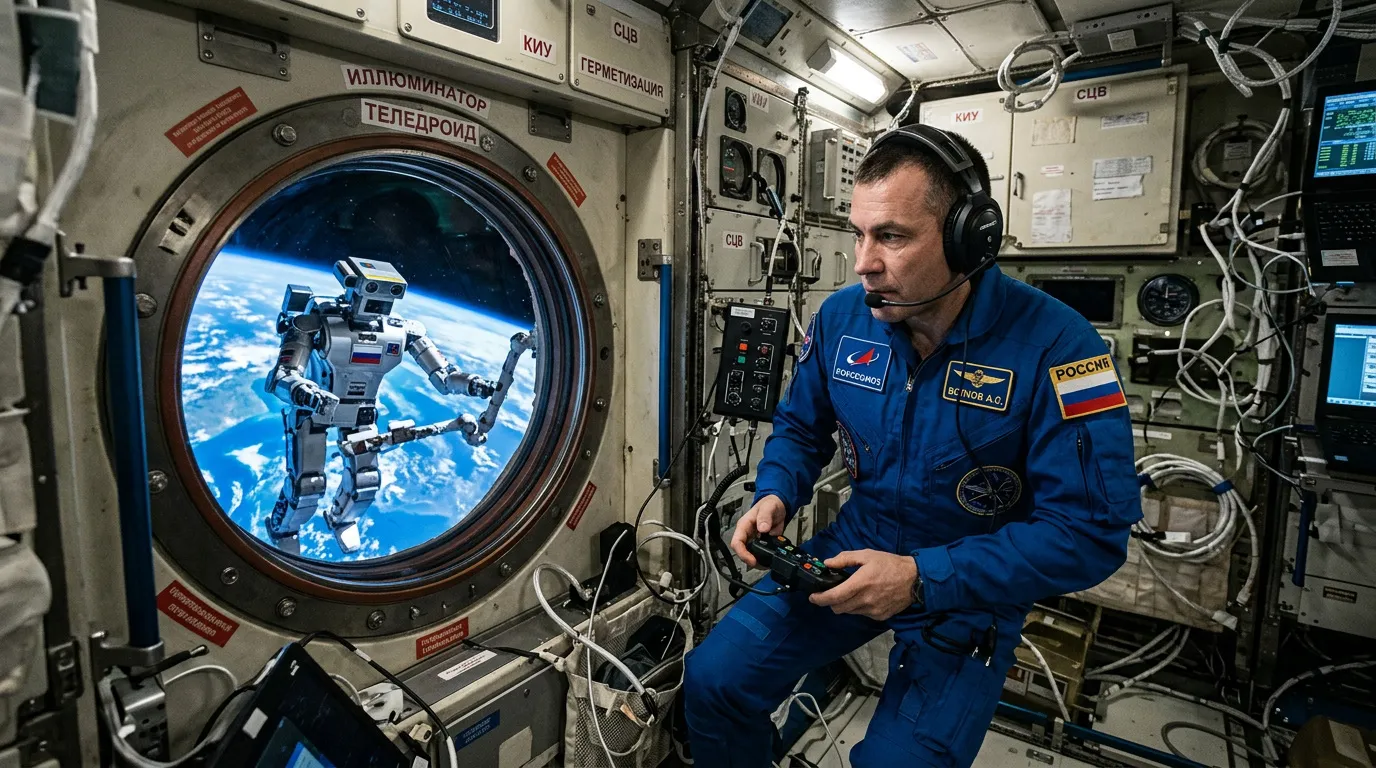
Teledroid will not directly affect everyday consumer life. However, the technological impact could be significant. Advances in machine vision, voice interfaces, hardened electronics and autonomous behavior in extreme environments are likely to transfer into civilian sectors.
Industries such as industrial robotics, nuclear energy, oil and gas, emergency response and medicine could all benefit from capabilities refined in orbit. NPO Androidnaya tekhnika and its partners are already positioning these systems as part of a broader portfolio for terrestrial applications.
A Russian Approach to a Global Trend
NASA is currently developing the Astrobee platform on the ISS, a set of free-flying robotic assistants for internal station operations. The Russian approach differs in its focus on external tasks and an anthropomorphic design tailored to human tools and infrastructure.
If the ISS experiment proves successful, Russia could demonstrate a working model that integrates cosmonauts, AI and robotic systems for extravehicular operations. For future plans involving a Russian orbital station and lunar missions, this capability is critical. In deep space, where signal delays make real-time teleoperation impractical, autonomy becomes a requirement rather than an advantage.
From Orbit to the Moon and Back to Earth
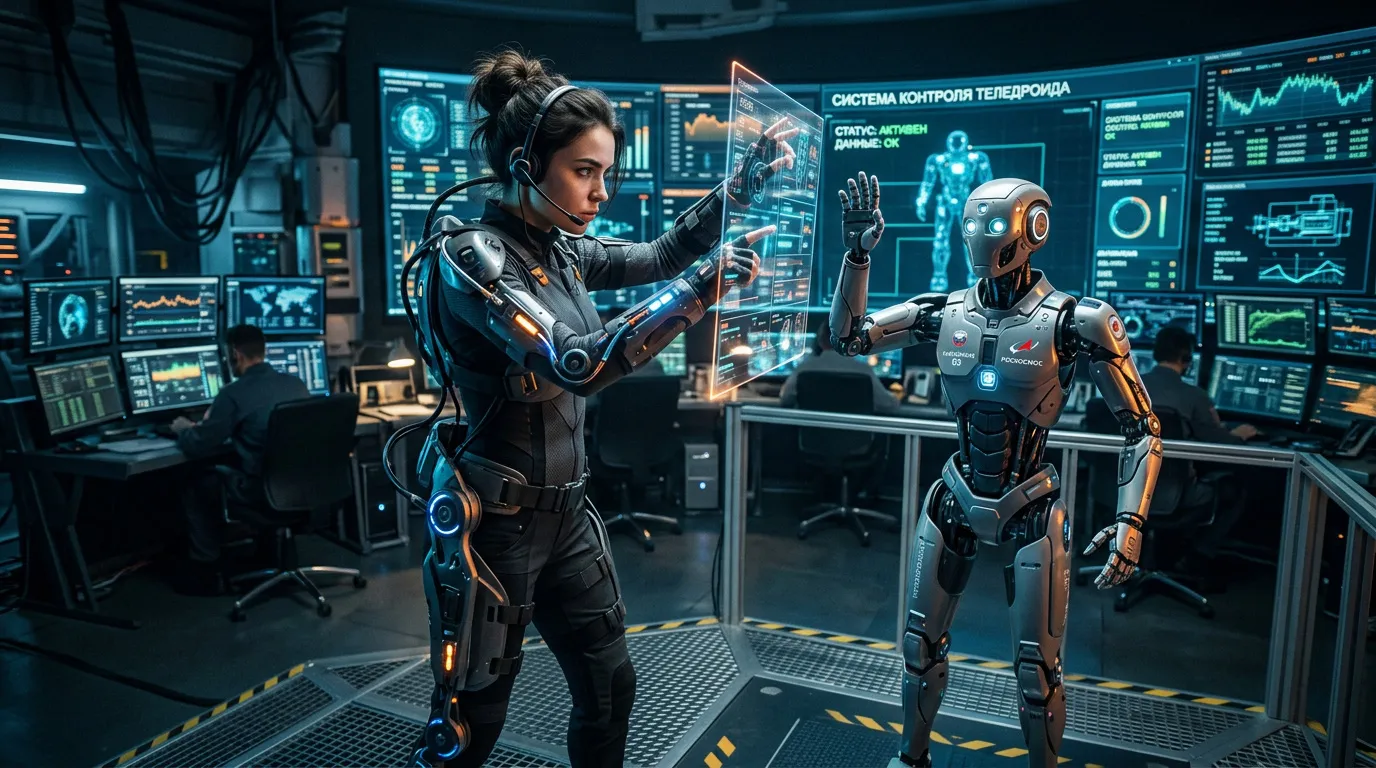
The immediate goal is to test voice-driven and supervisory modes on the ISS in 2026. If successful, the next phase will involve expanding functionality and adapting the system for future Russian orbital infrastructure.
Over the longer term, Teledroid could serve as a prototype for robotic systems in lunar exploration. At the same time, it may generate technologies for terrestrial industries, where reliability proven in space carries significant weight.
For now, Teledroid is not a commercial product but a strategic technological groundwork. Yet such systems tested under extreme conditions often define leadership in high-tech sectors.