Flying Sprayers Help Greenhouses Beat the Heat
Russian drone technologies are now being deployed to handle complex and hazardous maintenance tasks in controlled-environment agriculture, reducing costs and improving operational efficiency.
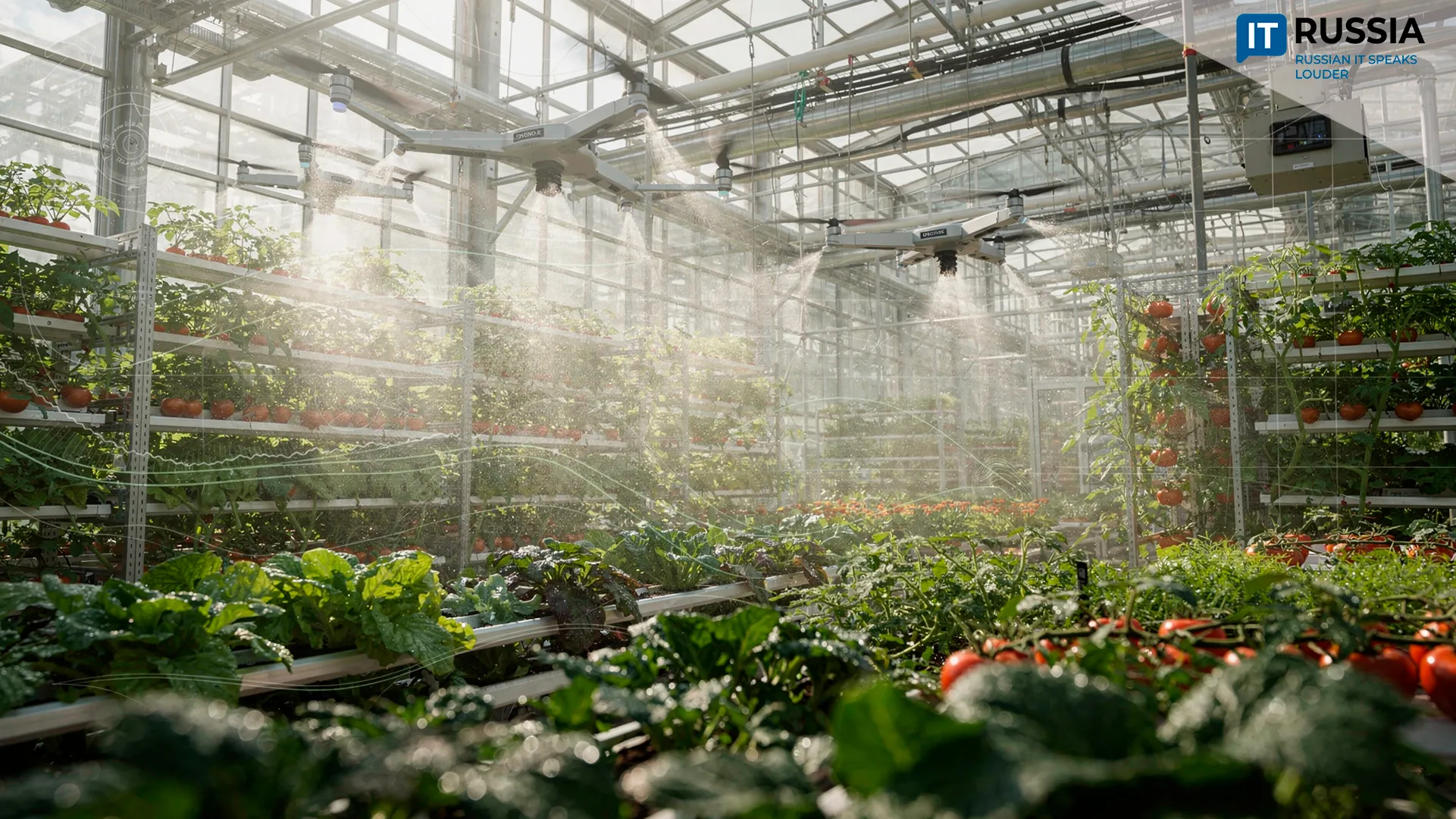
Digital technologies are making it possible to replace manual labor in complex high-altitude tasks that are both risky for workers and costly for operators. Over time, greenhouse maintenance is expected to shift toward intelligent drones and automated ground systems.
Protecting Greenhouses from Heat and Rust
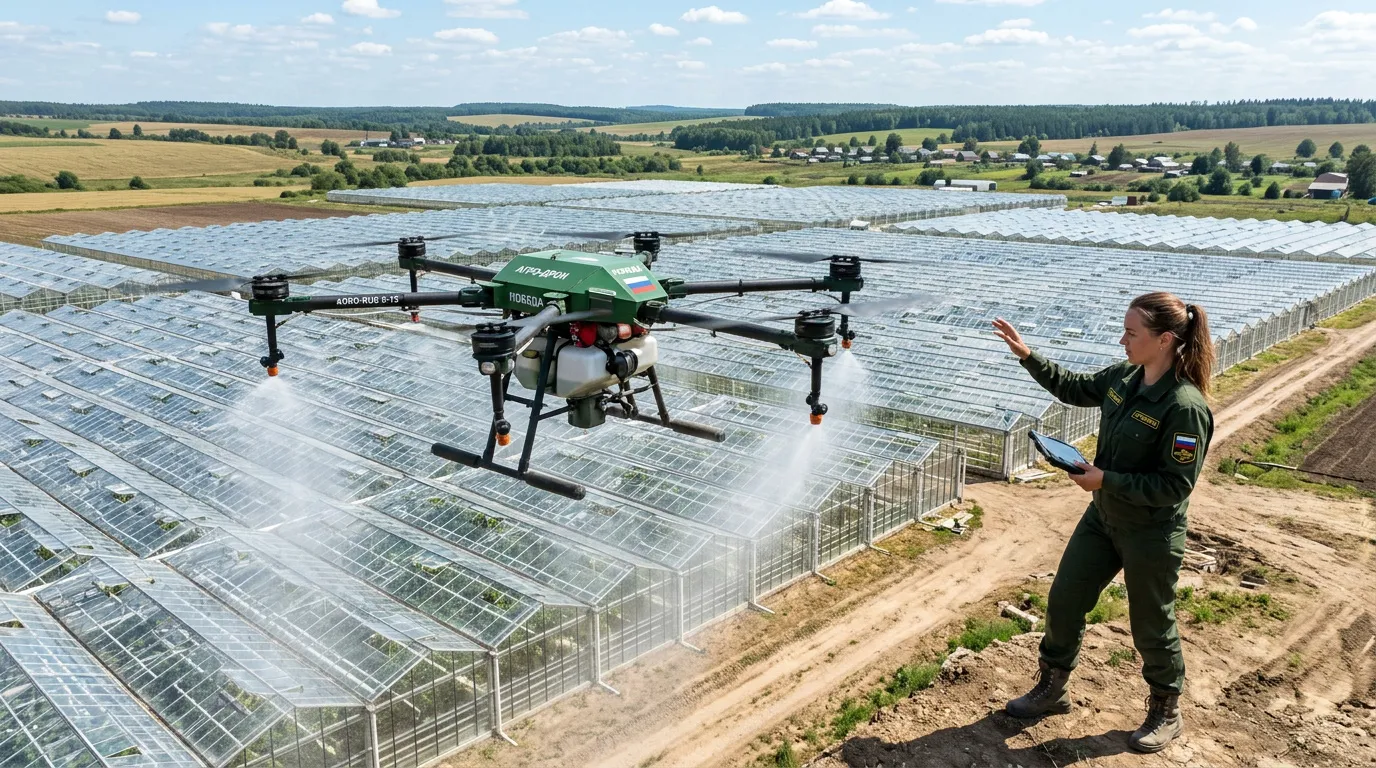
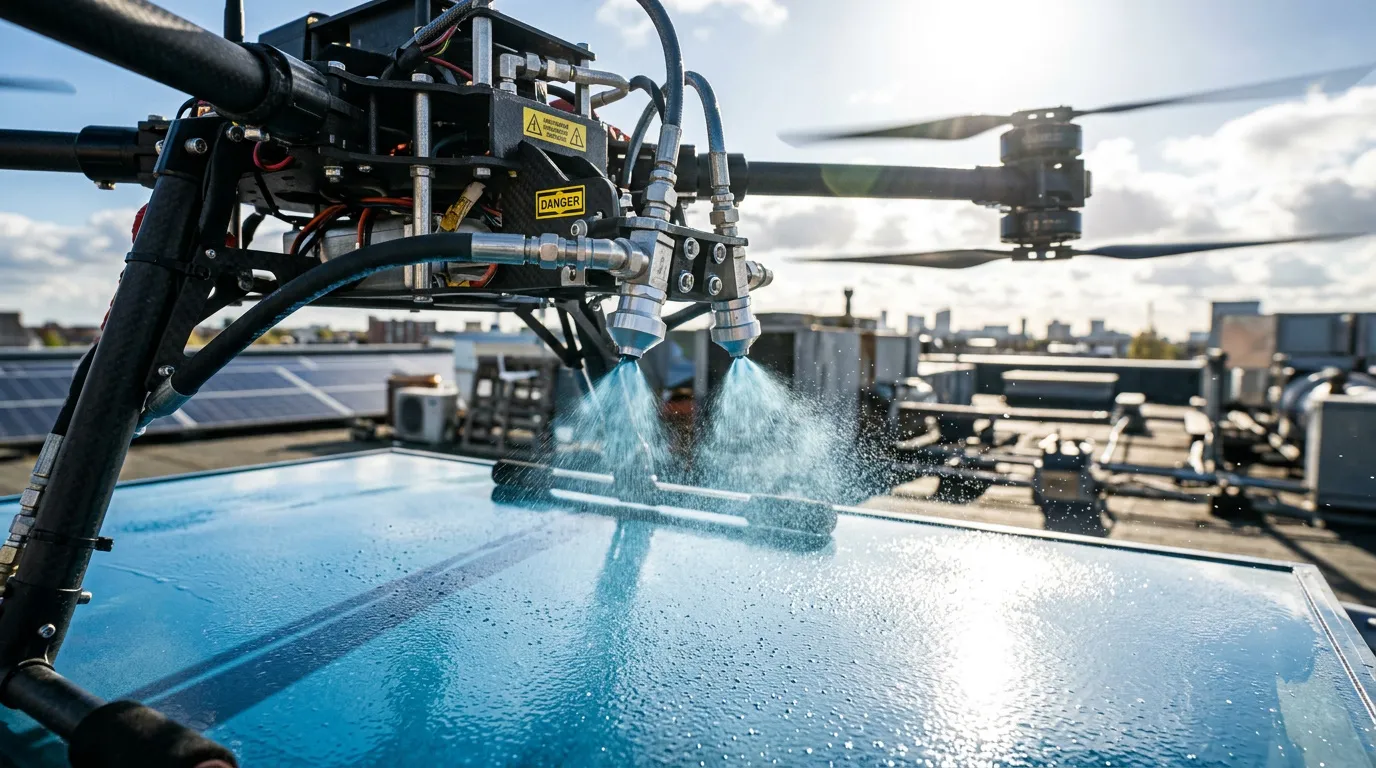
In the Gagarinsky District of the Saratov Region, drones were used for the first time in Russia at the Vesna greenhouse complex to apply light-diffusing coating to greenhouse structures. This is a critical operation.
A greenhouse is a complex system that requires consistent maintenance to ensure long-term, efficient operation. Coating or painting greenhouse surfaces protects both the structure and the crops from overheating during summer months, while also serving sanitation and protective functions. For example, untreated metal components can begin to degrade within three seasons. At the same time, painting is highly labor-intensive, as greenhouse areas often span multiple hectares. With structures frequently exceeding 8 meters in height and incorporating glass or plastic elements, the work also poses significant safety risks.
That is why the pilot project in the Gagarinsky District is important for the entire sector. The Volga UAV Center, working with regional agricultural specialists, used drones to coat an entire hectare of greenhouse structures in a short period.
Experts report higher coating quality when drones are used, as the material is applied more evenly. The speed gains are even more striking – the work was completed 50 times faster than with manual labor. Notably, the coating material used in the pilot was produced domestically.
Becoming Part of the Production Process
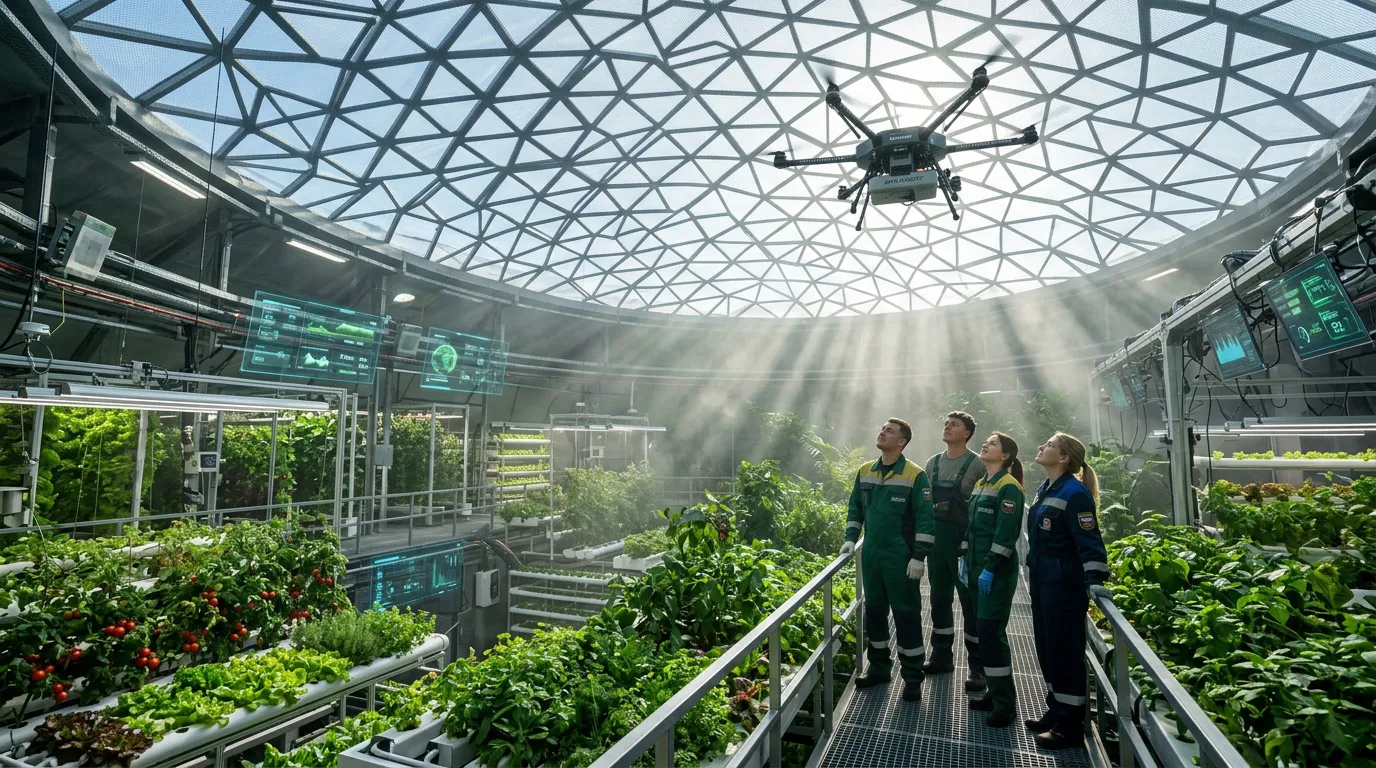
The pilot is expected to scale, with drones set to be deployed at additional greenhouse facilities. Given the size of modern greenhouse operations, UAVs are becoming an integral part of the production process. They allow critical maintenance tasks to be carried out precisely when needed – at the start of the summer season – helping protect young plants from heat stress.
It is also important to note that greenhouse maintenance involves a wide range of similar tasks. At the end of the season, coatings must be removed, while in winter, darker coatings are applied to allow ultraviolet light penetration while retaining heat. This reduces energy consumption for heating and lighting.
Since greenhouses require ongoing anti-corrosion and antifungal treatment, drones can operate year-round. Once one task is completed, they can immediately move on to the next.
Part of a National Strategy
UAV technologies create a new segment in agriculture and directly support the national project “Unmanned Aerial Systems,” which focuses on deploying civilian drones in agriculture, forestry, and other sectors.
Expanding the use of unmanned systems is now one of the key priorities for the agricultural sector. On April 1, 2026, Agriculture Minister Oksana Lut chaired a meeting to discuss the adoption of UAVs, self-propelled machinery with autopilot functions, and the development of fully autonomous agricultural equipment. Lut emphasized that scaling UAV deployment and autonomous machinery is one of the most effective ways to improve efficiency and reduce production costs. The Ministry of Agriculture has announced plans to develop a roadmap for expanding the use of UAVs and semi-autonomous machinery, as well as advancing fully autonomous agricultural systems.
Drone Manufacturing and IT Growth
Once the pilot in the Saratov Region confirms its economic viability, the Russian UAV market is expected to gain a new segment – service solutions for greenhouse operators.
Meanwhile, the initiative will drive demand for components and accelerate growth in Russia’s IT sector. New drone platforms will be required, along with software for route planning, weather integration, coverage control, computer vision for quality assessment, telemetry processing, and data analytics. In the future, these systems will need to integrate with smart greenhouse management platforms, where agricultural drones will play a central role. As a result, the project could help establish technological independence in greenhouse maintenance services.
On the international market, integrated solutions may prove attractive, combining Russian drones, software, application methods, and domestically produced coatings. From this perspective, export opportunities are strongest in countries with rapidly developing controlled-environment agriculture sectors.