Russia’s Tax Authority Rewires Its IT Platforms
Russia’s Finance Ministry and the Federal Tax Service aim to stabilize budget revenues by bringing more economic activity out of the shadows and improving tax administration. To support that shift, they are rolling out new digital control tools.

Speaking about priorities for the year, Anton Siluanov, Finance Minister of the Russian Federation, stressed the need to maintain steady tax inflows without adding administrative pressure on businesses. At the same time, the government plans to target tax evasion and companies operating in the shadow economy. The mechanisms for that – including digital ones – are already designed, and their rollout timelines are defined.
Digital Control
Russia is moving tax administration away from after-the-fact audits toward a preventive model built on predictive analytics, where data is collected before transactions occur. This shift has been underway for several years, but it is accelerating in 2026. In practice, the legal framework needed to integrate businesses into a unified state digital ecosystem is already in place.
Stable budget inflows now depend not only on tax rates but also on deep integration between business systems and government IT platforms. These platforms support electronic document exchange, automated data sharing, and risk modeling. As a result, the tax authority’s KPIs are increasingly tied to the performance of these digital services in real time.

System Reconfiguration
Plans for 2026 include launching several new mechanisms. One key change affects SPOT (Sistema podtverzhdeniya ozhidaniya tovarov – shipment pre-notification system). Starting July 1, importers bringing goods by road from the Eurasian Economic Union will have to notify tax authorities in advance. Then, from October 1, they will be required to place a security deposit.
Meanwhile, automated audits and full traceability across transaction chains are becoming core tools of fiscal policy. Businesses will need to adjust their accounting and ERP systems to integrate with the Federal Tax Service. That shift is likely to drive demand for IT solutions, including integration tools and electronic document exchange platforms. Once proven domestically, this tech stack could move into export markets – particularly in EAEU countries and in economies modernizing their fiscal systems.
Evolution of the Digital Fiscal Framework
The national goods traceability system, NSPT (Natsionalnaya sistema proslezhivaemosti tovarov – national goods traceability system), introduced in 2021, initially tracked imports from the moment they crossed the border. SPOT extended that model in 2025 and now pushes it further. In effect, tracking begins while goods are still located at the supplier’s site abroad, even though they are already visible to Russian information systems.
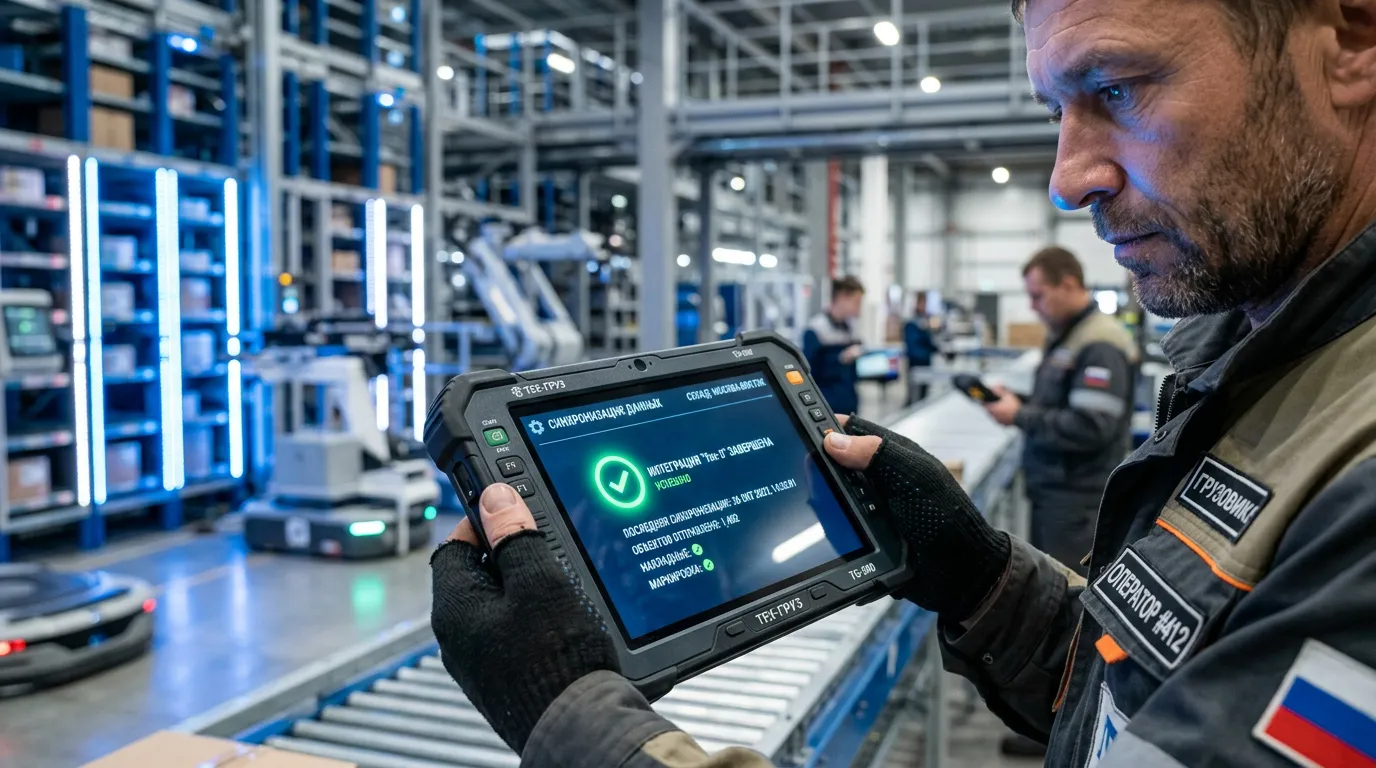
Full transparency is also supported by the tax monitoring system. While 569 large companies were connected in 2024, that number reached 876 by January 2026. These companies provide tax inspectors with real-time online access to their accounting data.
Marina Krasheninnikova, Head of Tax Monitoring at the Federal Tax Service of Russia:
“Participation in tax monitoring is becoming a core element of digital development and risk management strategies for large businesses. To reduce costs, we are automating processes: more than 70% of participants have connected to AIS ‘Nalog-3’ with seamless data exchange.”
AIS “Nalog-3,” launched in 2023, runs entirely on Russian software. It enables automated data processing and real-time updates across the system.

Budget Stability as a Product of Digital Governance
Russia’s tax system shows how governments can build large-scale digital platforms for predictive control, traceability, legally significant data exchange, and integration with business software. At the same time, these tools make compliance easier for legitimate companies while narrowing the space for gray-market practices.
That digital evolution supports stable budget revenues. In turn, it enables predictable funding for social programs, regional initiatives, infrastructure, and public services. Russia is steadily reducing the share of shadow economic activity, creating more transparent competition for compliant businesses and supporting healthier economic growth.