


Digital Audit as a Tool of Trust: Russia’s Audit Chamber Brings AI Into Oversight
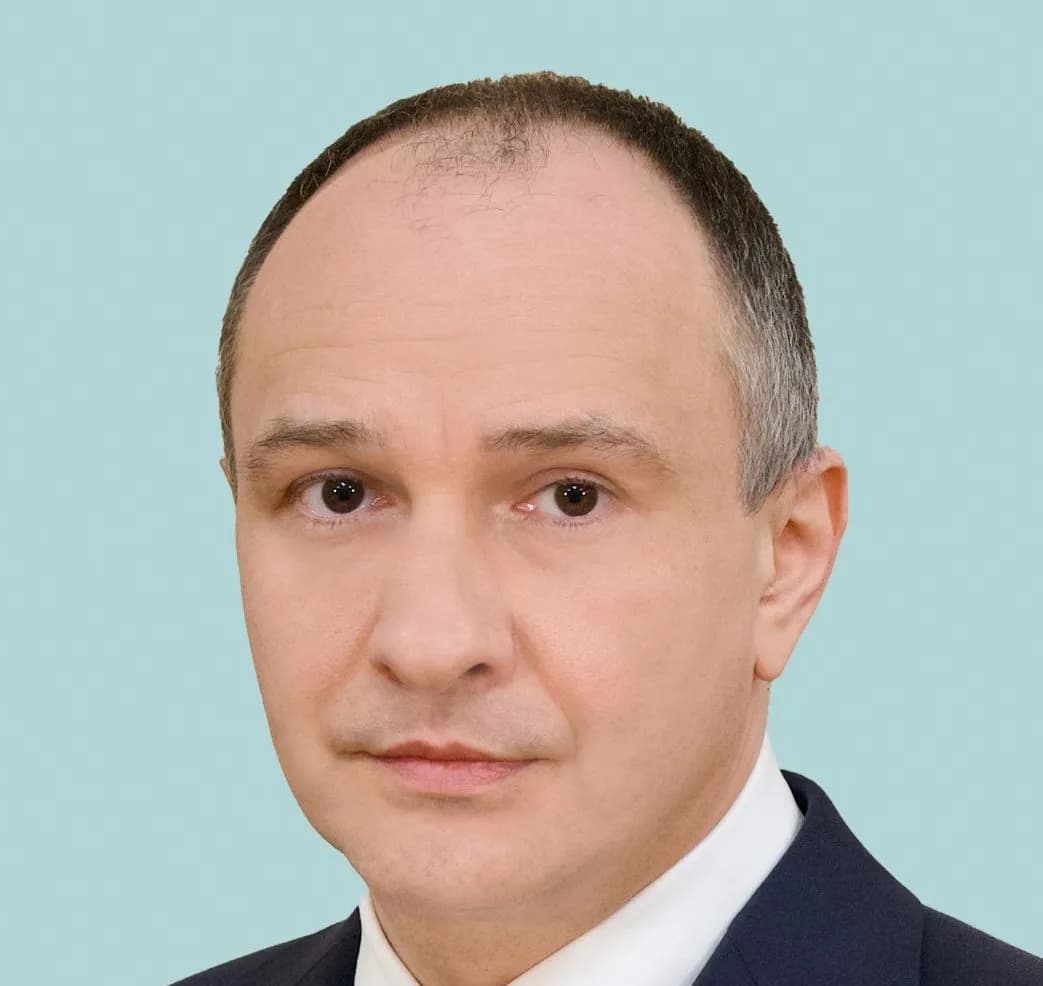
Summing up the results of 2025, Chairman of the Accounts Chamber of the Russian Federation Boris Kovalchuk outlined a new strategic direction for the institution. The focus is on digital audit, big data analytics, and the use of artificial intelligence to improve oversight of national projects and government programs.

Entrusting Terabytes of Data to Algorithms
Historically, audit activity in Russia has been rooted in retrospective control – document checks, report analysis, and post-factum identification of violations. But in the context of large-scale national projects spanning the economy, healthcare, education, demographics, and infrastructure, the priority is shifting toward risk prevention and timely course correction.
The Accounts Chamber (AC) is responding by moving to digital audit. Development is underway for a state information system capable of aggregating data from dozens of agencies and programs, identifying anomalies, modeling the consequences of policy decisions, and assessing economic returns in near real time. At its core are machine-learning technologies and artificial intelligence designed to process terabytes of information – from budget requests to progress reports on school construction or medical equipment procurement.

Three Pillars of the Strategy
The new AC strategy rests on three pillars. The first is tighter oversight of national projects, which receive trillions of rubles in funding and are expected to deliver measurable results.
The second pillar is maximizing the economic and social impact of audit. This goes beyond identifying improper spending to evaluating outcomes – for example, how effectively a newly built hospital improves access to care, or how business activity changes in an area connected by a new road.
The third pillar is process digitalization. Here, the Accounts Chamber goes beyond internal optimization to act as a driver of inter-agency integration, shaping information-exchange mechanisms and establishing unified data and reporting standards.

The Power of Integration
This initiative fits into Russia’s broader digital-economy agenda. In recent years, projects such as the Unified Digital Housing and Utilities Platform, the Tariff Federal State Information System, electronic budgeting systems, and digital twins of cities have advanced rapidly. The Ministry of Digital Development, the Ministry of Finance, the Federal Antimonopoly Service, and other agencies are steadily moving government functions into the digital domain.

Within this ecosystem, the Accounts Chamber positions itself as an analytical core providing feedback. Digital audit, in this sense, is not just oversight but a governance instrument that closes the loop of “planning – implementation – evaluation – adjustment.”
Data as the Foundation of Trust
Last year, the Accounts Chamber helped return nearly RUB 96 billion (approximately $1.05 billion) to budgets at all levels, with a total economic effect of almost RUB 149 billion (about $1.6 billion). Digitalization has the potential to amplify this impact. As early as 2026–2027, audits are likely to begin not with document requests, but with algorithmic diagnostics that highlight risk zones for deeper analysis.

A digital economy cannot function without institutional trust, which is built on transparency, predictability, and accountability. By introducing AI and advanced analytics platforms, the Accounts Chamber is not merely optimizing oversight – it is fostering a new governance culture in which decisions are based on verified, comparable, and timely data, delivered not only faster, but more honestly.


