Russian Researchers Teach Satellites to See the Future More Clearly
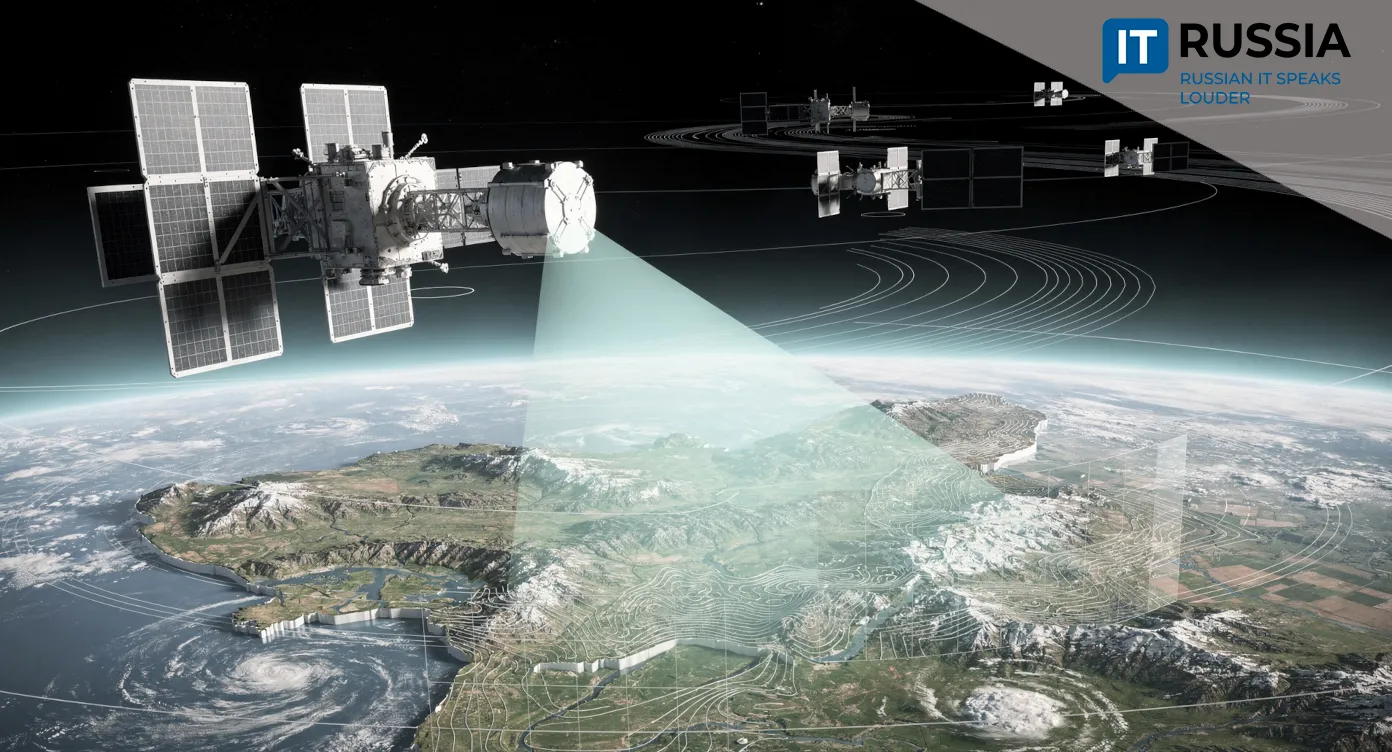
More than a thousand satellites are watching Earth. Yet the data they transmit often arrives late, incomplete or degraded by atmospheric interference. A new mathematical framework developed by Russian scientists aims to change how supercomputers interpret that imperfect stream, potentially improving everything from weather forecasts to climate modeling and disaster response.
Rethinking Imperfect Data
Supercomputers that simulate dynamic processes on Earth depend on continuous, homogeneous streams of measurements. In practice, providing such input is difficult. Data from orbital platforms must travel vast distances and can be distorted by atmospheric phenomena or external signal interference before reaching processing centers.
Researchers at Lomonosov Moscow State University and the Marchuk Institute of Computational Mathematics of the Russian Academy of Sciences have developed a new mathematical approach for handling “non-ideal” Earth remote sensing data. Their algorithms allow the construction of stable computational models even when information is delayed or incomplete. Instead of forcing observational data to meet rigid computational assumptions, the method adapts modeling frameworks to reflect the inherent complexity of real-world measurements. In effect, it reframes how Earth is studied from space.
A New Baseline for Meteorology
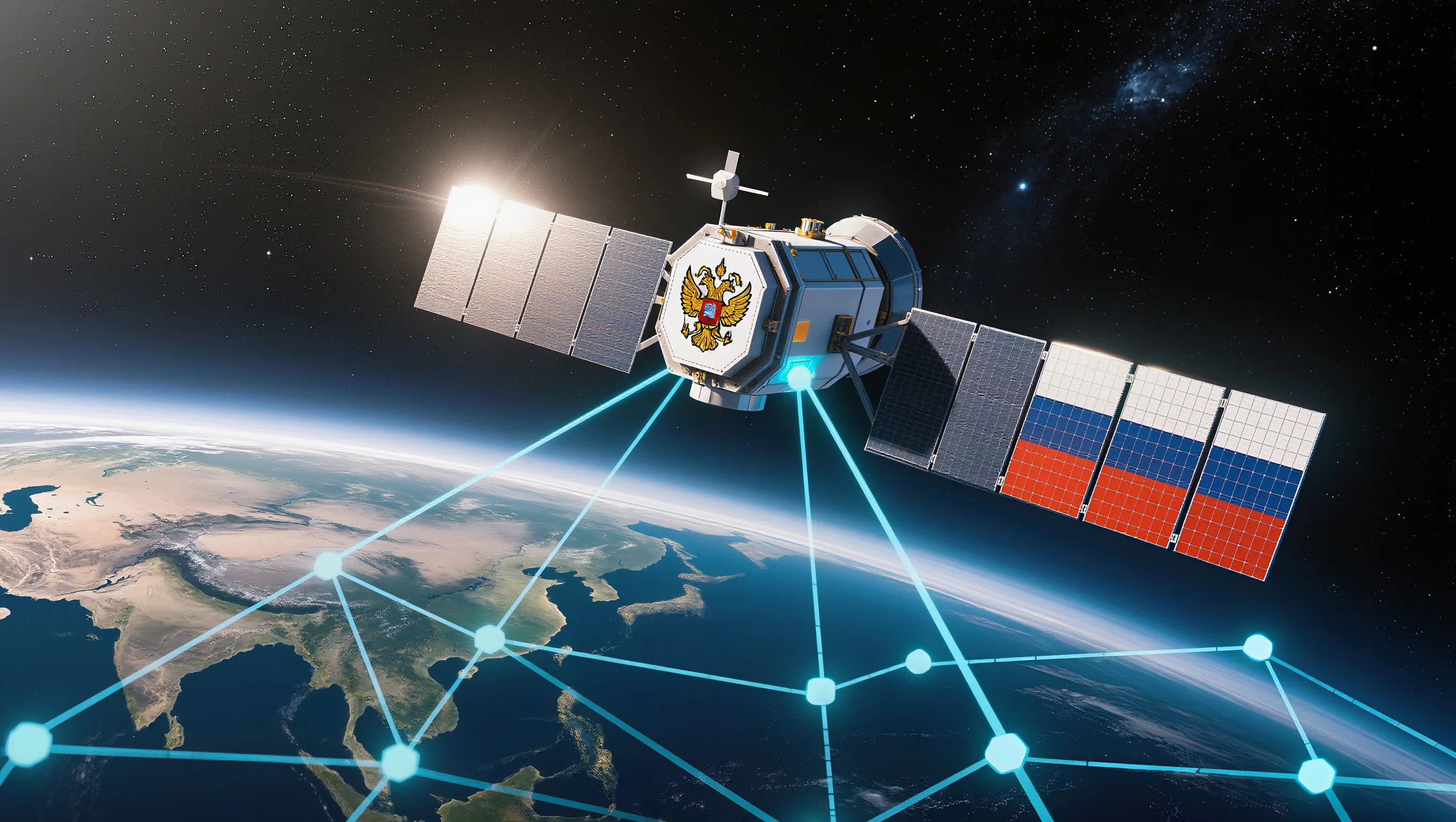
Remote sensing data underpins modern cartography, agriculture, forestry management, emergency response and environmental monitoring. Russia’s emerging Obzor-R (Survey-R) space complex is designed to contribute to these applications. The radar satellite can transmit large volumes of digital information about Earth’s surface and objects on it. Operating around the clock and in all weather conditions, it produces high-resolution imagery that can support scientific research, environmental analysis, engineering tasks and the creation of digital elevation models.

Globally, companies such as Google have pushed forecasting capabilities forward. Its GraphCast model, trained on station and satellite data, uses artificial intelligence to generate fast and accurate 10-day weather forecasts. The Russian method differs in focus. Rather than relying primarily on model training at scale, it addresses a structural limitation of satellite observation – incomplete data coverage. By mathematically compensating for gaps and irregularities, the approach could become a foundational tool in contemporary meteorology.
Expanding Predictive Power
Weather forecast accuracy and understanding of climate change depend on data quality. More robust algorithms could make it possible to anticipate a destructive hurricane a day earlier or calculate the trajectory of a wildfire more precisely. The method is also applicable to emergency monitoring scenarios, including floods and seismic events, where data streams often arrive under chaotic and noisy conditions. The framework is designed for integration with data from Russian orbital platforms, including future Roscosmos projects.
In 2023, the Russian Earth remote sensing market reached 25.6 billion rubles, approximately $307 million at current exchange rates, doubling its annual growth rate from 12.5 percent to 21.5 percent and expanding 1.6 times compared with 2019. By 2030, the market could reach 100 billion rubles, or roughly $1.2 billion. Growth is supported in part by expanded data collection infrastructure. Plans call for deploying constellations of 410 satellites by 2030, up from 23 in 2024.