MEPhI Launches Lab to Train an Elite of Cybersecurity Specialists
Fifteen workstations powered by Russian hardware and software from RED SOFT. Instead of lectures, students will attend developer-led master classes, complete internships and work hands-on with real products listed in Russia’s official software registry.
Behind the Red Ribbon
A symbolic red ribbon has been cut. At National Research Nuclear University MEPhI – Natsionalnyi issledovatelskii iadernyi universitet MEPhI, widely known as MEPhI – a new laboratory backed by RED SOFT, a leading Russian software developer, has officially opened. The agreement was reached last fall, and the project has now moved from paperwork to fully equipped workstations and deployed software. The idea is straightforward: as Russia builds out its own technology stack, universities should train specialists to work with domestic platforms from day one, rather than retraining them years after graduation.
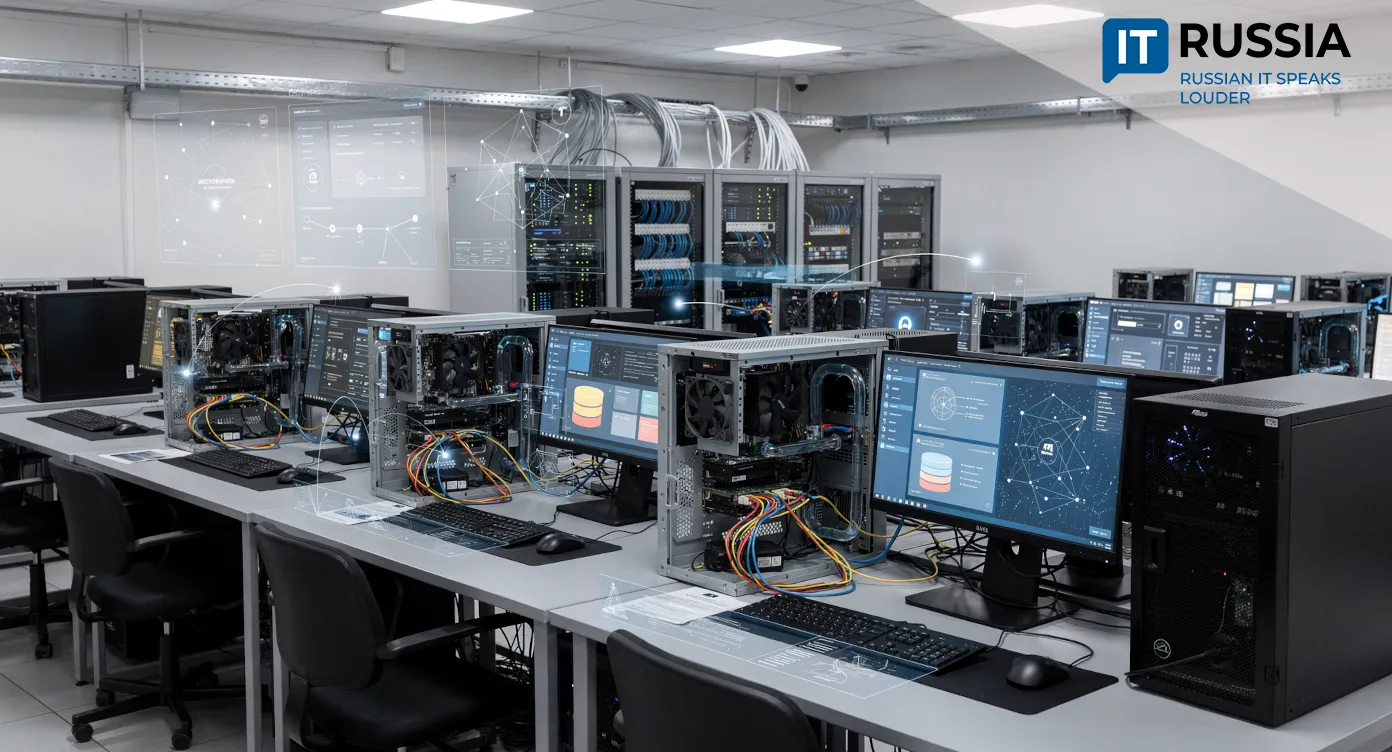
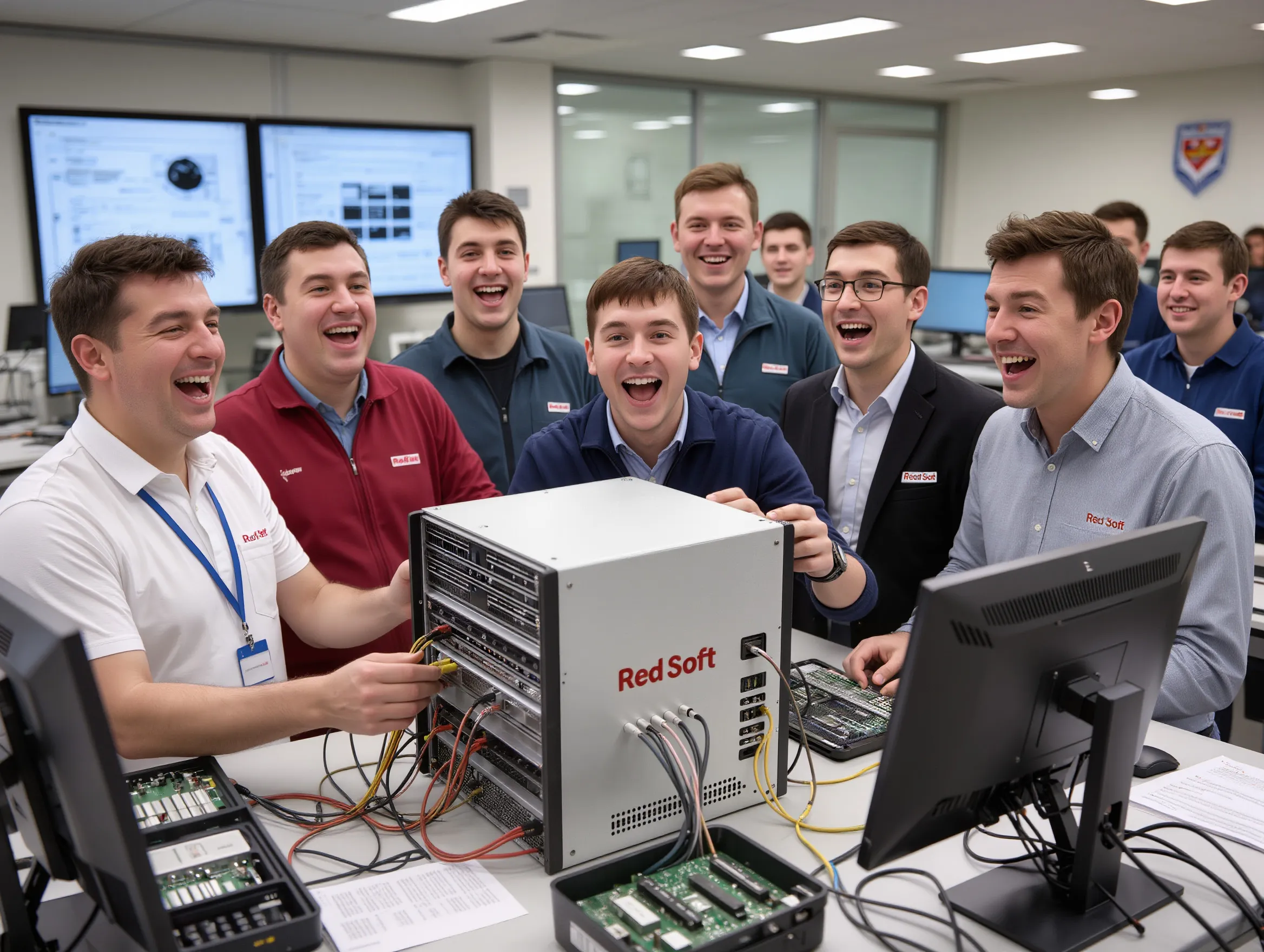
Within the Institute of Intelligent Cybernetic Systems, 15 modern workstations have been set up using Russian computing equipment. RED SOFT delivered its flagship products to campus: RED OS, Red Baza Dannykh (Red Database) and RED Virtualizatsiia (RED Virtualization). The solutions were presented by Evgeny Dorofeev, Head of University Relations at RED SOFT.
These are enterprise-grade, certified products included in the Ministry of Digital Development’s official registry of Russian software and already deployed in government agencies and state-owned companies. That means students will train on the same systems they are likely to encounter in the workplace, including in the nuclear sector and other strategically important industries.

Mission-Critical Software
The central goal is to ensure graduates leave university not with abstract theory, but with a working understanding of how Russian software operates in real environments. That has become especially important as the government has invested heavily in import substitution. Specialists who can confidently deploy and manage domestic platforms are in high demand.


For students, the value proposition is clear. The program includes developer-led master classes, internships and certification opportunities, offering both professional growth and direct exposure to production-grade systems. With that experience, graduates will be better positioned to secure roles in ministries, state corporations such as Rosatom and other high-profile institutions.
For the broader tech sector, the lab’s launch at MEPhI represents a structural gain. The more graduates understand the architecture and operational specifics of Russian software, the less dependent the country becomes on Western vendors in sensitive areas such as nuclear energy and public administration.

The Import Substitution Wave
MEPhI is not the first university to implement such a model. A similar laboratory began operating at Sirius in 2024, where students also train on virtualization and database solutions approved by FSTEC.
As early as 2023, the Ministry of Digital Development stated that this practice should not only continue, but expand nationwide. The logic is straightforward: the push for domestic technologies is visible across cybersecurity, artificial intelligence and other advanced fields.
“We believe that all software included in the registry of Russian software should be provided to universities free of charge. For educational purposes, universities should be able to use any of this software. We are currently working on this initiative,” said Maksut Shadaev, Minister of Digital Development, Communications and Mass Media, speaking at CNews FORUM-2023.
Russia’s Digital Core
“By launching the RED SOFT laboratory at National Research Nuclear University MEPhI, we are taking a significant step forward in strengthening our technological education. At one of the country’s largest technical universities, we will jointly train engineers capable of ensuring Russia’s technological sovereignty. It is important for us that students receive not only theoretical knowledge, but also hands-on experience with the best domestic infrastructure software. Our partnership with MEPhI allows us to build this training model on a systemic basis,” said Rustam Rustamov, Deputy CEO of RED SOFT.
The laboratory could soon evolve into a full-fledged competence center for deploying RED SOFT products within IT infrastructures of nuclear-industry institutions. Here, specialists will be trained to tackle concrete, complex challenges in a strategically important sector.
Within a few years, such training centers may become standard at forward-looking technical universities. What appears innovative today could soon become routine practice.
The launch of the MEPhI lab is not a symbolic memorandum of cooperation. It is a tangible step toward ensuring that Russia transitions to its own technologies under the management of domestically trained specialists.