Total Business Monitoring: Gazprom Expands Centralized Control
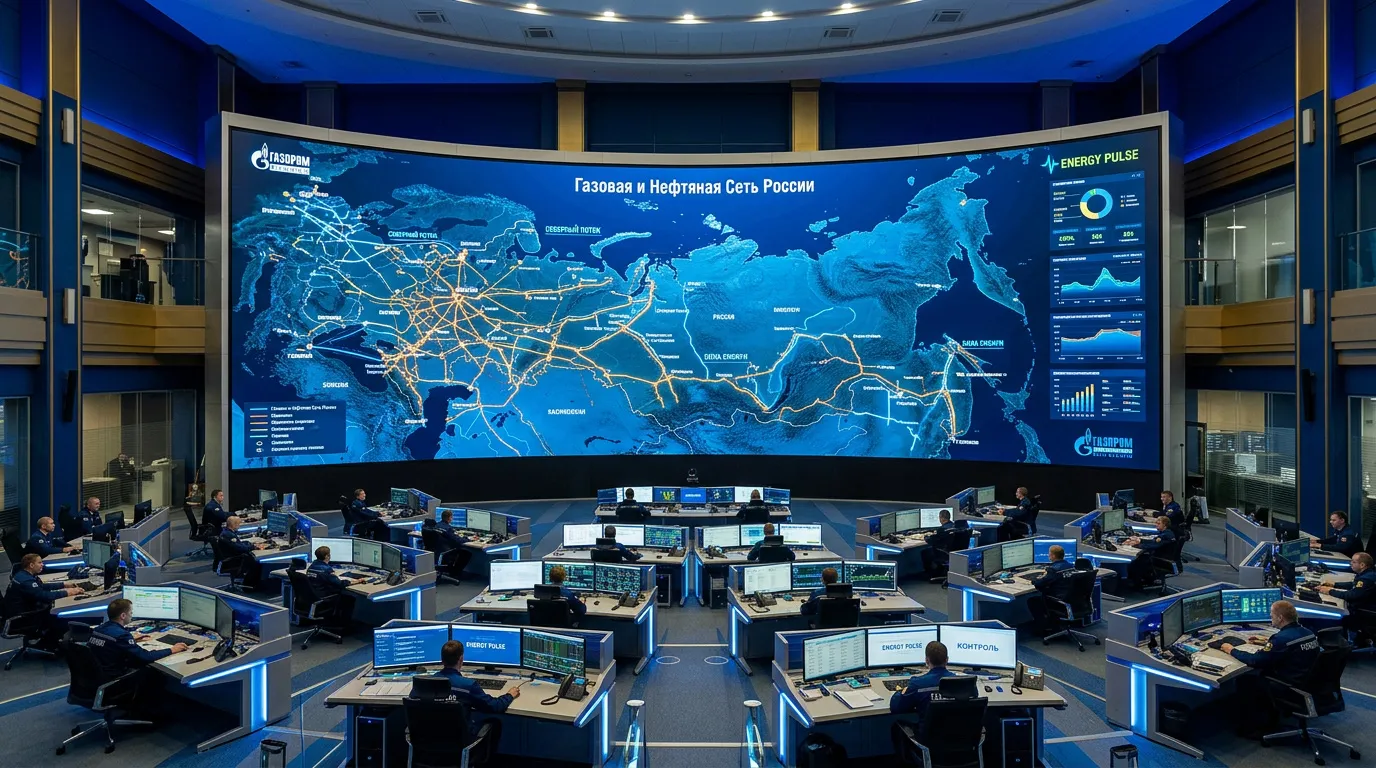
Gazprom’s Unified Dispatch Center (EDC) has expanded its control perimeter. Operating on the foundation of the company’s dispatch department, it now monitors and consolidates production accounting metrics across all business segments.
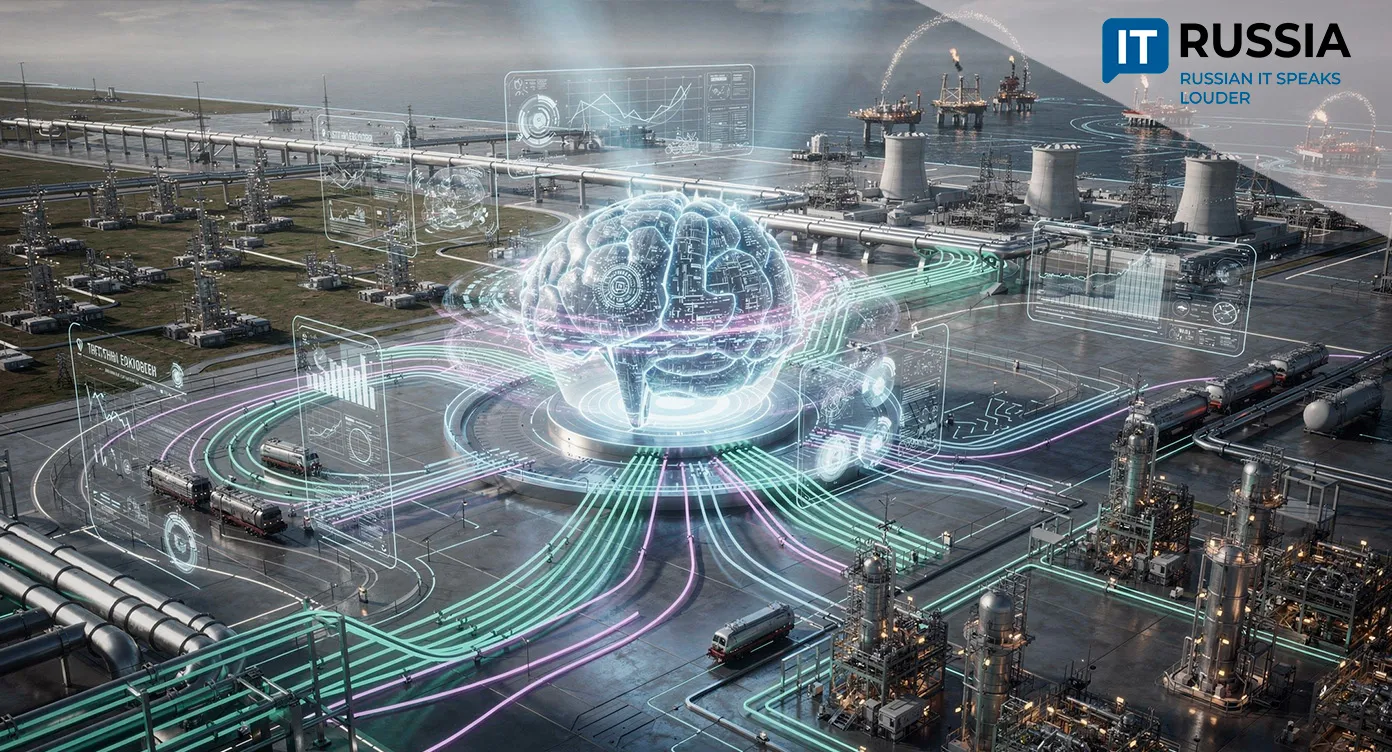
Previously, dispatch management covered gas production, transportation, storage, and processing, including Gazprom PHG, Gazprom Mezhregiongaz, and Gazprom Pererabotka. The EDC now incorporates additional business units such as Gazprom Neft, Gazprom Energoholding, Gazpromtrans, Sakhalin Energy, Gazprom Gas Motor Fuel, Gazprom Fleet, and other entities. All these organizations are now integrated into a unified management framework.
Expanding the Analytics Perimeter
Participants operate through standardized reporting templates and unified KPI monitoring systems. Importantly, annual and quarterly targets for gas and liquid hydrocarbons production, domestic supply, exports, processing capacity utilization, and power generation are now decomposed into daily operational tasks and performance metrics.
At the same time, the EDC does more than aggregate data. It performs comprehensive validation of calculation methodologies and the formation of analytical indicators. All participants interact through shared reporting standards and templates.
EDC as a New Operational Layer
The Unified Dispatch Center was established in 2023 based on Gazprom’s dispatch department. Since then, the system has continued to evolve in both scale and complexity. Coordination across participants is maintained through unified reporting standards and KPI monitoring systems.
Operational control is now directly linked to achieving planning and budgeting targets. This transition from fragmented automation to enterprise-wide management platforms aligns with Gazprom’s broader digital transformation strategy, which aims to improve efficiency in both production and management processes through digital technologies.
For the oil and gas sector, this represents a significant upgrade in controllability of critical infrastructure. The greater the transparency of real-time production metrics, the easier it becomes to plan domestic gas supply, export flows, processing loads, and power generation assets. If the center evolves beyond reporting into predictive capabilities, it could enable more precise planning across production, transportation, processing, exports, procurement, maintenance, and capital investment.
In 2026, the Russian government approved a strategic roadmap for digital transformation of the fuel and energy sector through 2036. Its objective is to accelerate the transition to a new technological level based on domestic digital solutions. Priority is given to Russian core and application software for key production and management processes. In this context, Gazprom’s EDC deployment serves as a practical implementation of that policy.
A Logical Chain of Development
The EDC is driving demand for several classes of domestic digital solutions, including industrial data platforms, analytics systems, enterprise data buses, production accounting systems, Russian DBMS and infrastructure software, industrial cybersecurity tools, and digital twin and simulation technologies.
Gazprom already operates related initiatives. One example is its industrial safety information and management system, which spans Gazprom PJSC and its subsidiaries, covering 98 organizations and more than 600 branches, as well as oil, energy, and sales subholdings. The group is effectively moving toward unified digital management environments not only in production, but also across adjacent corporate processes.
In 2021, Gazprom Neft demonstrated the shift from localized automation to asset-level digital modeling by creating a digital twin of the A. Zhagrin field. The system integrates modules for production, transportation, reservoir pressure maintenance, and other operational processes.
Since 2024, Gazprom has been developing a digital subsurface management platform. The deployed solution synchronizes data in real time between production and financial systems, reducing costs and construction timelines for wells, improving drilling productivity, and lowering losses from equipment failures.

The expansion of the EDC moves dispatch management beyond a narrow gas-focused framework into a unified business control center for the entire group.