Digital Professor to Advise Farmers
Developers at SiSort, together with scientists from Voronezh State Agrarian University, have created a neural network trained on the works of Doctor of Agricultural Sciences and breeder Sergey Goncharov.
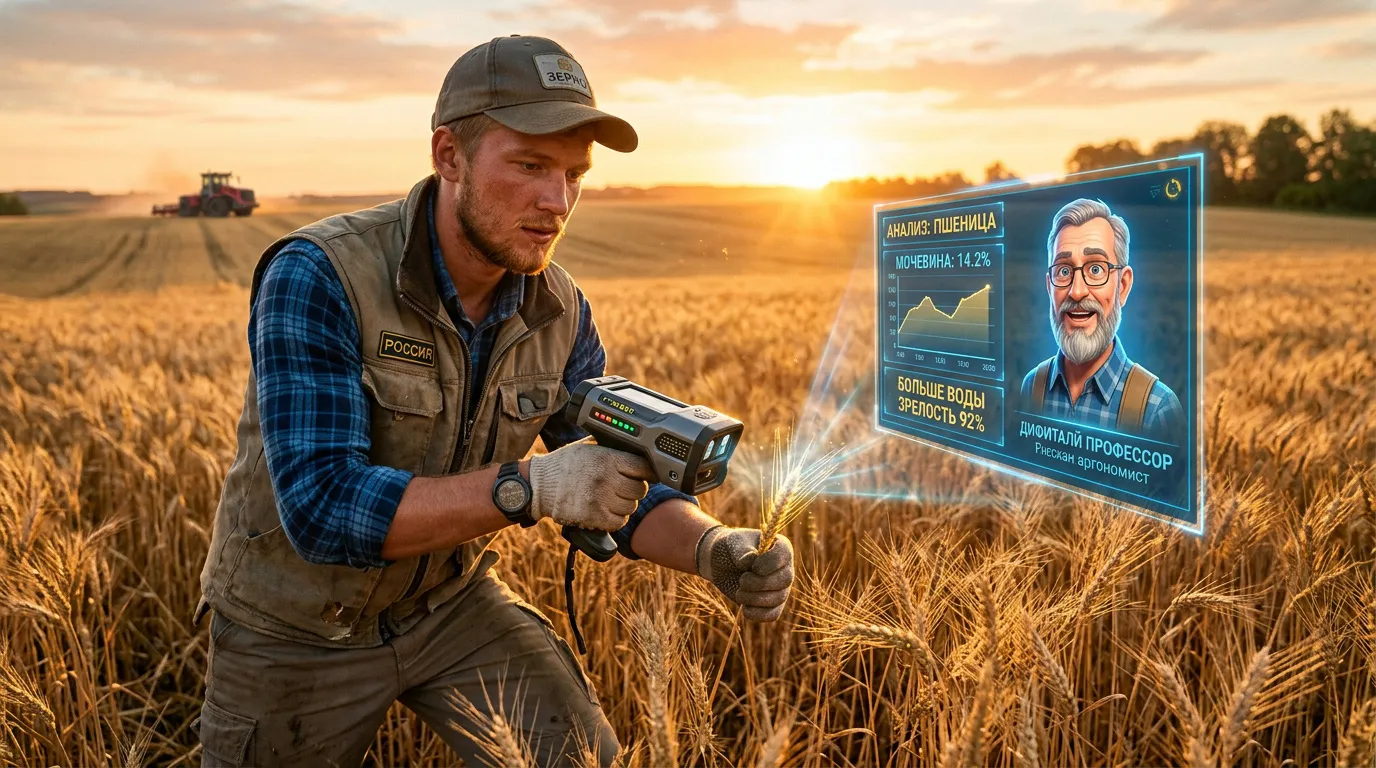
Science fiction writers have long explored whether artificial intelligence could recreate a digital copy of a genius and preserve their talent after death. Is it possible to capture a scientist’s knowledge and experience and apply it in everyday work? Developers at the Russian company SiSort are now testing that idea in practice. They have built a digital version of an agronomy professor that is already advising crop producers across Russia.
AI Charged by Expert Knowledge
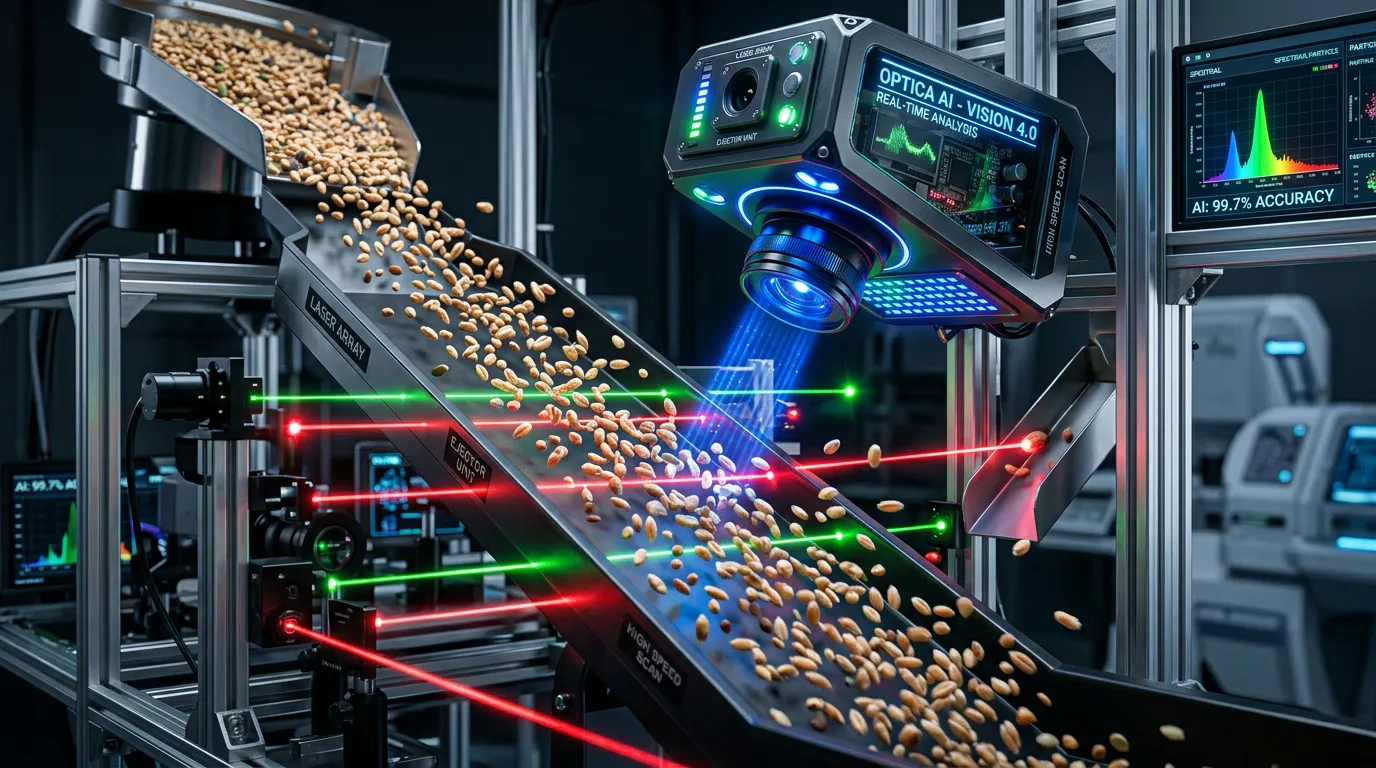
The Altai-based company SiSort, part of the Rosspetsmash Association (Association of Specialized Machinery Manufacturers), is known in Russia and internationally as a producer of photo separators designed to sort mixed materials, including grain crops. This equipment already relies on artificial intelligence technologies.
Building on that experience, the team launched a unique – and partly futuristic – project: an experimental neural network trained on the scientific works of plant breeder Professor Sergey Goncharov. Crucially, the digital model was trained not only on formal academic publications but also on the scientist’s personal notes, including correspondence with farmers. This approach preserves not just factual accuracy but also elements of Goncharov’s communication style.
The resulting AI service now advises farmers, with the goal of making university-level expertise accessible to practitioners in the field.
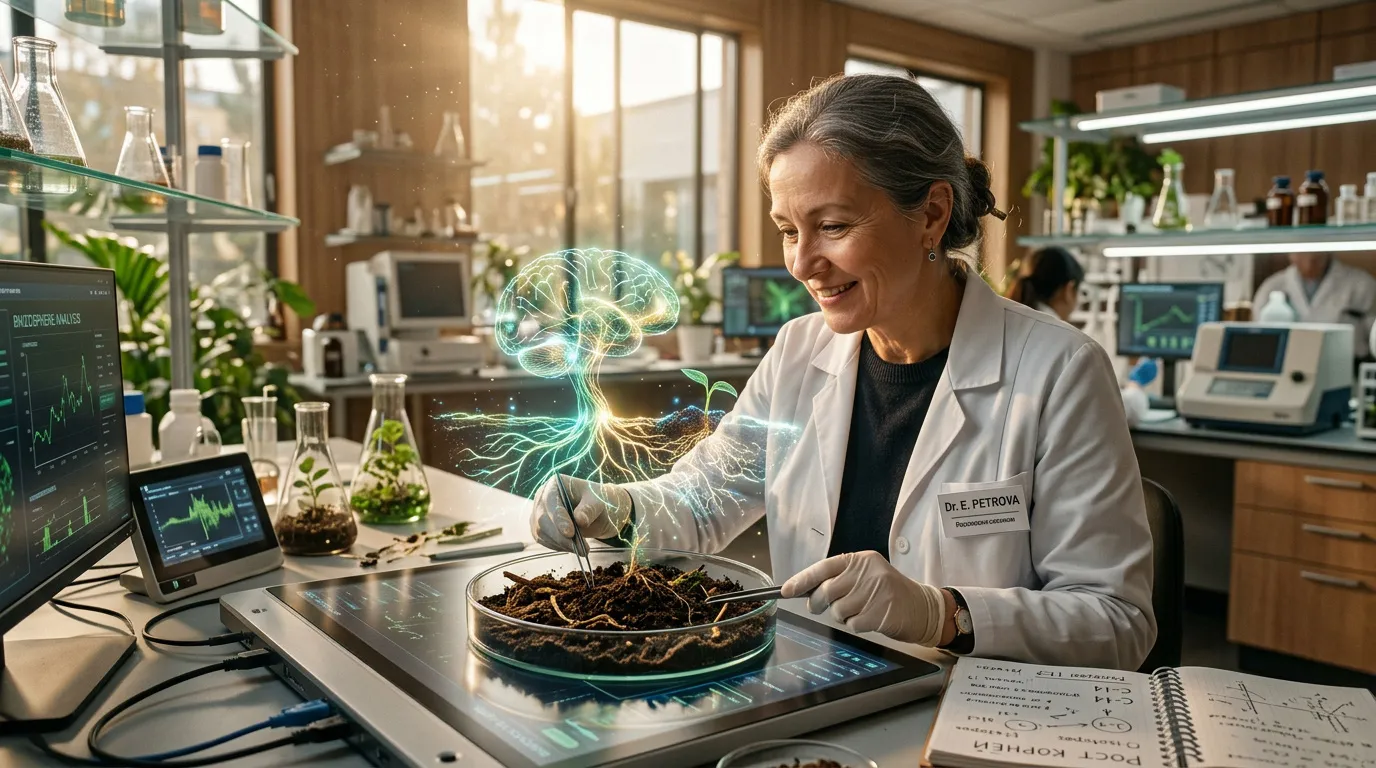
According to Konstantin Klimchuk, head of digital transformation at SiSort, the experiment has delivered strong results. The digital agronomy professor has been offering practical, actionable recommendations to real-world agricultural specialists.
Professional Advice at Scale
Professor Sergey Goncharov is well known in the scientific community as a contributor to the development of seven crop varieties, the author of numerous research papers, and a co-author of ten inventions. He specializes in breeding hard wheat varieties and malting barley. Importantly, he is not a purely theoretical scientist. Alongside his academic work, he has collaborated with major agricultural holdings and understands the real challenges faced by farmers. Access to expertise at this level is typically out of reach for small farm operators. This service changes that.
“The ‘professor’ can explain crop varieties, their specifics and challenges, answer questions about what matters and what does not for malting barley, help select the right variety, and clarify other nuances. And all of this is grounded in Goncharov’s scientific work, not guesswork,” Klimchuk explains.
At this stage, the project remains an experiment and a startup that has yet to mature into a full-scale technology. But it signals a broader trend in the development of applied AI for agriculture.
The team is building a service model for crop production that connects applied agronomy, university science, and generative AI. Developers plan to expand the “digital professor” by integrating it with existing solutions. SiSort previously introduced the Kalibr platform (seed and plant analysis platform), designed for digital analysis of seeds and plants and used alongside its photo separators. Integrating the digital professor with Kalibr will enable rapid, case-specific diagnostics. An agronomist could upload a field image to Kalibr, receive an AI-generated diagnosis, and then get tailored recommendations from the digital professor. In the future, the system could be expanded with drones for continuous field monitoring.
A Growing Class of AI Experts
This is not Russia’s first attempt to build digital advisory tools for agriculture based on scientific expertise. In summer 2024, Uralchem introduced the “Digital Twin of Agronomist Ivan Polevoy” at the CIPR 2024 conference (Digital Industry of Industrial Russia). That AI-based system provides guidance on agronomy, fertilizer use, and agricultural production. What sets the SiSort project apart is its focus on modeling a specific university professor with deep expertise in a narrow segment of crop science.
Experts say the new service is likely to find demand among small and mid-sized producers that lack in-house agronomists. The digital professor can help them navigate complex situations. Given that SiSort already exports its products, the solution could quickly gain traction in countries with close trade ties to Russia.
As Russia’s agricultural sector continues to grow, more digital assistants are expected to emerge – typically niche solutions focused on areas such as agronomy, seed production, plant protection, logistics, and market analytics. The most effective tools will be those that prove their value in real-world use.
Over time, the most successful of these systems could be integrated into a EDP (Unified Digital Platform) for agriculture, making advanced expertise accessible to farmers nationwide. This would strengthen the link between science and production, improve crop yields, and increase operational efficiency across farms.