Saratov Scientists Develop a Multifunctional Debugging Board
Researchers in Saratov have built a domestically produced debugging board based on a Russian microcontroller, with thousands of units already deployed across the country for education and real-world applications. Vavilov University in Saratov, together with the company 1T, has developed a debugging board based on the Russian microcontroller MIK32 Amur. More than 2,500 of these devices have already been delivered to educational institutions across Russia and are being used in robotics and the internet of things.
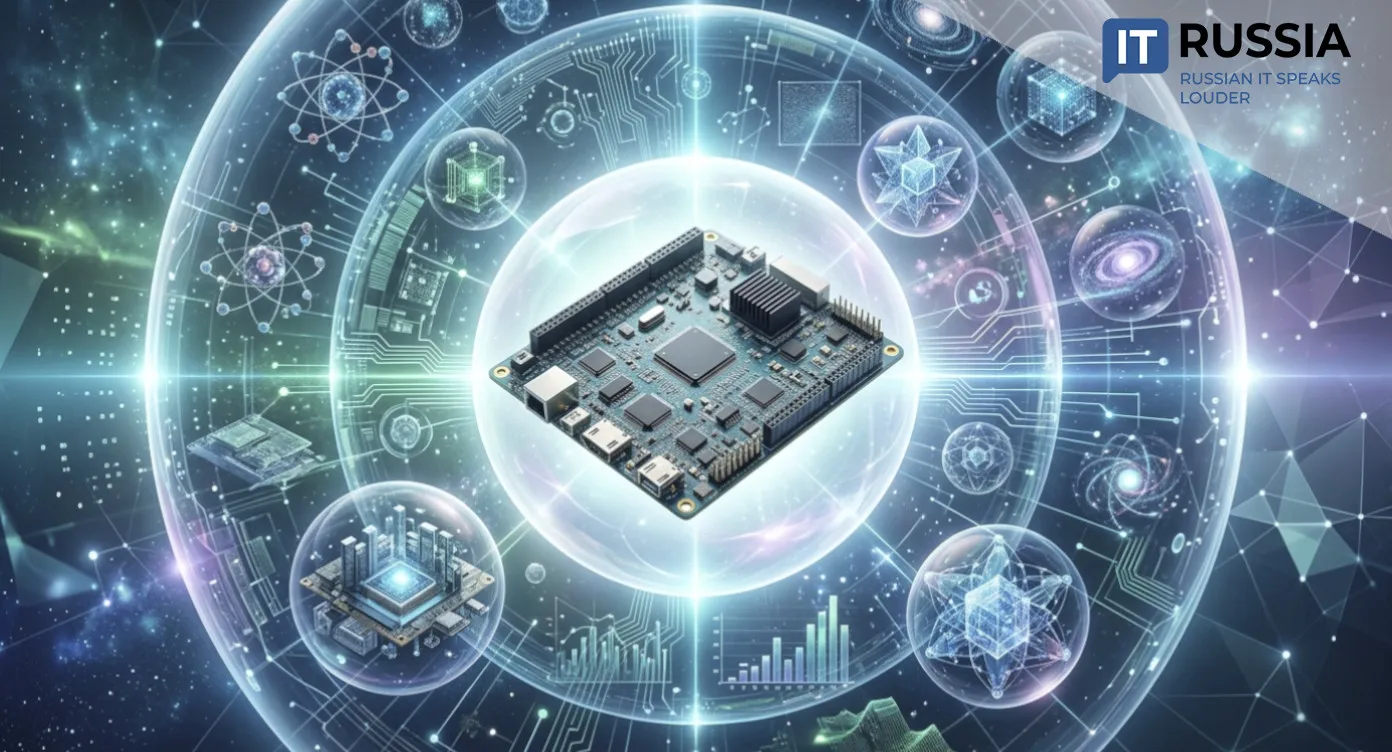
At the core of the board is the Russian microcontroller MIK32 Amur. The device processes data from peripherals and controls actuators through GPIO, I2C, and UART interfaces. The board supports a wide input voltage range, features dual power levels, includes a JTAG connector for software debugging, and provides operational status indicators.
The new development has already completed the full cycle from circuit design to mass deployment. The board is built without any foreign components in its critical modules.
According to the university’s press service, more than 2,500 devices based on the Russian MIK32 Amur microcontroller are currently operating across Russia. They are used in educational programs, mobile robotics, smart home systems, and IoT applications.
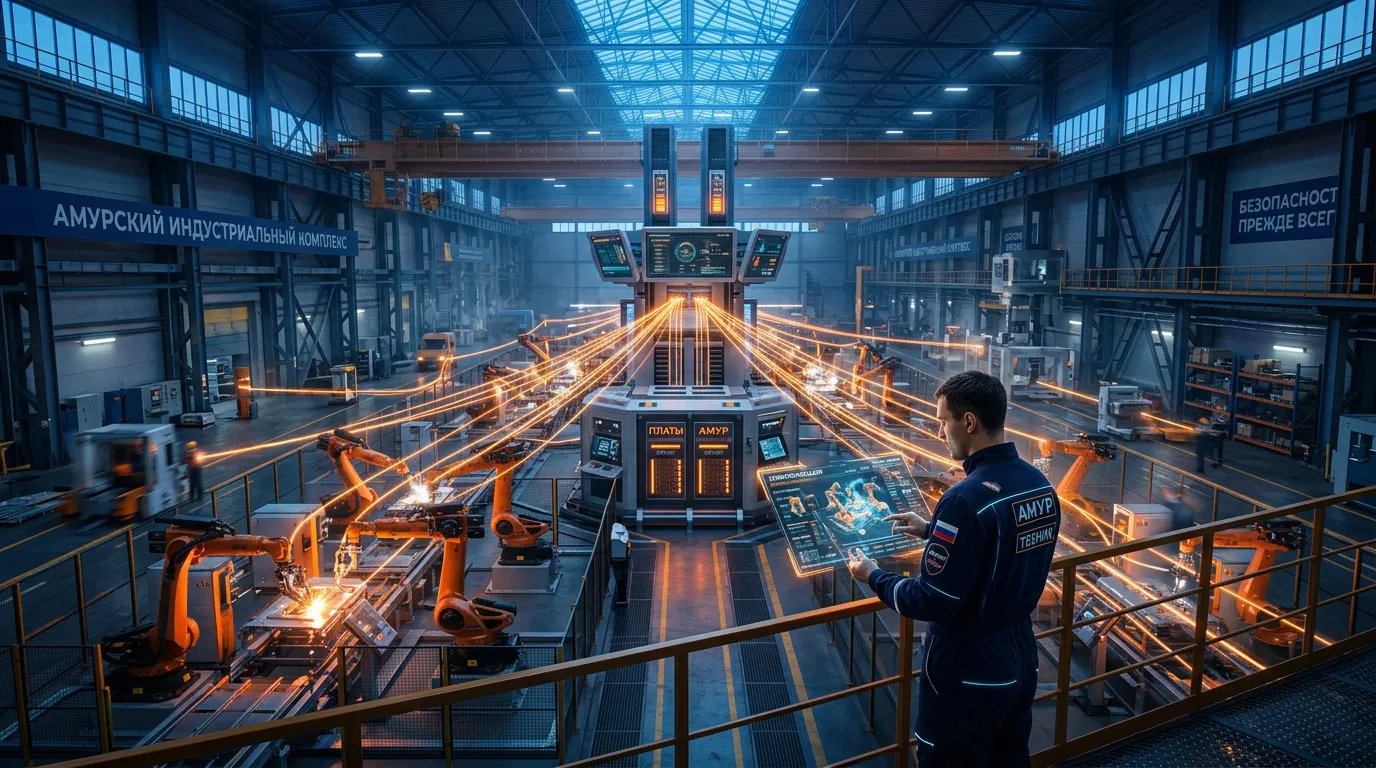
The board is included in 1T REX (Rossiyskaya eksperimentalnaya kiberfizicheskaya sistema – Russian Experimental Cyber-Physical System) educational kits for students in grades 9–11 and college students participating in the Kod budushchego (Code of the Future) project. It also serves as a core component of the Cyberfarm training complex, designed to teach IoT technologies in the agricultural sector.
Advantages of the MIK32 Amur Microcontroller
The entire production cycle of the MIK32 is located in Russia, making it the only domestically produced first-level microcontroller on the market. It also offers a lower price compared to imported alternatives.
Developers can guarantee stable supply, which provides a competitive advantage. The product is not affected by restrictions on high-tech imports.
Additional advantages of the Saratov team’s development include hardware-level security, built-in GOST cryptographic protection, and a debugging platform based on the RISC-V architecture.
The Technological Path of the New Development
Russian researchers have been working on similar products for several years.
In 2024, Mikron introduced a prototype of Russia’s first programmable logic controller based on the MIK32 Amur for industrial automation, mechanical engineering, energy, lighting, security systems, and water supply. In the same year, Mikron and Elron released a fully Russian Arduino-compatible board, ELBEAR ACE-UNO, based on the MIK32 Amur microcontroller. This marked an important step in building a development ecosystem: while PLCs target industrial use, compatible boards lower the barrier to entry for engineers, universities, and developers of applied devices.
Later, the first 100,000 MIK32 Amur microcontrollers were assembled at GS Group facilities. This was no longer a research demonstration but a signal of a shift toward industrial-scale production, a prerequisite for widespread adoption of domestic boards and controllers. In 2025, researchers at South Ural State University developed and patented the first control program for a three-phase brushless electric motor using the MIK32 Amur.
From Chip to Complete Hardware Solutions
Russian microelectronics has taken another step from producing individual chips to delivering complete hardware solutions for industry. This is a key marker of maturity: the domestic microcontroller is now being applied across a growing range of real-world use cases, from educational boards and PLCs to specialized solutions for electric drives.

In the coming years, such developments are expected to expand, particularly in sectors where technological sovereignty, reliable supply chains, and compliance with domestic standards are critical. These include industrial automation, energy, utilities, transport, and security systems.
The decisive factor will not be a single board design, but the ability to build a full ecosystem around it: mass production, software, engineering libraries, compatible drivers, and deployment channels.