Deepfake Detection Gets Smarter: VisionLabs Can Now Identify the AI Behind the Fake
VisionLabs has upgraded its deepfake detection technology. The system now not only identifies manipulated photos and videos but can also determine which AI tool was used to create them.
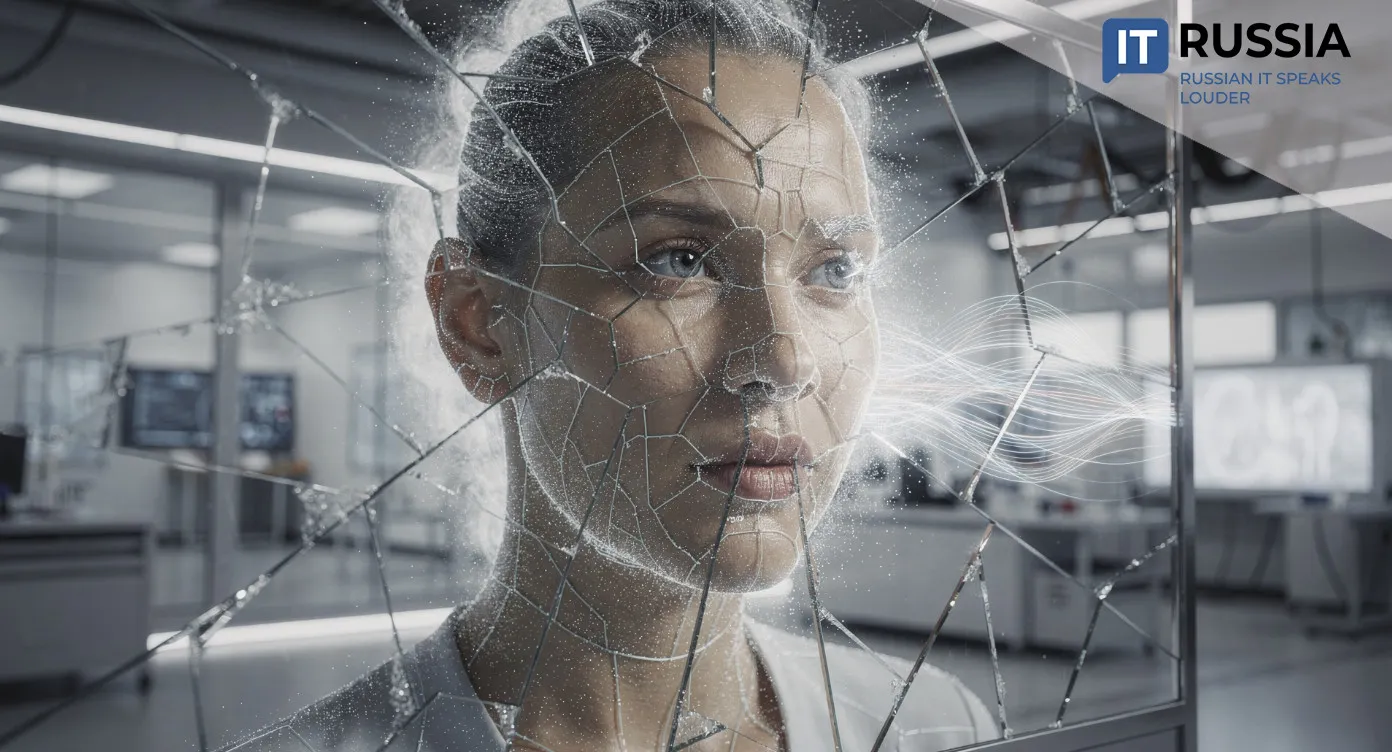
The updated algorithm distinguishes four categories of deepfakes: face swapping, fully AI-generated faces, facial expression transfer and lip synchronization. Among the AI services it can identify are Nano Banana, Higgsfield AI and Veo. Rather than introducing an entirely new product, the company has expanded an existing technology. The key upgrade is its ability to classify manipulated content and attribute it to the AI system that generated it.
Deepfake Detection as Trust Infrastructure
VisionLabs' work represents a practical evolution of an existing solution with implications for artificial intelligence, cybersecurity, biometrics and fintech. The upgrade is designed to reduce fraud risks while adding another layer of video verification. Its reported accuracy of 99.3% was achieved in internal testing, although real-world performance will continue to depend on recording quality and ongoing algorithm updates. For Russia, the technology also forms part of the country's digital sovereignty and trust infrastructure. It can strengthen biometric protection without relying on foreign services.
The need for such technologies is growing rapidly. During the first quarter of 2025 alone, analysts identified 61 unique deepfake videos and approximately 2,300 copies. That equals 67% of the total volume detected throughout 2024 and is 2.6 times higher than in 2023. Globally, attribution technologies are becoming increasingly important for identifying the origin of AI-generated content, although no universal detector has yet emerged.
Early Validation
In the domestic market, the next logical step is integrating the technology into enterprise workflows. The system can protect remote transactions at banks and insurance companies, verify participants during video calls, authenticate content for news organizations and social media platforms, and support HR operations and government information systems. Before this upgrade, VisionLabs had already deployed the technology at Russian and international financial institutions while integrating it into MTS ID KYC, a platform for remote customer identification, and video communications services.
Export opportunities are concentrated in the CIS, the Middle East and Asia, where Russian developers already maintain commercial partnerships. VisionLabs has reported deployments at banks in Kazakhstan, Uzbekistan and Kyrgyzstan, suggesting the technology has already completed an initial validation phase. The primary business models include software licensing, integration into remote identification and video communication systems, and delivery through APIs and cloud services.
The technology's main competitive advantage remains its ability to determine how a deepfake was created rather than simply detecting that one exists. At the same time, rapidly evolving generative AI models, differing national regulations governing personal data and competition from international vendors remain significant challenges.

Deepfake Regulation Continues to Evolve
Deepfake detection technologies have developed gradually in Russia. In 2023, VisionLabs introduced its first system capable of detecting face swaps, facial expression manipulation and fully AI-generated images. In 2024, the company packaged the technology as the Deepfake Detection product and began deploying it across banks, digital identity platforms and video communications services. Similar technologies have also emerged in academia, including a project developed by the St. Petersburg Federal Research Center of the Russian Academy of Sciences.
In 2025, specialized solutions appeared for video conferencing, including Kontur.Tolk, while multimodal systems combining audio and video detection were introduced by MWS together with VisionLabs. In 2026, KodikScan, developed by ArkhiTekh AI, entered the market. The platform analyzes digital content and claims it can identify the AI model responsible for generating it, placing it in partial competition with the updated VisionLabs technology.
Globally, regulation of deepfakes accelerated after Intel introduced FakeCatcher in 2022. The detector analyzed subtle skin color variations and operated in real time with reported accuracy of up to 96%. In 2023, China introduced mandatory labeling requirements for synthetic content and restricted its distribution without the subject's consent. During 2024, major online platforms began widely deploying AI-content labels by combining automated detection with embedded metadata. Research based on real-world datasets, including Deepfake-Eval-2024, later showed that detector performance often declines when analyzing content originating from social media platforms.

Multimodal Analysis
The VisionLabs upgrade signals a transition from simple deepfake detection to classification and attribution. That substantially increases its practical value for banks, cybersecurity teams, media organizations and government agencies. Over the next several years, technologies like this are expected to become built-in capabilities within remote identity verification, video communications and fraud prevention platforms, operating continuously in the background. The next major step will be multimodal analysis that simultaneously evaluates video, voice, text and metadata.
The reported accuracy rate of 99.3% should be viewed as the result of internal testing because, without independent validation, it cannot be considered a universal measure of performance. The technology's competitiveness will ultimately depend on how quickly detection models evolve alongside generative AI, while export opportunities are likely to remain strongest within the CIS financial sector, where VisionLabs solutions have already been deployed on a limited scale.