Beyond Silicon: How Russian Scientists Are Harnessing Spin Waves
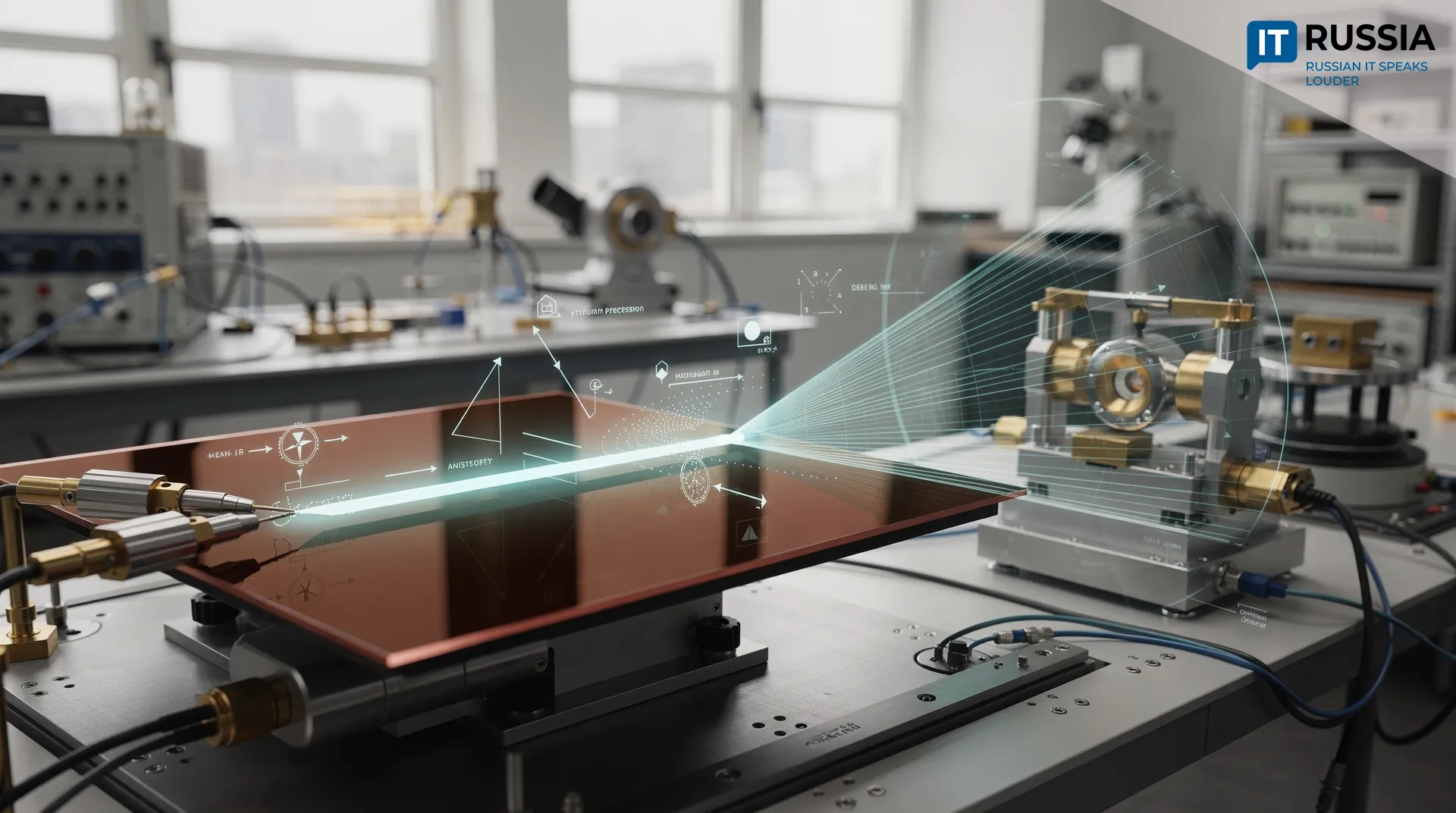
Scientists at Saratov State University and the Kotelnikov Institute of Radio Engineering and Electronics of the Russian Academy of Sciences have investigated magnonics, an approach that uses spin waves rather than flows of electric charge to transmit and process information. The researchers experimentally showed that, in a specially selected anisotropic magnetic medium, a beam of spin waves can propagate with virtually no spreading. They also confirmed a superresolution effect: information about an object smaller than the wavelength remained detectable at a much greater distance than the classical diffraction limit would normally allow. The work was published in the journal Uspekhi fizicheskih nauk (Advances in Physical Sciences).
The era of conventional silicon electronics is steadily approaching its physical limits. Microchips overheat, while the energy required to process data is rising rapidly in the age of artificial intelligence. Quantum phenomena are emerging as an alternative to familiar flows of electrons. In another significant advance in this global race, scientists at Saratov State University and the Kotelnikov Institute of Radio Engineering and Electronics of the Russian Academy of Sciences have experimentally demonstrated that information can be controlled using magnonics.
Magnonics is a field of modern physics in which information is transmitted and processed not by electric current but by spin waves. The approach can reduce energy losses and limit the heat generated by devices.
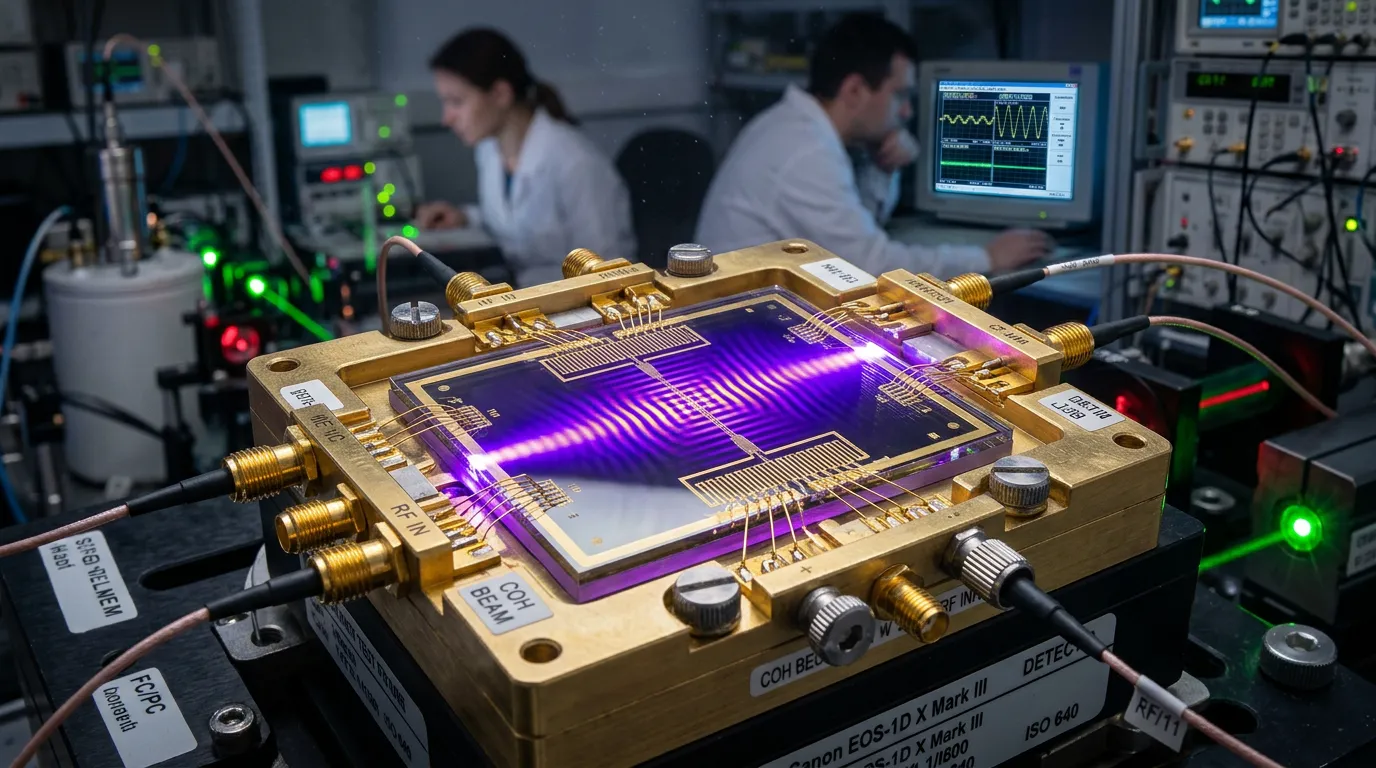
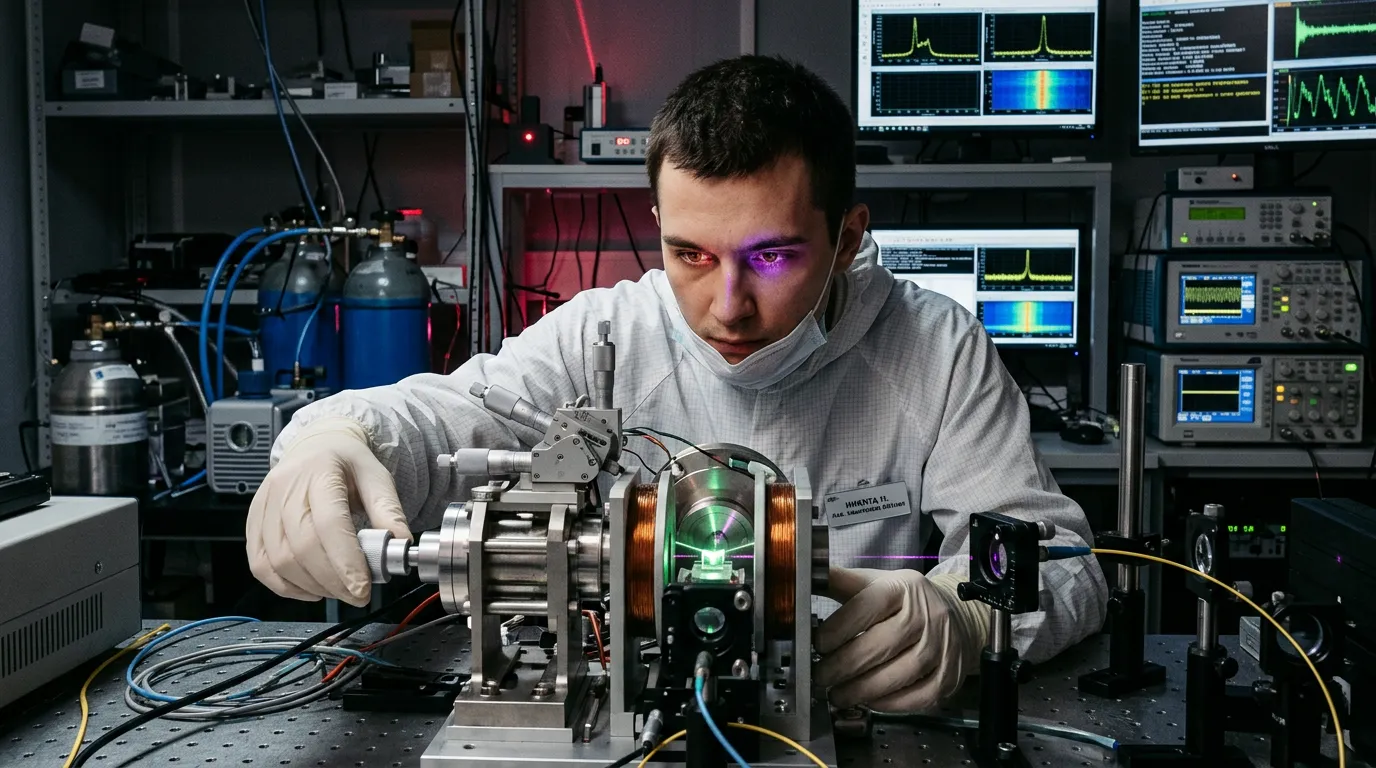
The basic idea is straightforward: instead of electric charge, the technology uses spin waves, oscillations of magnetization within a material. The Russian physicists worked with films of yttrium iron garnet (YIG), a material known for its exceptionally low wave damping. The researchers showed that, in a specially engineered anisotropic medium, a beam of spin waves can propagate with virtually no spreading. They also confirmed a superresolution effect: information about objects smaller than the wavelength can survive over distances that exceed the classical diffraction limit. The signal can travel centimeters in the gigahertz range with minimal losses and without parasitic heating. For industry, that could translate into lower energy consumption.
Neural Networks and Terahertz Waves: A Breakthrough in Perspective
The experimental results are the tip of the iceberg; the foundation for the discovery was laid over many years. In 2021, scientists in Saratov established principles for creating efficient magnonic waveguides. By 2024, researchers at LETI had built a prototype reservoir computer for neuromorphic computing, reducing energy consumption by an order of magnitude. Meanwhile, researchers elsewhere were tackling the same challenge: an Austrian-German team proposed exciting magnons with alternating current, a method that proved 1,000 times more efficient than microwave antennas.
In 2025, Russia followed with an experimental frequency filter based on a two-layer YIG structure and demonstrated controlled routing of waves between channels. Magnonics could ultimately underpin next-generation microwave filters, highly sensitive sensors and hardware accelerators for AI, in which the physical properties of a material itself become a source of computing power.
Technological Sovereignty and Exporting Ideas
The latest discovery provides a foundation for a new generation of electronic components. For Russia, it is also a matter of strategic survival. With support from the Russian Science Foundation, researchers in Saratov are already developing laboratory prototypes of demultiplexers and resonators. Scientists are building up domestic expertise so that the country can reduce its dependence on foreign lithography systems and silicon-based manufacturing processes.
Direct exports of hardware remain limited for now, but Russia could eventually sell not chips themselves but intellectual property, including patents, magnonic-element architectures and unique methods for modeling microwave components. Its scientific community could carve out valuable niches in the global microelectronics industry.
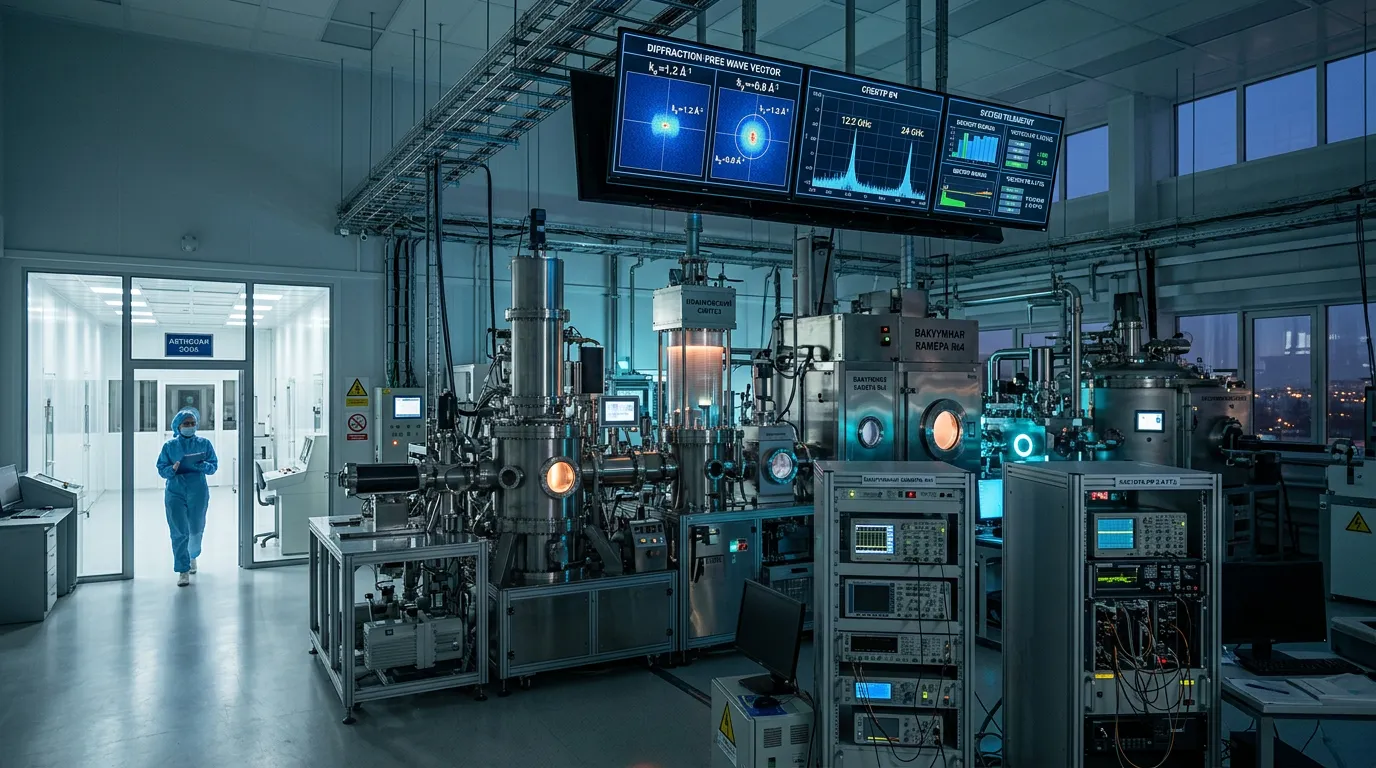
Widespread adoption of magnonics remains a distant prospect and will require advances in nanominiaturization and integration with conventional electronics. In the coming years, hybrid systems are likely to emerge in which magnonics works alongside traditional photonics and microelectronics, taking on some of the most heat-intensive and energy-hungry tasks.