Russian Scientists Plan to Upgrade AI System for Real-Time Marine Litter Monitoring
The technology is also expected to be adapted for use on autonomous monitoring platforms.
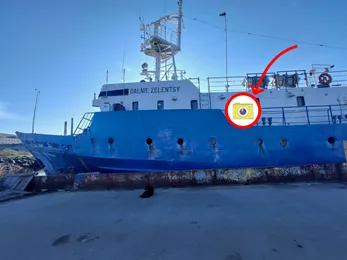
Researchers from the Moscow Institute of Physics and Technology and the Shirshov Institute of Oceanology have developed an artificial intelligence–based system that can automatically detect floating marine debris and other objects from onboard a vessel, even in Arctic conditions. The system is designed to enable large-scale monitoring of pollution in the world’s oceans, the university’s press service told IT-Russia.
Frodo May Not Survive the Winter
Plastic pollution and other forms of marine debris are among the most serious threats to ocean ecosystems, alongside climate change. The Arctic region is of particular concern to scientists, as microplastics have already been found in the bodies of marine animals. Late last year, a large-scale rescue effort was launched in Kamchatka, a region bordering the Arctic, to save an orca calf named Frodo that had become trapped in a plastic ring. After two months, the operation was suspended, and experts warned that Frodo was unlikely to survive the winter.
Plastic has also been detected in seabed sediments. As for traditional methods of spotting debris on the ocean surface, such as visual observation, their effectiveness is limited. How many people would it take to visually monitor vast stretches of open water?
The researchers say they have found a solution. The system is built on two machine-learning approaches: image classification using contrastive learning and direct object detection. Both methods were tested on a unique dataset collected by the scientists during an Arctic research expedition in the fall of 2023.
Good at Spotting Birds, Less So at Finding Trash
The most effective approach for detecting marine debris was based on contrastive learning using ResNet50+MoCo combined with a CatBoost classifier. The widely used YOLO algorithm performed worse in this task, although it proved more effective at detecting birds.
Looking ahead, the team plans to further refine the algorithms to enable real-time operation. The system is also expected to be adapted for deployment on autonomous monitoring platforms.
Earlier, IT-Russia reported that school students from the city of Rybinsk in Russia’s Yaroslavl region had invented an aquatic robot capable of collecting trash from the surface of the water.