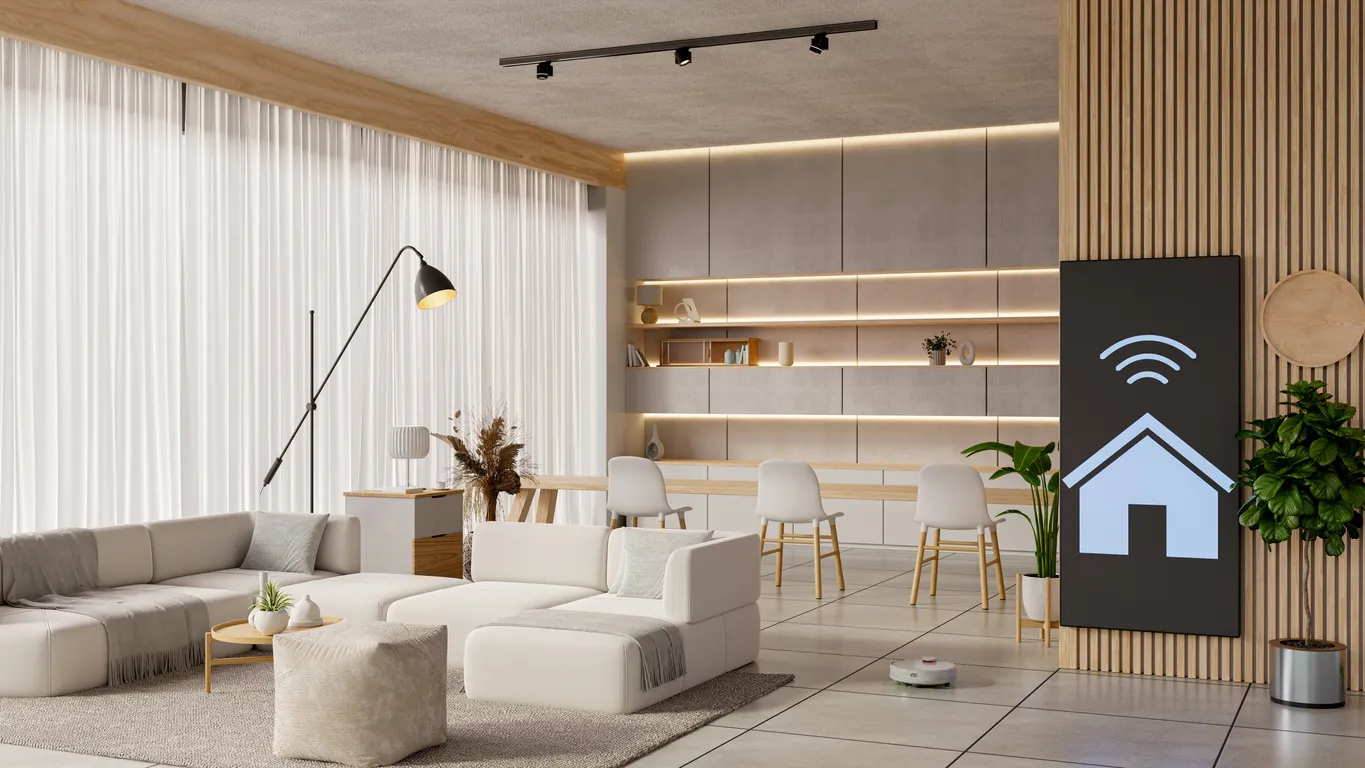
Artificial intelligence and connectivity are set to become the key growth drivers in the sector.
Russia’s smart home technology market is
undergoing rapid expansion, having grown more than threefold over the past
year, according to Anatoly Kurmanov, head of the “Digital Regions: Best
Practices and Development Strategies” section of the Council for the
Development of the Digital Economy under the Federation Council and chair of
the expert council at the Umnyi Gorod (Smart City) Competence Center. He shared his
assessment with IT Russia.
Kurmanov recalled that the Russian
government has approved a concept for the digital transformation of “smart”
apartment buildings, with a corresponding roadmap now in preparation.
“But the key factor is not even state
support. What really matters is that developers and businesses themselves are
advancing these technologies and viewing them as a serious marketing advantage
when selling housing. According to the latest analytics, the market has grown
by more than three times in just one year,” the expert said.
Total Home Automation
According to Kurmanov, the most in-demand
automation scenarios are linked to core residential infrastructure systems,
including water supply, heating, ventilation, gas systems, and lighting. These
functions are gradually being shifted to management via digital platforms.
“Demand is also growing in parallel for
complex, multi-stage scenarios, where systems respond not to a single trigger
but to a combination of conditions. For example, ‘if I am not at home and
another condition is met, then one device should be turned on, another switched
off, and climate settings adjusted.’ What seemed exotic just five years ago –
such as remotely controlling a robot vacuum cleaner or heating food and water
by the time the homeowner returns – is now seen as standard functionality,” he
explained.
The expert also expressed hope that within
the next three years, Russians will abandon paper utility bills and fully
switch to digital payment services.
AI and 5G
Artificial intelligence and communications
technologies will be the key growth drivers in the sector, Kurmanov said.
“AI makes it possible to implement the most
sophisticated scenarios, from analyzing data from sensors and video cameras to
adapting system behavior to the habits of a specific user. The second
cross-cutting technology is connectivity – without it, there is no smart home
or smart apartment. First and foremost, this refers to fifth-generation
networks. 5G and reliable internal connectivity within buildings are becoming a
basic requirement: without a stable connection, systems simply do not work. The
more reliable and comprehensive the coverage, the more reliably all components
operate. Even now, neural network-based technologies can, for example,
automatically call an elevator when a person enters the building, because a
smart intercom knows which floor they live on. There will be many more such
scenarios,” Kurmanov predicted.