Opturan AI Module Changes How Public Transit Is Planned
Buses arrive on schedule, drivers avoid exhausting shifts, and transit fleets are used as efficiently as possible. Today, that scenario is becoming a reality with a new AI module for Russia’s Opturan platform.
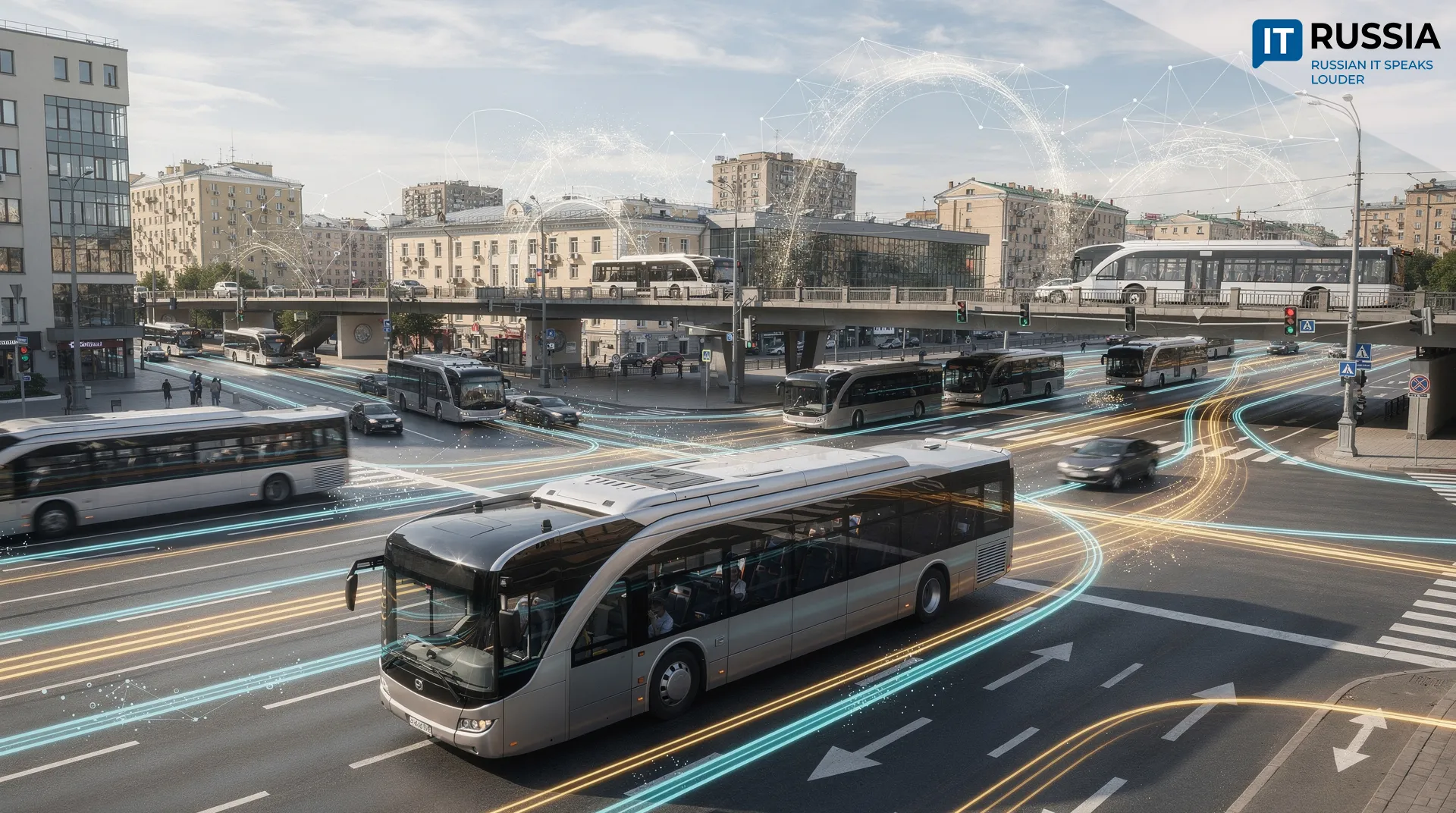
The breakthrough, according to Russia’s Ministry of Transport and its subordinate federal enterprise ZashchitaInfoTrans, is that, for the first time globally, according to the developers themselves, three critically interconnected tasks in surface public transit planning have been combined into a single production-scale calculation: creating timetables, assigning vehicles to trips and scheduling driver shifts. This is not generative AI but a carefully designed combination of machine learning and discrete mathematical optimization. The system simultaneously generates and compares millions of feasible options while accounting for dozens of parameters, from vehicle capacity and service intervals to driver work-and-rest requirements and an operator’s internal rules.
Testing at Mosgortrans’ Andropova depot, with participation from the Organisator Perevozok (Transportation Organizer) state agency, demonstrated that the approach works in practice. Across nine routes, vehicles operated according to the calculated schedules without any trips being lost, idle time between trips fell 34%, and projected payroll savings reached 5.2%, or RUB13.4 million (about USD157,000) a year. The optimization also freed up two buses that could be reassigned to strengthen service on other routes.
Potential Across Russia and Abroad
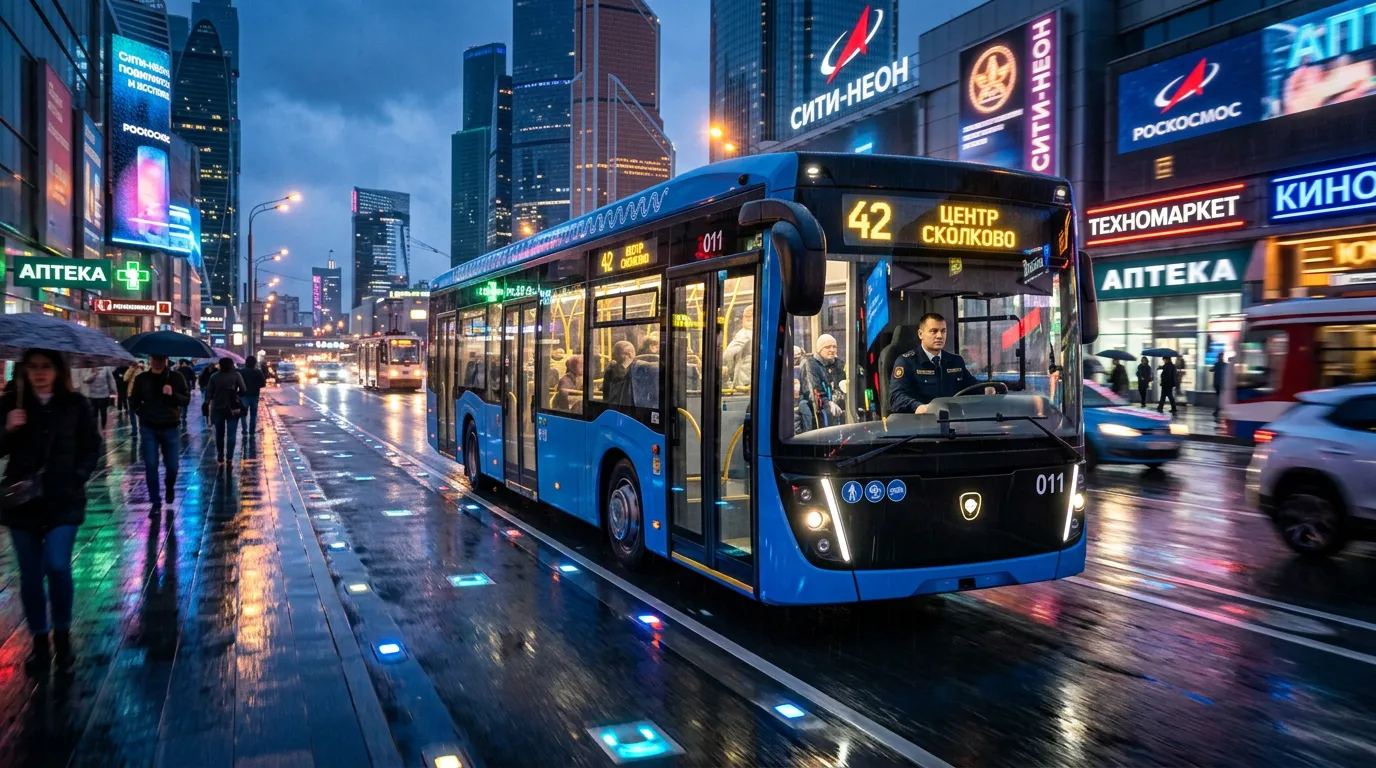
For Russian transit operators, the technology offers a way to make operations more resilient: It can improve service regularity even when budgets are constrained, drivers are in short supply and fleets cannot be expanded quickly. The potential impact of scaling could be substantial given that Russia’s public transit systems carried about 14 billion passengers in 2025 and operated a fleet of more than 132,000 vehicles. The platform has already moved beyond the experimental stage. Opturan is used in Moscow, the Moscow region and Kaliningrad, where it plans daily operations for more than 15,000 drivers and 8,000 vehicles; in 2025 alone, the system helped schedule more than 12 million shifts.
There is also potential to broaden its use. The developers say the technology can work not only with buses but also with trams, trolleybuses, metro systems and suburban transit. For international markets, a key advantage is that the system is built on a Russian software stack and is included in Russia’s software registry, a feature that could make it attractive to countries pursuing greater technological independence.
From Separate Tasks to End-to-End Optimization
Mosgortrans began its first AI deployments for assigning drivers to routes in 2024, taking working hours and rest periods into account. This was an early stage in the development of what would become the platform. By May 2025, the system covered all 25 of the operator’s bus and electric-bus depots and more than 13,000 drivers, cutting the time needed to create driver assignments from two hours to five minutes. That same year, ITMO University introduced ConnectPT, a tool that uses graph neural networks and evolutionary algorithms to analyze transit demand and recommend changes to route networks. Unlike Opturan’s operational planning focus, ConnectPT is designed for strategic transit planning.
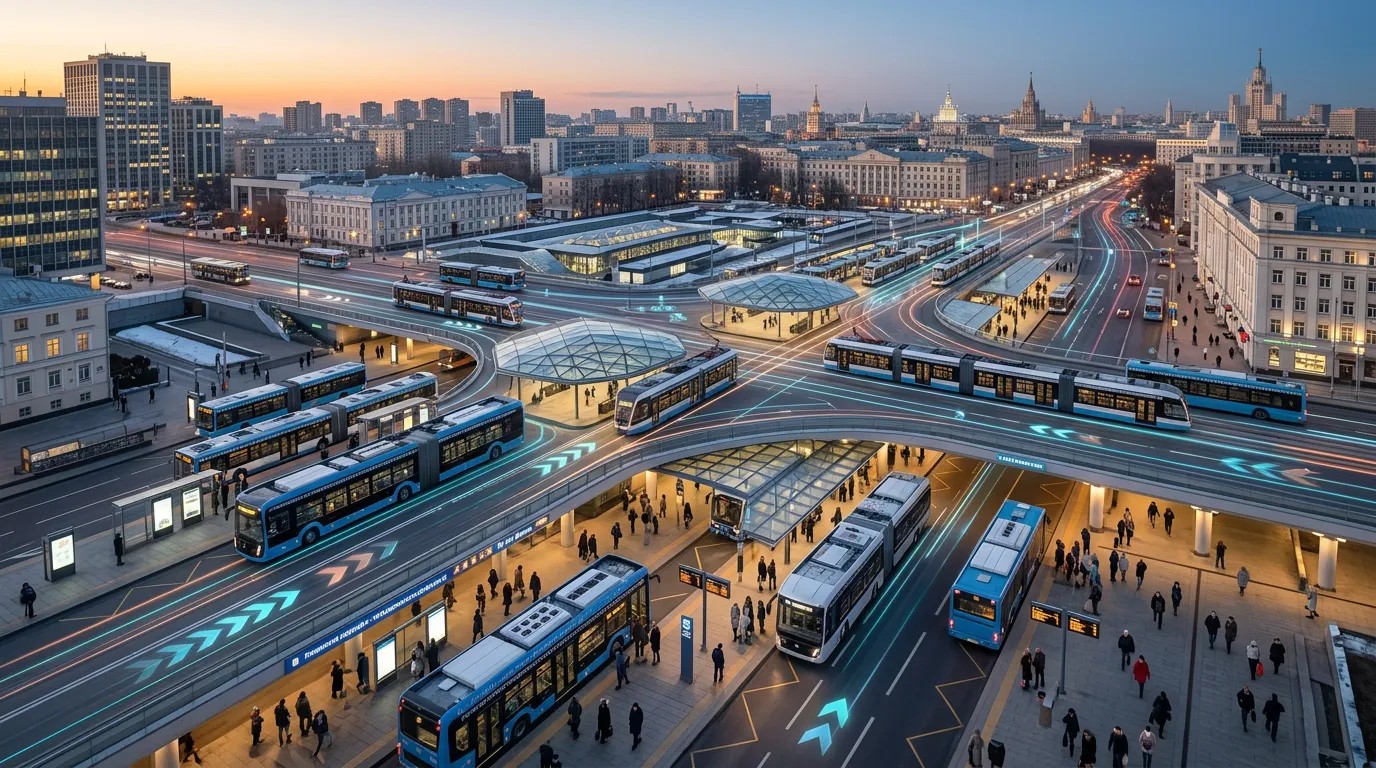
By 2026, Opturan had taken the next step. Where separate modules had previously been used to create shifts and assign drivers, the actual service timetable is now included in the same calculation. The use of AI in transit planning is not unique globally, but the claimed ability to solve three interconnected planning problems simultaneously at production scale is the feature that sets the Russian project apart.
A Step Forward
Such a development marks a shift from automating individual dispatcher tasks to end-to-end mathematical optimization of a substantial part of a transit operator’s production process. If the results achieved in Moscow can be replicated in other regions, Opturan could become an industry standard for managing transit operators’ resources, moving beyond dispatch automation to serve as a full-scale resource-planning platform. A logical next stage would be integration into broader digital systems, including passenger-flow forecasting, digital models of cities and route-network optimization systems.