Russian Scientists Develop a Navigator System for Diagnosing Diseases in Dogs
The development by Russian researchers marks the country’s first formalization of veterinary knowledge into a digital logical model. It offers an alternative to “black box” artificial intelligence and expands the reach of Russia’s IT industry into new applied domains.

A Challenge for Digitalization
Researchers at the Perm National Research Polytechnic University have unveiled Russia’s first automated system for diagnosing diseases in dogs. The tool has the potential to reshape veterinary care, particularly in regional clinics and large livestock operations where access to specialized expertise is limited.
Veterinary medicine, especially when dealing with companion animals and livestock, has long lagged behind the large-scale digitalization seen in human healthcare. Its effectiveness depends critically on two factors: the personal experience of the veterinarian and access to laboratory equipment. Experienced specialists are scarce, particularly outside major cities, while comprehensive testing often takes time that is simply unavailable in acute cases.
Current technological solutions generally follow two paths. On one side are narrowly focused rapid tests, such as those targeting a specific virus, which are ineffective when the cause of illness is unclear or multifactorial. On the other are expensive machine-learning systems that analyze large datasets, for example medical images, but operate as “black boxes,” producing results without explaining the reasoning behind them. These systems require substantial computing power, extensive annotated data, and, most importantly, do not always inspire full trust among practicing veterinarians. The Perm-based researchers set out to address precisely this gap.
The Core of the Technology
The defining feature of the new system lies in its architecture, which is built not on training neural networks but on deep formalization of expert knowledge.


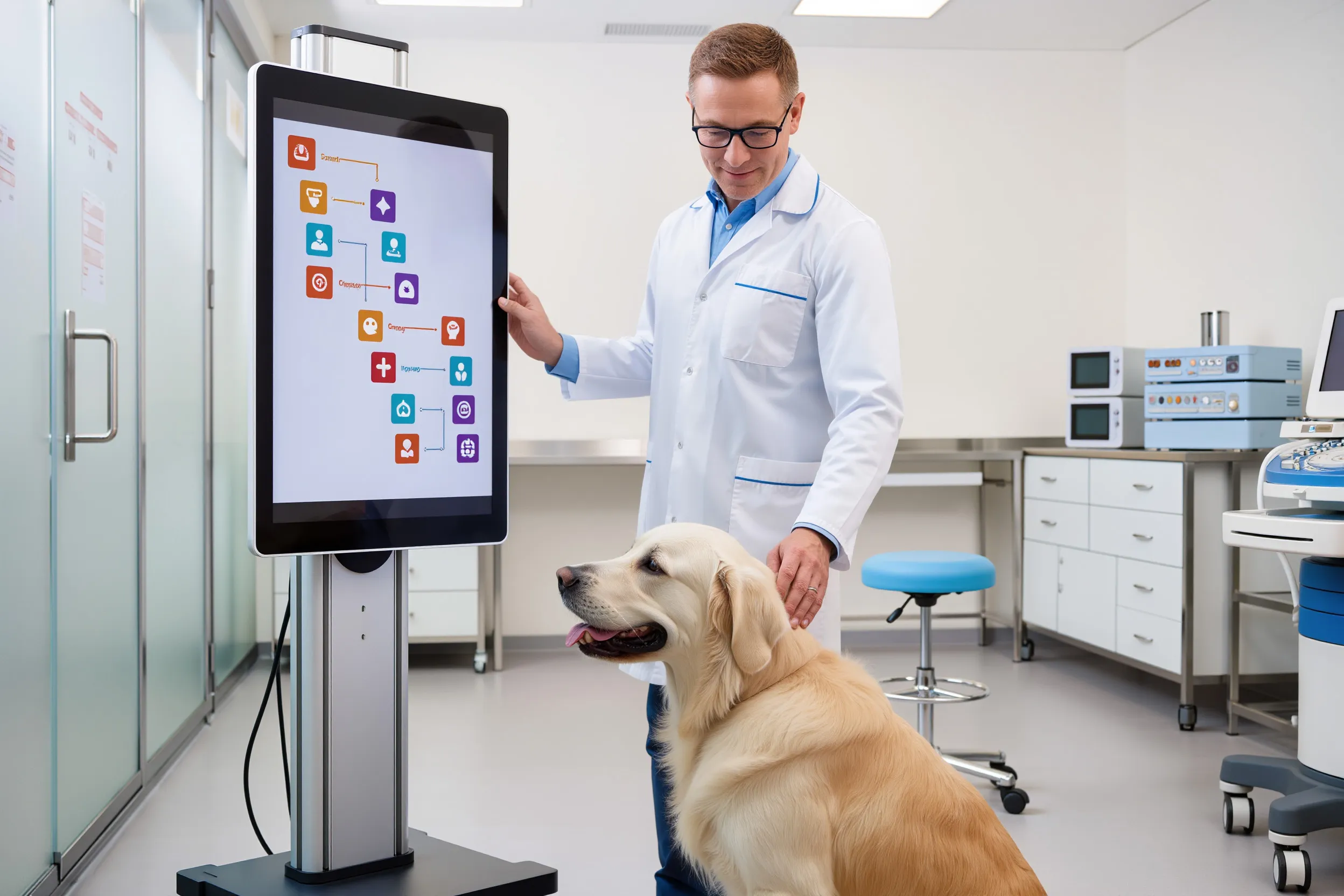
The research team undertook extensive work to structure the entire body of knowledge on common canine diseases, representing it as a hierarchical decision tree. At the “trunk” level are broad categories such as infectious and non-infectious diseases. The “branches” then divide into narrower groups, including viral and bacterial infections, ultimately leading to specific diagnoses such as canine distemper or parvoviral enteritis. Each symptom, syndrome, and final diagnosis is assigned a unique digital code. In this way, the intuitive, experience-based knowledge of a seasoned veterinarian is translated into the precise language of mathematical logic.
On this foundation, the team created a navigator-style software tool. As the veterinarian examines an animal, key symptoms are entered into the system as numerical codes. The algorithm moves through the branches of the decision tree, progressively narrowing the range of possible diseases, prompting clarifying “questions,” and ultimately presenting the most likely diagnosis along with a transparent explanation of the logical path taken.
Implications for Russia and Beyond
The Perm Polytechnic development is significant not only as a practical veterinary tool but also as an indicator of maturity within Russia’s IT sector. It improves the quality and accessibility of veterinary care across the country. The system does not require high-performance hardware or constant internet connectivity to run complex neural models. It can be deployed on a standard computer in a district clinic, animal shelter, or mobile veterinary unit. This reduces the risk of diagnostic errors caused by limited experience and accelerates decision-making, which is critical for containing outbreaks in areas with high animal density.
Developed entirely by Russian scientists and programmers, the system is independent of foreign software and services, a strategic advantage under current conditions. It also provides a foundation for creating a broader family of diagnostic assistants tailored to other animal species.
The economic impact could be substantial. Early and accurate diagnosis enables faster initiation of appropriate treatment, reducing mortality among dogs, including service animals and those used in agriculture. This translates into direct cost savings for state kennels, canine units, and private farms.
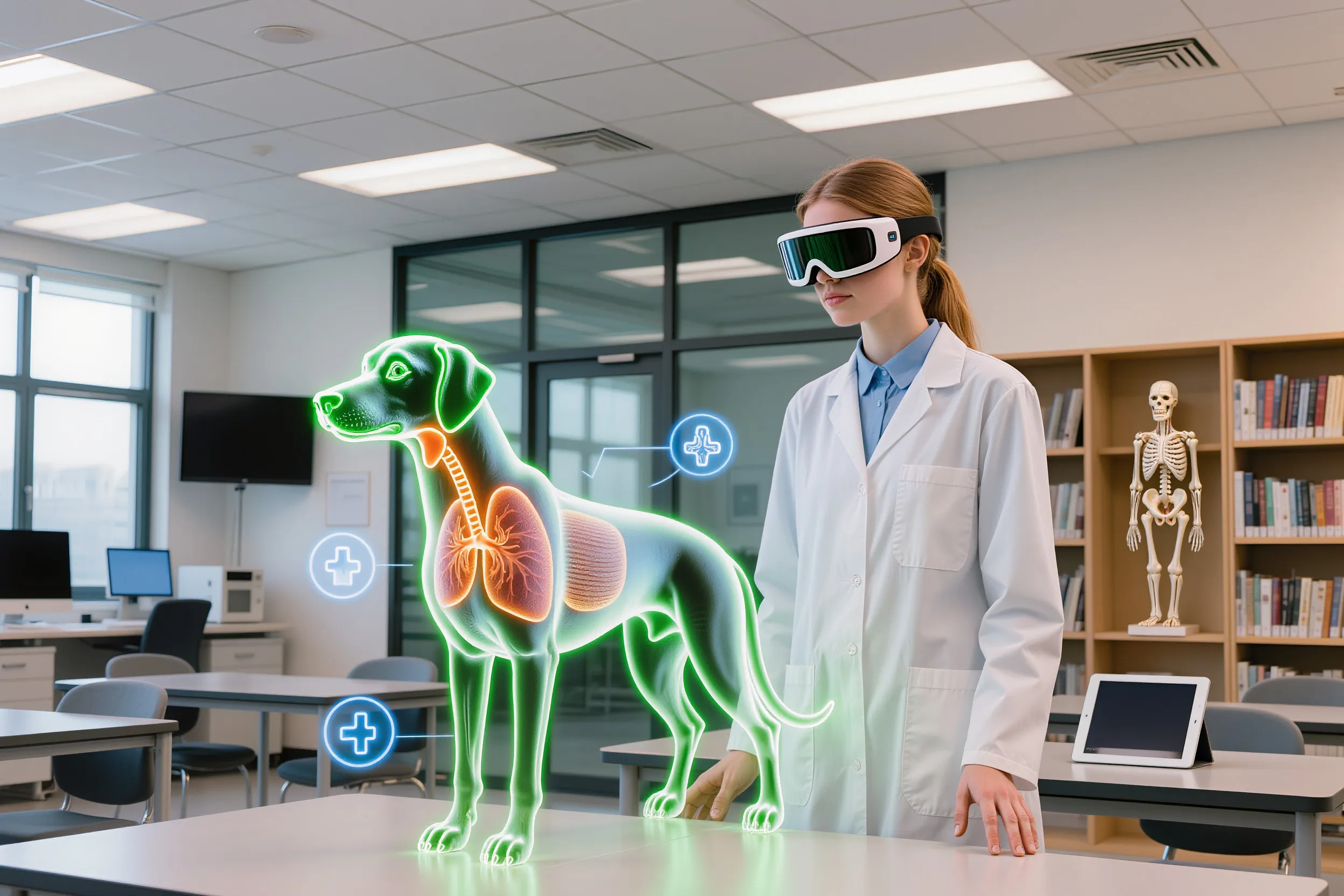
The system also serves as an effective training platform for veterinary students. It allows users to practice diagnostic reasoning interactively, learning how symptoms and diseases are interconnected.
Globally, digitalization in veterinary medicine is also gaining momentum, but the emphasis is often on computer vision techniques, such as deep-learning analysis of X-rays or MRI scans. The Russian system offers an alternative, complementary philosophy: a hybrid approach in which the machine does not replace the veterinarian but acts as an assistant, strengthening expert judgment through a transparent and interpretable tool.