Skolkovo’s IT Startups Generate $5.8 Billion in Revenue
The combined revenue of IT startups at Russia’s largest innovation hub, Skolkovo, has climbed past 480 billion rubles (about $5.8 billion), accounting for roughly 15 percent of the country’s total IT market.
How Skolkovo Residents Are Reshaping Russia’s Economy
According to Alexander Fetisov, deputy managing director of the Skolkovo Foundation and head of its Digital Technologies Development Center, the ecosystem makes a substantial contribution to Russia’s IT industry and plays a significant role in strengthening the country’s economic foundations. Today, the ecosystem includes around 5,400 startup companies. Their combined revenue last year exceeded 700 billion rubles (about $8.4 billion), and new projects have created more than 110,000 jobs.
Startups affiliated with the Digital Technologies Center alone generated 480 billion rubles (about $5.8 billion) in revenue, giving them a 15 percent share of Russia’s IT market. Skolkovo is now focused on building corporate demand from major industrial partners for startup products and solutions, including flagship companies of the Russian economy. The Digital Technologies Development Center prioritizes projects related to artificial intelligence, import substitution, and the creation of national technology solutions.
Specialists are also concentrating on cybersecurity and new technologies for industrial and service applications, such as software for enterprise lifecycle management, product modeling, and design. Around 700 companies within the innovation center use AI technologies in their products, with about 300 focused exclusively on AI. Skolkovo has also established SKY, a dedicated Center for AI Security and Deployment.

From Student Projects to Clients in Africa and Southeast Asia
One Skolkovo resident company, Qapp, which focuses on protection against quantum threats, provides comprehensive cybersecurity solutions based on quantum-resistant algorithms and delivers information security software. The company has developed its own post-quantum algorithm, Hypericum.

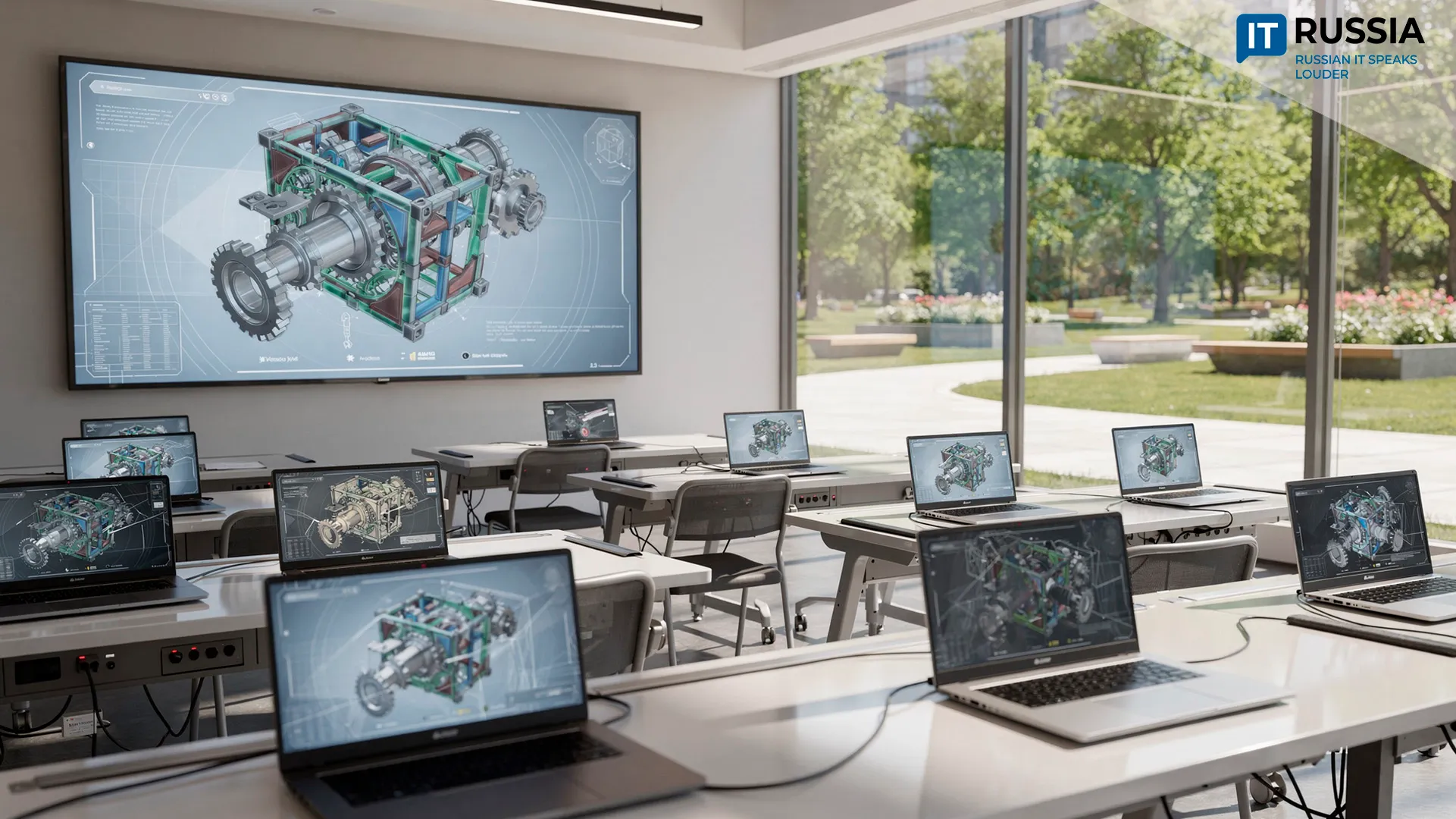
Post-quantum cryptography solutions are being integrated into end digital products that require cryptography, ranging from web browsers to electronic document management systems and blockchain platforms. As noted by the Skolkovo Foundation’s Digital Technologies Center, Qapp exemplifies a technology startup focused on building new national technologies. The company’s origins trace back to 1997, when a group of young scientists developed a computer-based mathematical model of a complex chemical process and an operator training simulator for a petrochemical plant. Today, the company operates offices in Kazan and at Skolkovo, runs 40 technological installations, maintains close ties with leading Russian universities, and its rapid digital twin development platform for industry and education is used by more than 120 universities and technical colleges.

The company’s clients include major Russian oil, gas, and chemical producers such as Rosneft, Gazprom Neft, Tatneft, Novatek, and Sibur, as well as organizations across the Middle East, Africa, and Southeast Asia. Another Skolkovo-based team, Phishman, has developed an automated knowledge management system for cybersecurity training that is used by more than half a million users in Russia and the CIS. The solution helps businesses defend against cyber threats and raises cybersecurity awareness, addressing what is often the weakest link in corporate security: employees themselves.
Why Cooperation Matters
Skolkovo residents receive a wide range of benefits from the ecosystem, including tax incentives, grants, and access to expert consulting. At the same time, state-backed cooperation with technology companies accelerates the adoption of advanced technologies across key sectors of the economy. Supporting high-tech enterprises also creates new jobs, contributing to higher living standards and overall prosperity in Russia.
Skolkovo aims to cultivate technology leaders and create favorable conditions for small companies to scale. The ecosystem also supports the annual training of thousands of qualified engineers and Skoltech students, reinforcing Russia’s long-term goal of achieving technological sovereignty.