Russia Is Building a Smart Fleet
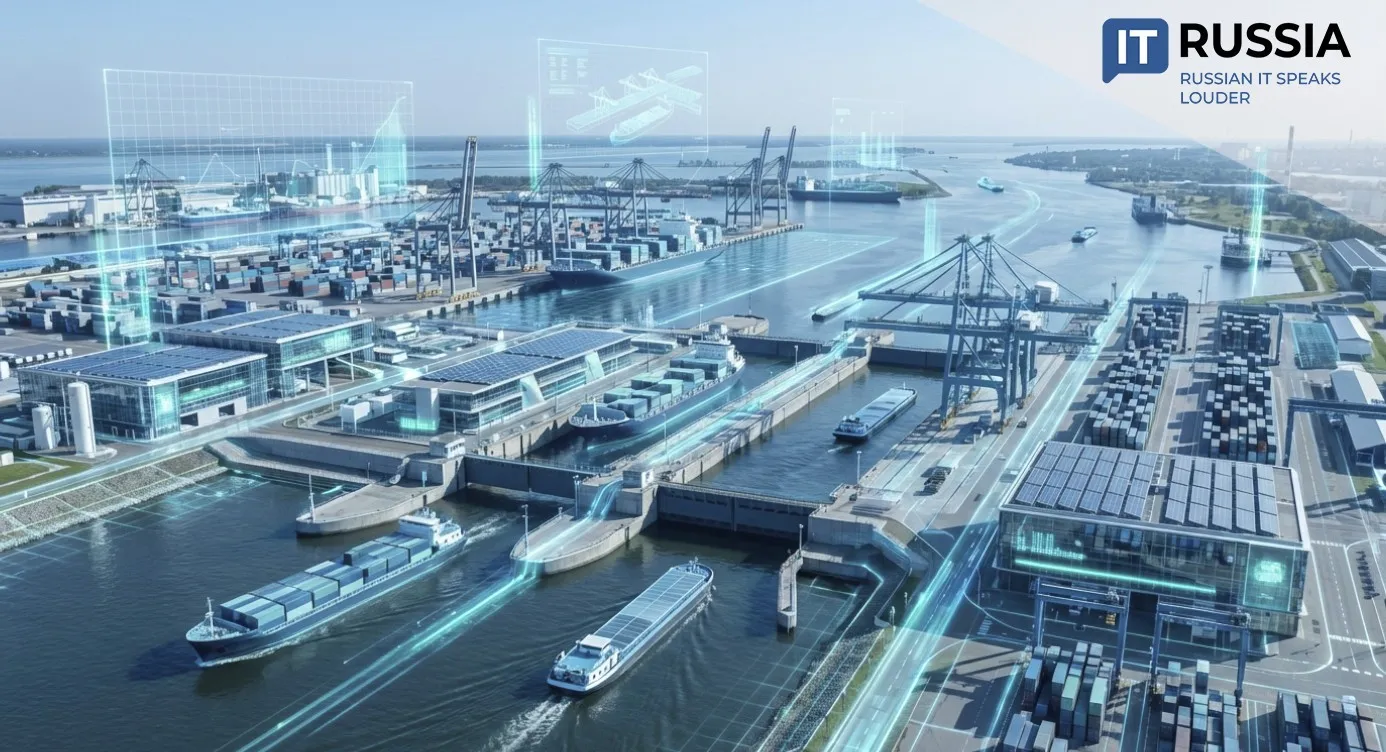
Russia’s seas and rivers are coming alive in digital form. Electronic bills of lading are replacing stacks of paperwork in minutes, digital twins of ports and vessels are predicting failures weeks in advance, and the Tsifrovaya Reka platform is linking captains, logistics providers, and ports into a single data-driven network.
Digital Sails for a Traditional Industry
Russia’s inland and maritime transport system spans more than 72,000 kilometers of navigable waterways and connects key ports from the Baltic to the Pacific, handling billions of tons of cargo every year. Yet traditional management practices have long constrained growth. Paper documents can delay shipments for weeks, manual fuel accounting leads to losses measured in billions of rubles, and poor coordination between river, sea, rail, and road transport slows global corridors such as North–South. In this context, digitalization is no longer optional. It is a strategic necessity to cut costs, improve crew safety, and integrate into global logistics chains where delays can cost hundreds of thousands of dollars per hour.
Breakthroughs on the Wave
The year began with the launch of electronic bills of lading and transport waybills within the national electronic documentation system following a pilot voyage between Vladivostok and Sakhalin in late 2024. Today, six types of water transport documents are processed fully online, with weekly uploads of around 200,000 records and more than 10 million registered documents overall. Processing times have dropped from days to minutes. At a national industry meeting, officials also announced the Unified Information System Tsifrovaya Reka (Digital River), designed to integrate data from agriculture, railways, and customs to enable real-time monitoring of cargo flows on inland waterways.
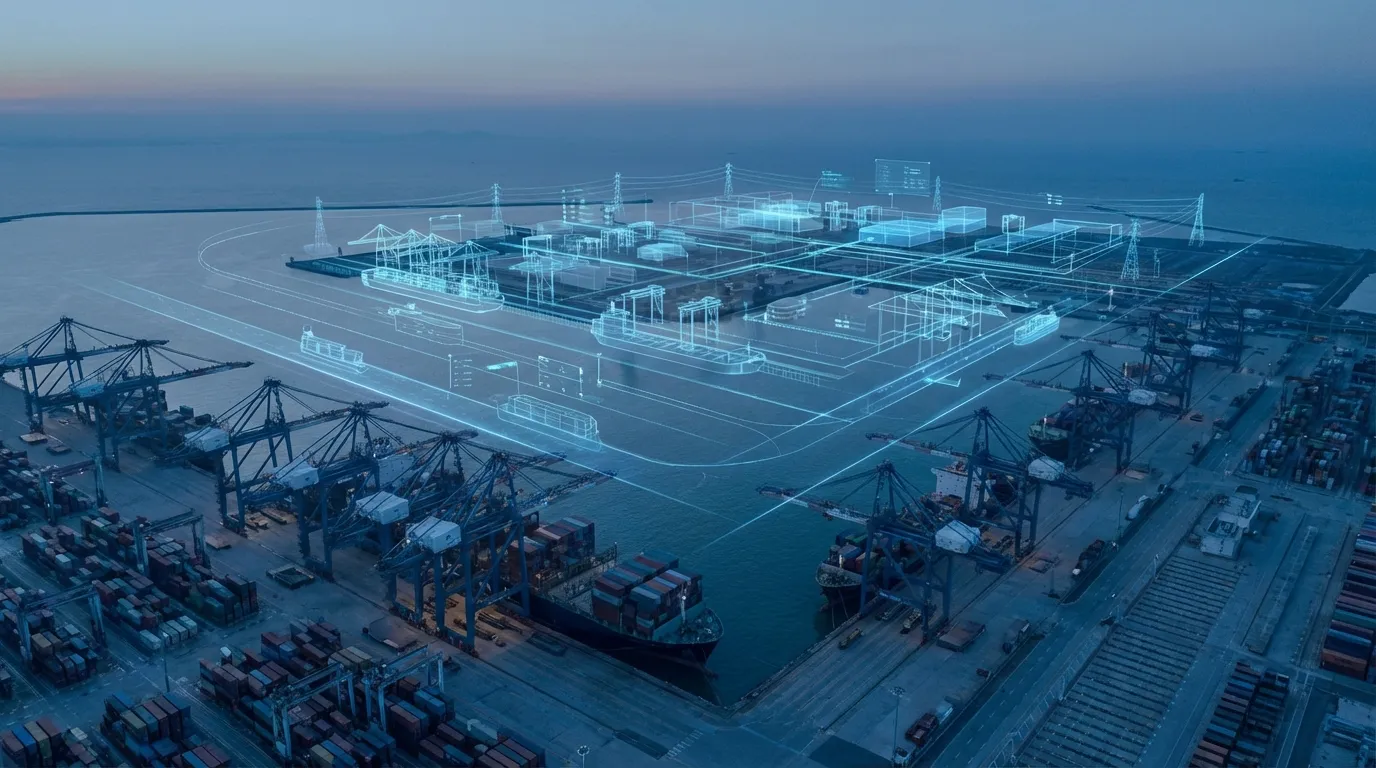
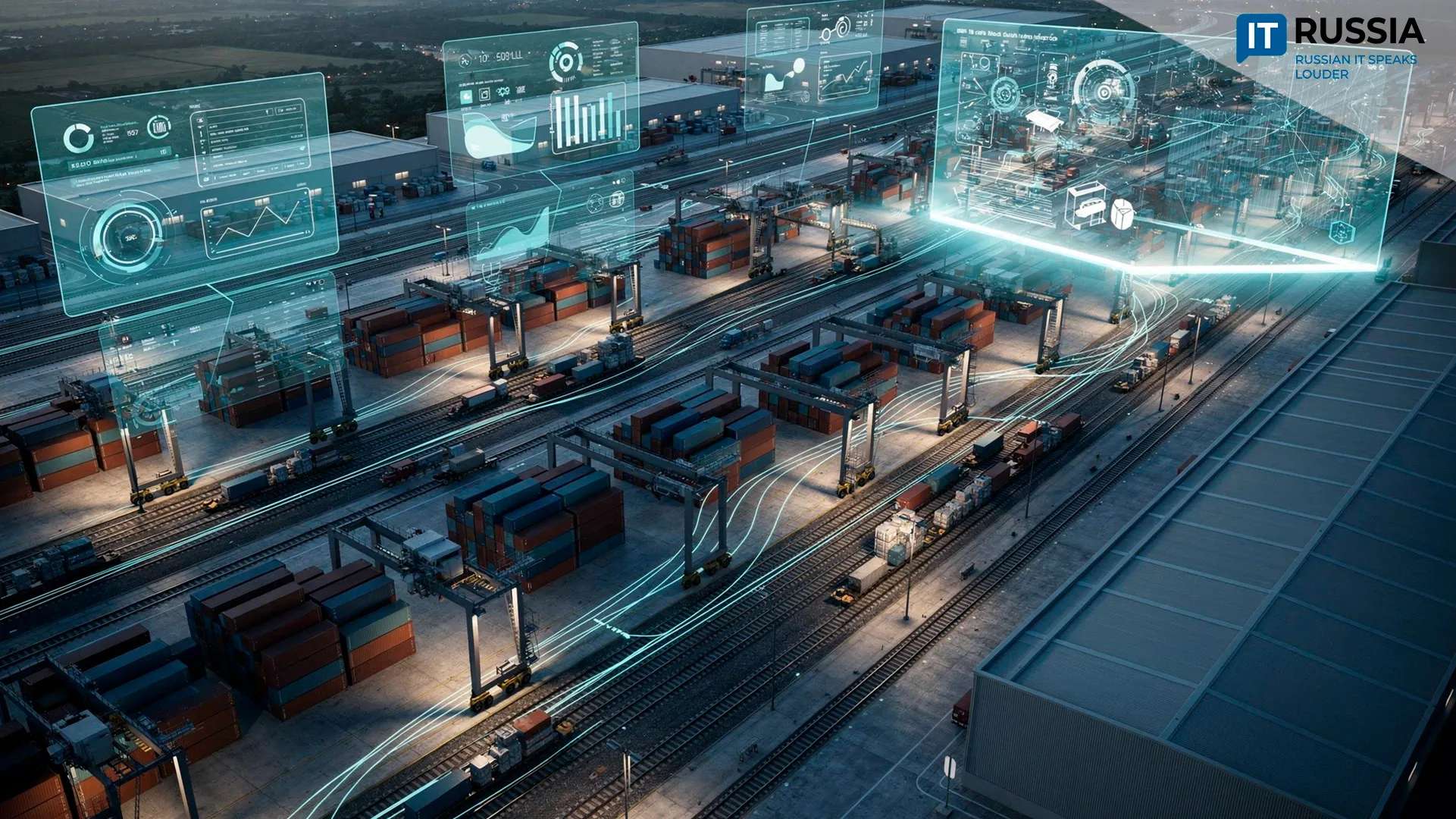
Digital twins have emerged as one of the year’s most impactful technologies. At the port of Taman, a digital twin of bulk cargo terminals was created on top of the terminal management system and integrated with industrial control systems. It tracks warehouse conditions, loading operations, and rail infrastructure in real time, forecasting risks and optimizing logistics. Simetra, together with Admiral Nevelskoy Maritime State University, developed a digital twin of the Khasan transport hub in Primorye. The model analyzes cargo turnover, infrastructure utilization, and expansion scenarios to avoid excessive capital spending. Port digital twins now take the form of high-fidelity 3D replicas built using laser scanning, sonar, and photogrammetry. They store metadata on structures, inspections, and design documentation, applying big data and AI to predict durability and maintenance needs, accelerating reconstruction by 20–30 percent without stopping operations.


Russian digital platforms are reshaping the sector at scale. XMARINEIQ automates freight rate and laytime calculations, eliminating spreadsheet errors that can cost brokers hundreds of thousands of dollars. SputnikService provides 24/7 monitoring of fuel consumption, onboard equipment, and crew health. The DOTS platform, based on industrial IoT, creates digital twins of vessels, analyzing high-resolution operational data and integrating it with corporate systems. Over the past year, more than 25 navigation systems and 30 simulators have been installed, equipping over 2,000 small vessels. The ISOLD system has been deployed in the ports of Saint Petersburg, Astrakhan, and Olya to ensure stable digital operations.
Regions Come Alive
For the Far East, the Arctic, and Siberia, digitalization is a matter of resilience. Digital twins of hubs such as Khasan make it possible to model northern supply deliveries, reducing logistics costs and improving reliability for regions such as Yakutia. Ports are expanding capacity by 26 million tons, passenger routes are growing to 52,000 trips annually, and cargo from Siberia is reaching European markets faster. Russia benefits from faster capital turnover, fuel savings of up to 30 percent through speed profile analysis, and reduced idle time. The projected cumulative economic effect is estimated at 1.5 trillion rubles (approximately $18 billion) by 2035.
Export potential is substantial. Affordable platforms such as DOTS, XMARINEIQ, and digital twins of hydraulic infrastructure are well suited for fleets in Asia and Africa, offering alternatives to Western solutions while supporting emissions monitoring and efficiency gains.
A Unified Multimodal Platform
By 2030, Russia plans to launch the national multimodal platform Tsifrovoy Transportny Put’ Rossii (Digital Transport Route of Russia). It will integrate river, sea, rail, and road transport into a single system, connecting 25 regions, 300 vessels, and around 3 million tons of cargo annually. The platform will model cargo flows for optimization, provide AI-driven routing for autonomous vessels, and enable predictive maintenance through a fleet of digital twins. The practical benefits include zero document delays, improved crew safety, fuel savings worth billions of rubles, increased cargo turnover, and near-zero CO₂ emissions in ports through autonomous maneuvering.

Russia is laying the groundwork for a competitive fleet where humans and machines reinforce each other, turning waterways into digital arteries of the global economy.