Theater / Museum: How Technology Is Driving a Deep Synthesis of Art Forms
This fall in Moscow, a performative exhibition project titled “Museum in Opera / Opera in Museum” launched, showcasing a new level of cross-pollination between artistic disciplines. The curators set out to erase the boundary between stage and gallery, with emerging technologies playing a central enabling role.
New Formats for Classical Art
The project was conceived by the Moscow-based New Opera Theatre and the Moscow Museum of Modern Art (MMOMA). The program is dedicated to the 80th anniversary of Yevgeny Kolobov, the founder of New Opera. As the organizers note, free interaction has always been intrinsic to both theater and visual art. MMOMA specialists are widely recognized for their expertise in cross-genre experimentation. Even the name “New Opera” signals an openness to innovation and a constant search for original ways to reinterpret classical works. New technologies are now actively assisting creators, making contemporary exhibition art more immersive and performative, and in doing so, bringing it closer to the logic of theater.
Orpheus and Eurydice, Reimagined
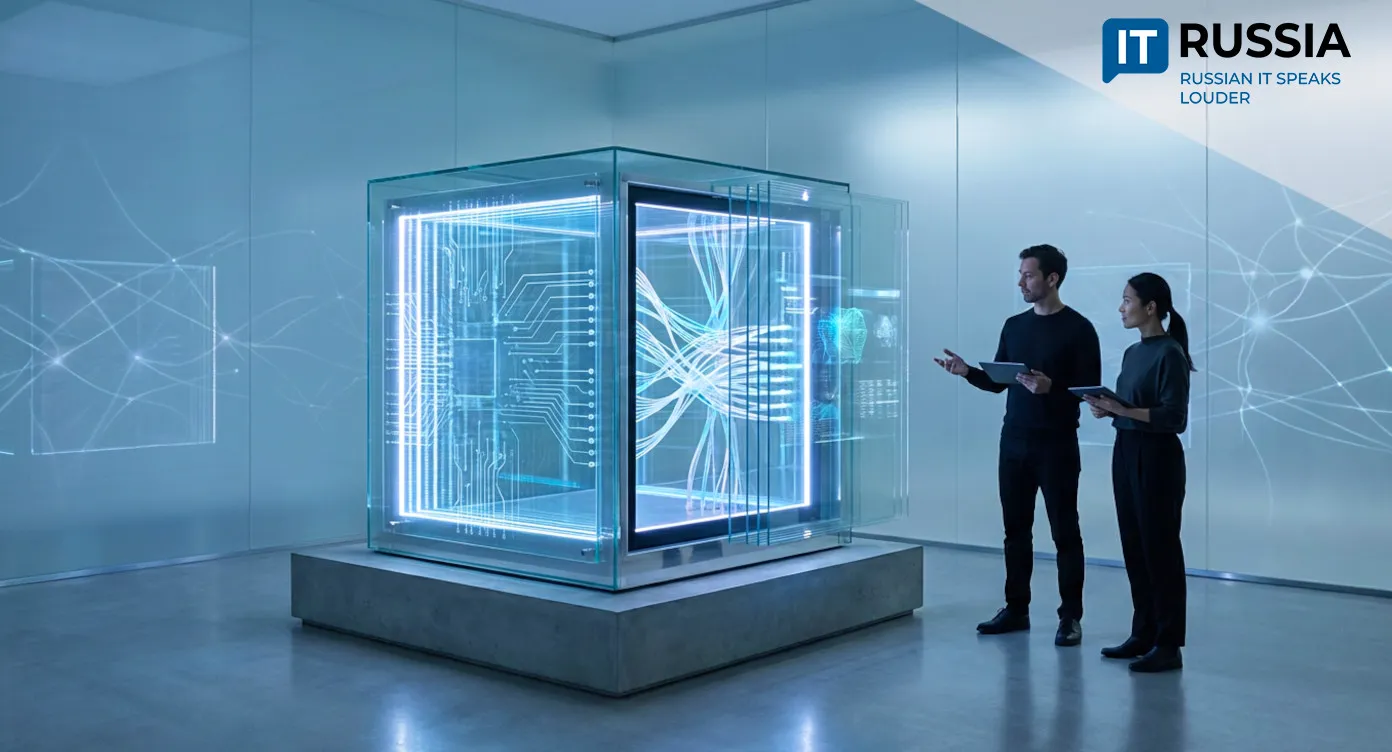
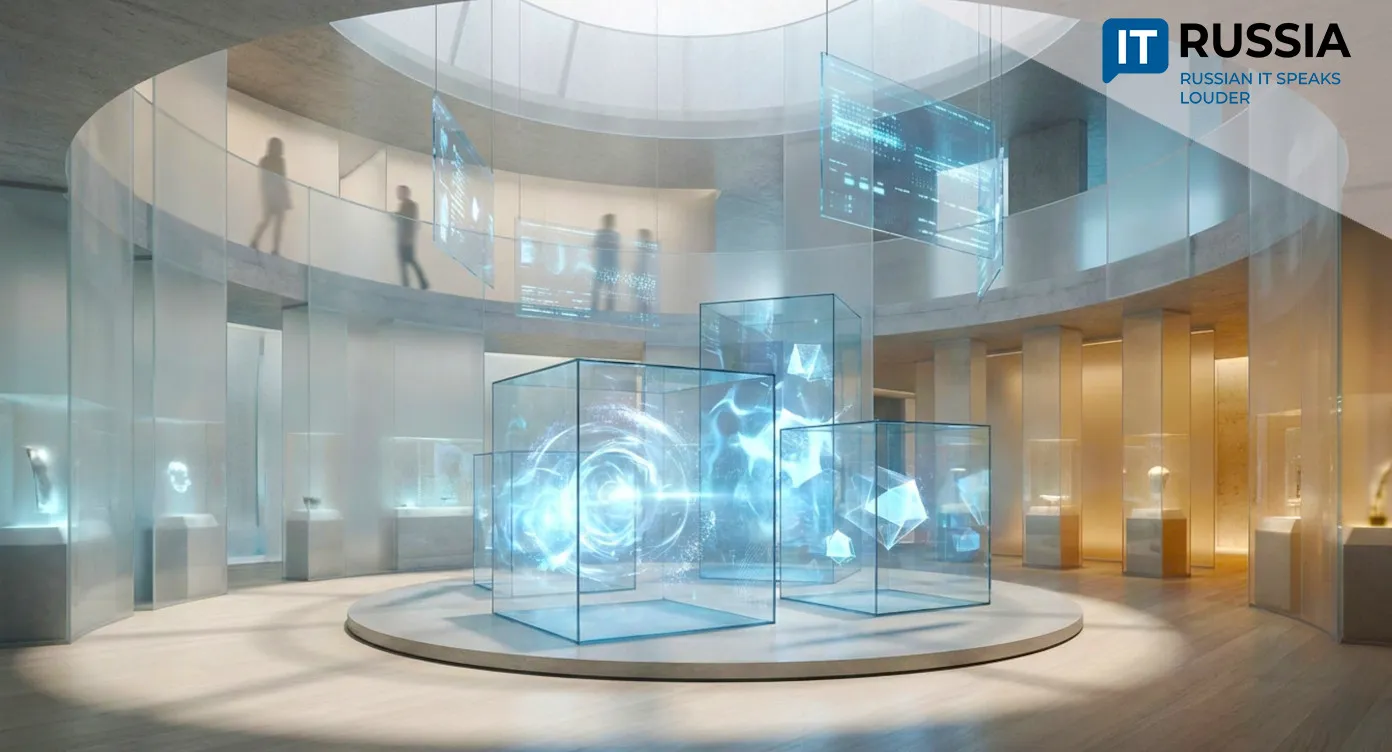
The project launched in September on the New Opera stage with guest performances by the musicAeterna and musicAeterna Dance ensembles under the direction of Teodor Currentzis. They presented a multimedia interpretation of Pascal Dusapin’s opera Passion, staged by director Anna Guseva. The narrative draws on the myth of Orpheus and Eurydice. The action unfolds behind glass, inside massive transparent cubes. This serves as a subtle but powerful reference to museum display cases, where masterpieces are visible yet remain spatially inaccessible to the viewer.
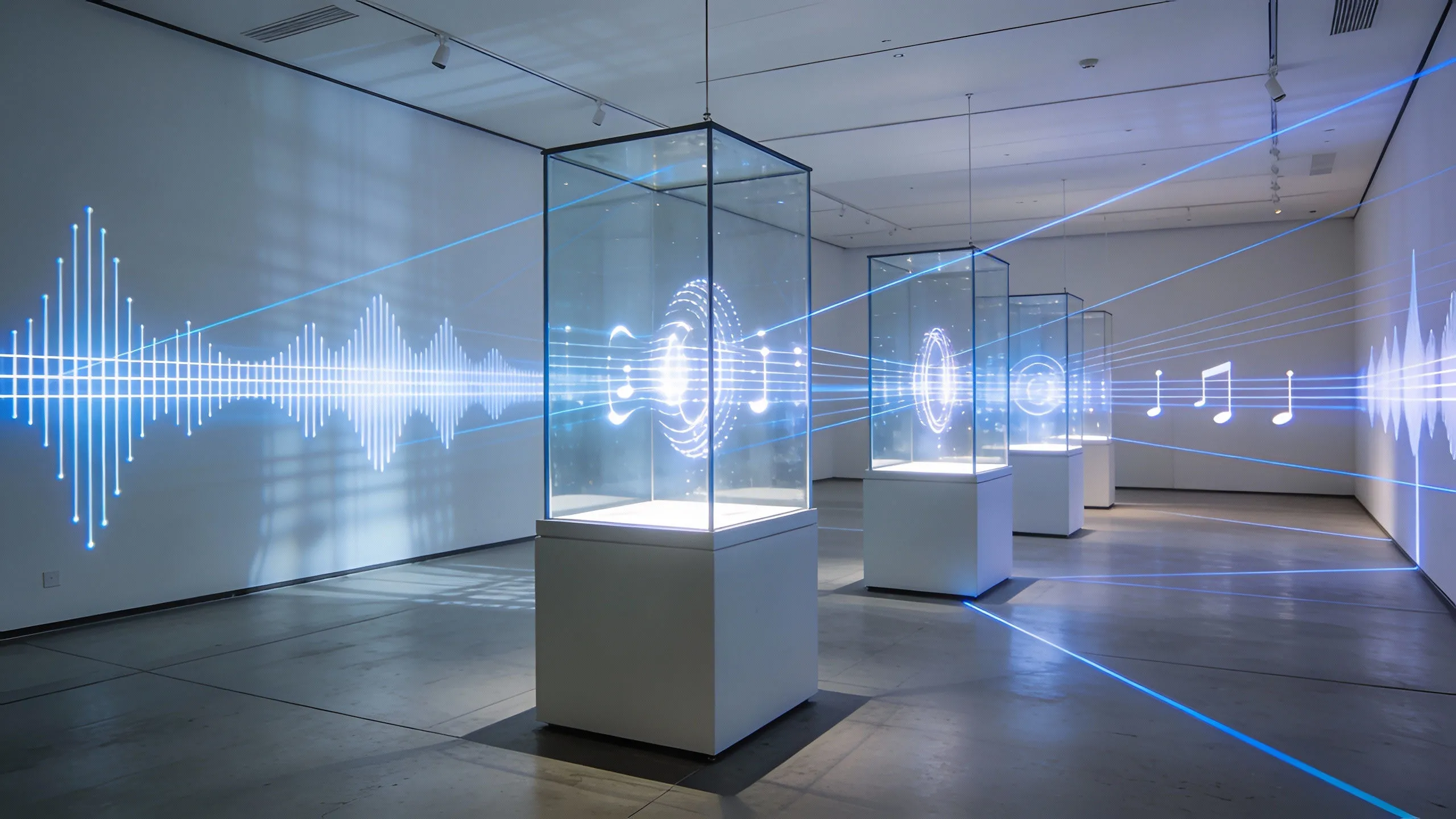
Visual impact plays a central role in the production. The glass cubes are illuminated, and at key moments the audience encounters visual effects generated using advanced technologies. Lighting design actively shapes perception, at times heightening tension and at others guiding attention and emphasis.
Running in parallel, an exhibition opened in the theater foyer, immersing visitors in the atmosphere of the performance. Titled References, the exhibition featured works by theater artist Alexey Tregubov, who has previously curated multiple exhibitions at MMOMA and designed three productions in the New Opera repertoire.
References functions as a dialogue between the artist, the opera’s narrative, and the broader history of art. Rather than direct quotation, Tregubov offers subtle allusions to well-known works of Western European and Russian art. His practice incorporates new technologies, artificial intelligence, and specialized computer software.

Contemporary artists increasingly engage with generative AI without hesitation. The resulting works are entirely original, referencing classical traditions while remaining so distinctive that any notion of borrowing becomes irrelevant. This reinforces a broader conclusion: the future of art is inseparable from technological progress, which acts as a catalyst for systemic change, both in artistic production and in how audiences perceive creative work.
Artists Listening to and Drawing Boris Godunov
In March 2026, the project enters a new phase. At MMOMA’s Petrovka building, audiences will experience the opera-exhibition Boris Godunov, curated by Viktor Misiano and Georgy Nikich. The curators have already outlined the format, which is designed to immerse visitors directly into a continuous visual and acoustic process.
The exhibition is inspired by a New Opera production based on the first version of Modest Mussorgsky’s Boris Godunov. It will unfold as an uninterrupted performance that integrates multiple cultural texts. Prominent contemporary artists have been invited to create works specifically for the project. Participants include Viktor Alimpiev, Alexander Brodsky, Dmitry Gutov, Irina Korina, Konstantin Zvezdochetov, Alexey Tregubov, and Leonid Tishkov.
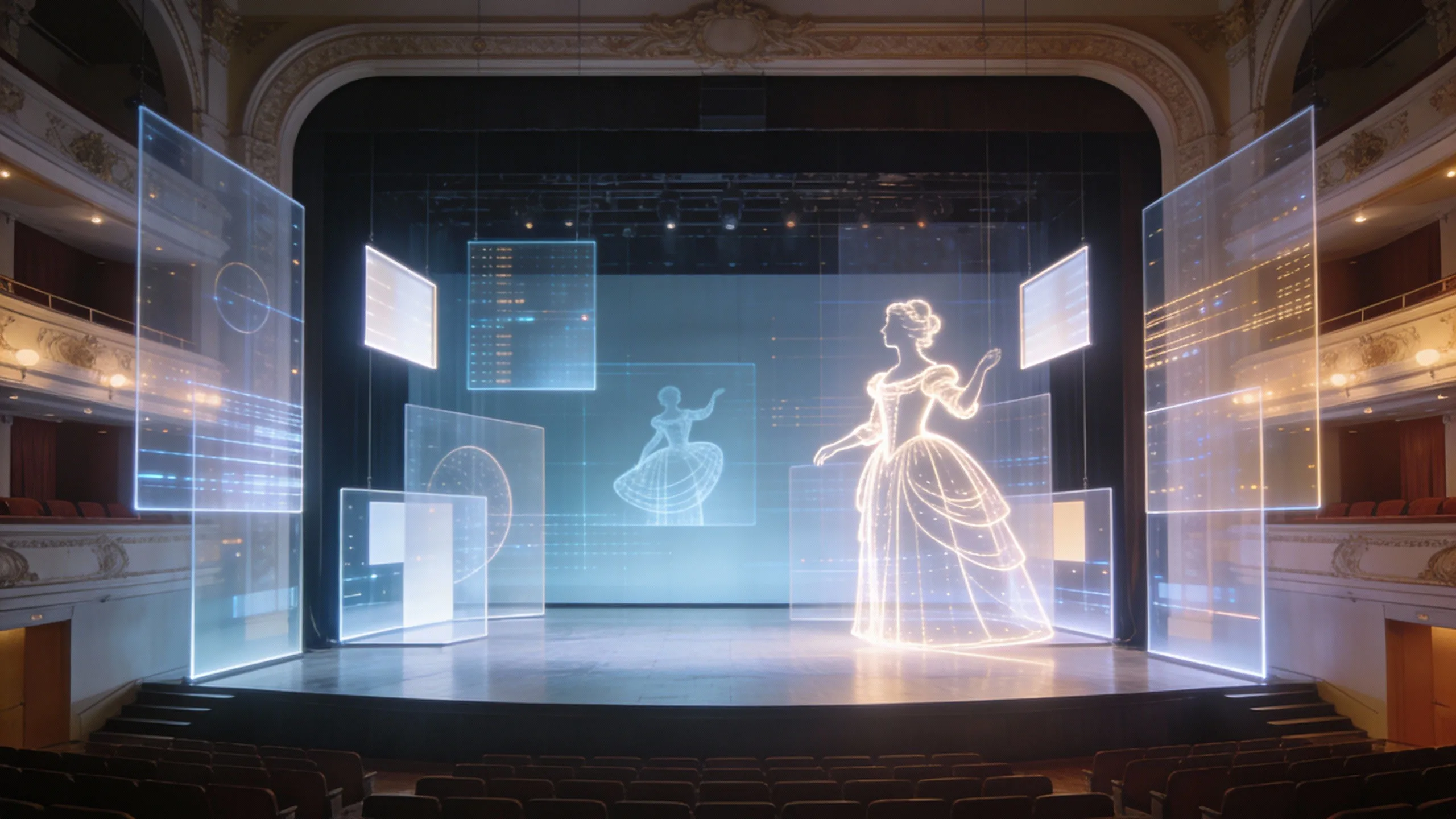
Another component of the initiative is a series of discussions titled Between / In Between. These creative meetings, conversations, and lectures will take place throughout the season at various venues, supported by multimedia technologies. This format further expands the project’s ambition to integrate diverse media, allowing art to transcend the physical limits of museums and stages and enabling audiences to become active participants rather than passive observers.
New Titans of the Art World
With its extraordinarily rich classical heritage, Russia is increasingly positioning itself at the forefront of contemporary cultural experimentation. Projects like Museum in Opera / Opera in Museum set a clear trend toward a new kind of synthesis in the arts. While the idea of synthesis in culture is not new, the specific nuances underpinning this performative project demonstrate a fundamentally new level of interpretation.
The creative range of each participant extends well beyond a single discipline, or even two. Much like the titans of the Renaissance, these artists operate across domains, elevating the culture of their time through multidimensional practice.
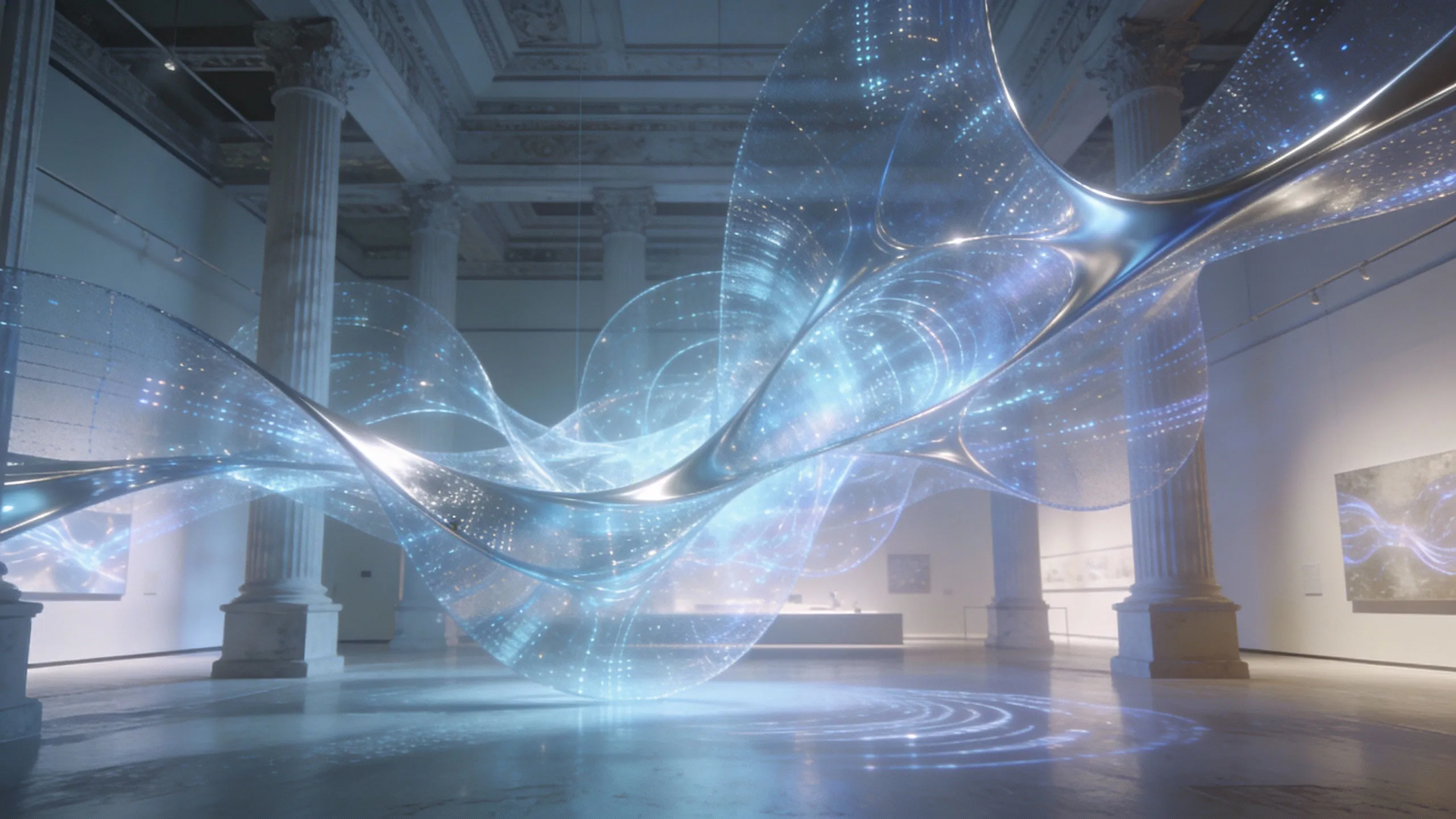
The project holds significant potential for interregional and international cultural diplomacy and may become a benchmark case for future experiments at the intersection of theater, visual art, and technological progress.