AI Helps Russia Discover 36 New Hydrocarbon Fields
Russia is accelerating the use of intelligent technologies to find new deposits and extend the life of mature fields.
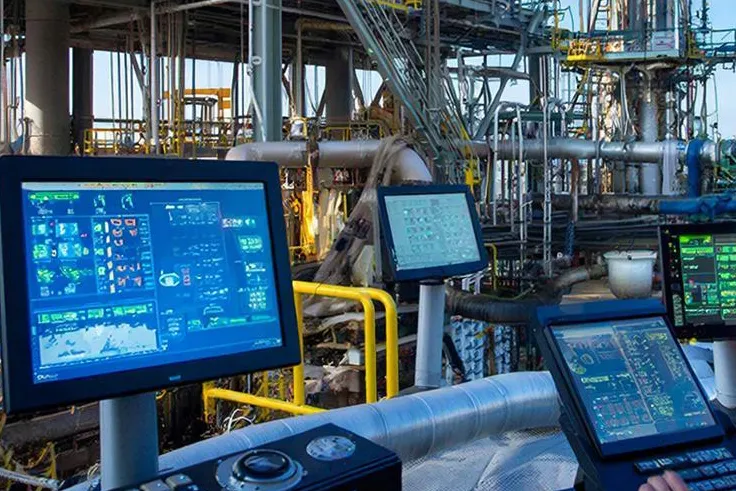
Last year, Russia discovered 36 new hydrocarbon fields, in part thanks to the use of digital technologies. Growth in oil reserves remained roughly in line with 2024 levels at 666 million tons, while gas reserves increased by 686 billion cubic meters. The figures were announced by Alexander Kozlov, Russia’s minister of natural resources.
Neural Networks Highlight Reservoirs and Process Data
Russia is actively developing the sector by rolling out intelligent solutions for both the discovery of new fields and the “revitalization” of existing ones. Researchers at the Trofimuk Institute of Petroleum Geology and Geophysics of the Siberian Branch of the Russian Academy of Sciences, together with specialists from SakhalinNIPInneft and Gas, have upgraded the seismic facies analysis method.
This technique is a core tool for imaging subsurface structures and identifying rock formations that may contain oil and gas. Previously, geologists classified seismic images manually, a process that was slow and subjective. The upgraded approach is now fully automated and simultaneously takes into account seismic data, well data, and geological models of the area.
Scientists from St. Petersburg State University and Moscow State University have also developed an AI system that speeds up the processing of offshore seismic survey data. The technology is expected to support safer development of fields in the Arctic and the Russian Far East, where around 70 percent of the country’s oil and gas reserves are concentrated. Meanwhile, researchers at Perm National Research Polytechnic University have created a technology that enables the safe extraction of viscous Arctic oil without thawing permafrost.
AI Determines Operating Modes
In addition, specialists at Rosneft’s research institute in Tyumen have tested innovative software known as RN-AutoBalance. The system is built around a neural network that analyzes real-time field data and independently determines the most efficient operating modes for wells.
The digital transformation of the oil and gas sector is making it faster and cheaper to discover new hydrocarbon accumulations, improving the efficiency and safety of well operations, and helping identify untapped zones in mature fields. According to Russia’s Energy Ministry, the use of AI already brings the sector up to 700 billion rubles a year (about $8.4 billion), and by 2040 the cumulative effect could reach 5.4 trillion rubles (roughly $65 billion).