Russia Settles on 5G Deployment Model
Mobile operators are authorized to deploy 5G networks using spectrum they already hold

One of the main barriers to launching 5G mobile service in Russia has been the allocation of the required radio-frequency spectrum. The issue has been debated for several years. Federal authorities have now effectively settled on a regulatory model.
Spectrum to Be Provided Free of Charge
Russia’s State Commission on Radio Frequencies (SCRF) has decided that mobile operators will be allowed to use spectrum currently allocated to their LTE networks to deploy 5G. The change applies to all four major operators: Beeline, MegaFon, MTS and t2. Each will receive 90 MHz in the 4,630–4,990 MHz band without auctions. The decision will allow the operators to bring new coverage areas online as quickly as possible.
It is also significant that operators have officially been authorized to use equipment purchased from foreign manufacturers during the initial phase. Starting in 2027, however, they are expected to begin a gradual transition to a domestic technology base. That process is to be completed by 2031.
“Since 2019, all LTE base stations that operators purchased from Ericsson, Huawei and Nokia have been 5G-ready, meaning they can support 5G or be upgraded to it. Given the pace and scale of equipment purchases, of the 500,000 LTE base stations operated by all Russian carriers, at least two-thirds are 5G-ready. Operators have also upgraded their network cores so that the entire infrastructure supports the 5G standard,” said Leonid Konik, a partner at ComNews Research.
First Up: Million-Plus Cities
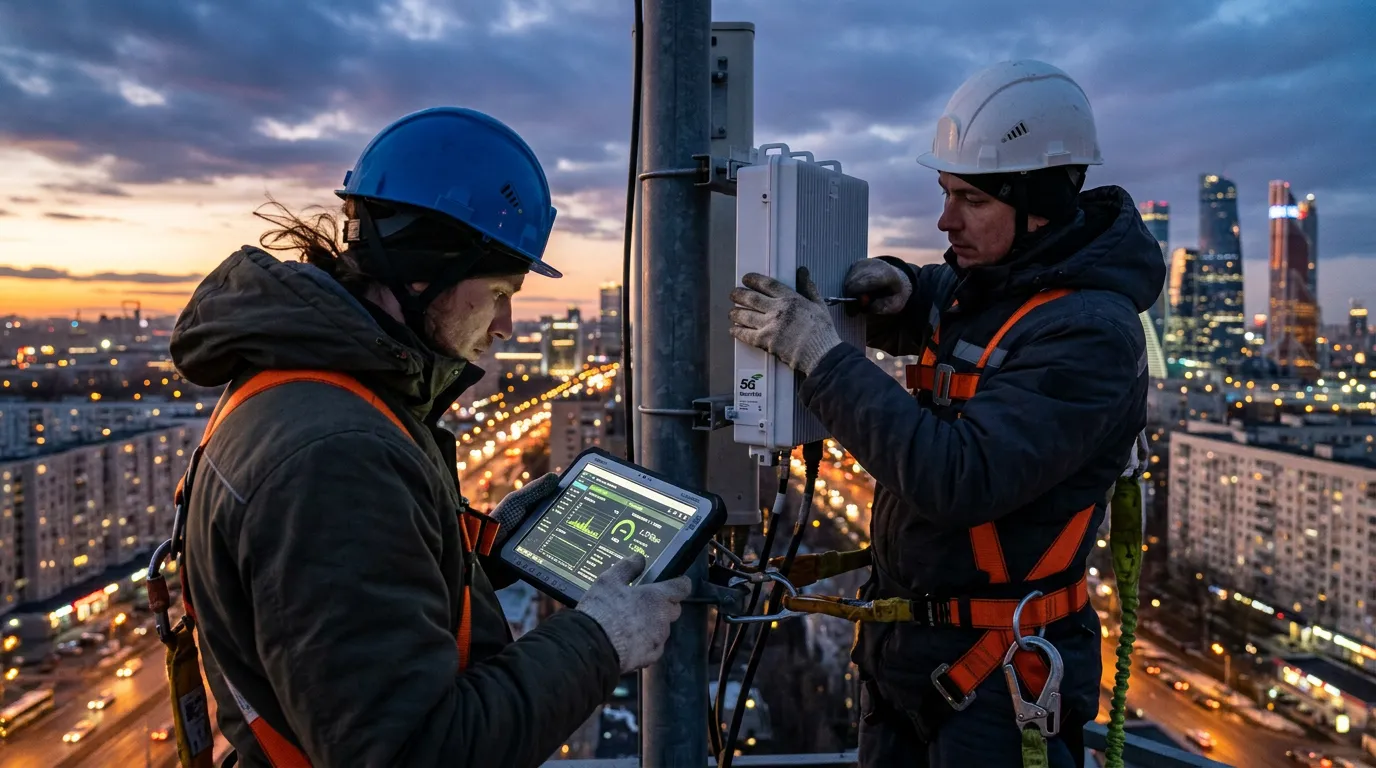
According to Russia’s Ministry of Digital Development, Communications and Mass Media, fifth-generation networks using technology-neutral spectrum should begin appearing in cities with populations of more than 1 million in the near term. In the 4.63–4.99 GHz band, 5G will be launched in key locations across million-plus cities by the end of 2028. Coverage will then expand in stages over the following three years.
The arrival of 5G in Russia is expected to significantly improve connectivity, particularly in high-density locations, while also encouraging the production of more advanced telecommunications equipment domestically. Experts note, however, that the new standard is more important to businesses than to individual users. It will support large numbers of devices connecting to the network simultaneously with minimal signal latency. The upgrade will also accelerate the adoption of smart devices with IoT connectivity.
A Compromise Solution
In 2025, the government planned to auction frequencies in the 4.8–4.99 GHz range, with a combined starting price of 47.4 billion rubles (about $548 million). Operators considered the proposed model economically unattractive, and preparations for the auction were canceled. The new approach removes two barriers at once: the cost of spectrum access and the need to build a network from scratch in a separate frequency band.
Russia began conducting 5G pilot deployments several years ago. In 2021 alone, MTS operated 14 test zones across Moscow. The networks were launched in the 4.9 GHz band. At that stage, however, the goal was not full-scale deployment but rather to demonstrate the technology’s capabilities.
Years of Preparation
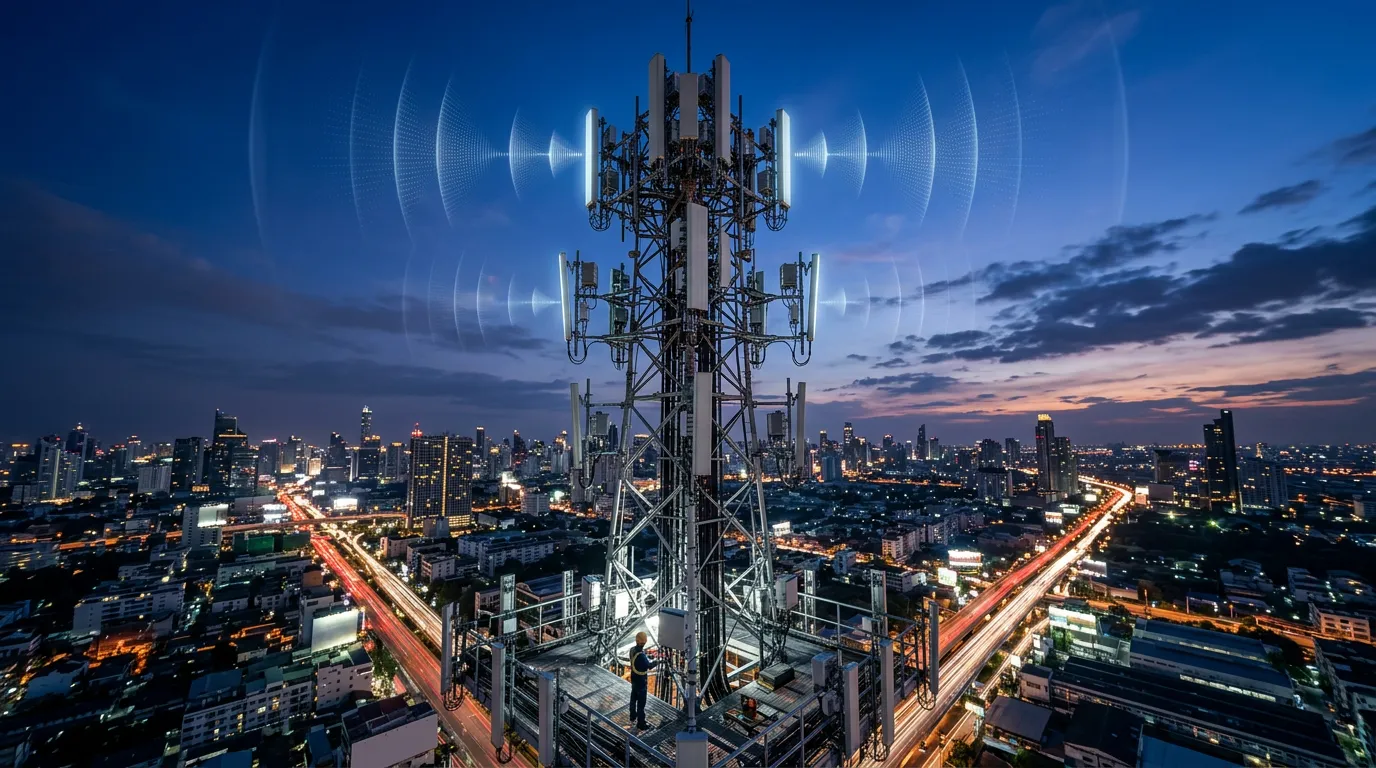
At the end of 2022, the Russian government and major companies signed a roadmap titled Sovremennye i Perspektivnye Seti Mobilnoy Svyazi (Modern and Advanced Mobile Networks). It called for replacing imported LTE equipment and developing the technical infrastructure needed for next-generation mobile networks.
In the following years, Russian base stations gradually moved into real-world operation. In addition, in summer 2025, Irteya unveiled the first domestically developed base station for 5G networks. It was built on an Open RAN architecture. During its launch in a pilot zone, the system demonstrated speeds of more than 1 Gbps.
In any case, the latest SCRF decision is an important step toward commercial 5G deployment in Russia. Experts caution that the impact will not be immediate. The first networks will appear only in million-plus cities and only in selected locations. Even so, the decision establishes a foundation for the subsequent technology transition, which will take time.