A Digital Volunteer: Yandex’s AI Helps Clean 50 Kilometers of Russia’s Coastlines
Piles of plastic, broken glass, and heaps of mixed waste are a common sight along rivers and seas. For volunteers, the task is not just to collect trash, but to sort it for recycling. This is where a new digital assistant has stepped in.

Finding and Removing Waste
In 2024, volunteer clean-up efforts across Russia were equipped with computer vision technology developed by Yandex in partnership with Far Eastern Federal University. As part of the Clean Shore project, artificial intelligence helped clean 50 kilometers of Russian coastline.
The technology is based on neural networks trained to recognize different types of waste in aerial imagery, including fishing nets, metal, rubber, large plastic items, concrete, and wood. The AI analyzes images in real time, identifies the type of waste and its approximate volume, and marks the coordinates of debris clusters on Yandex Maps, creating a digital pollution map. What was once an ad hoc effort has become a structured operation: volunteer teams can now pinpoint the most problematic areas and plan waste removal and sorting logistics far more efficiently.

Just the Beginning
For decades, the problem of polluted shorelines in Russia was addressed largely by enthusiasts whose dedication often ran up against a lack of systemic coordination. Trash bags were filled, but data on waste composition and sources were lost. Now, the outcome is not only a cleaner shoreline but also detailed statistics. These data show that neural networks help tackle waste up to four times faster.

In 2025, cleanup operations took place in federally protected natural areas, including the Kronotsky Nature Reserve and the South Kamchatka Wildlife Sanctuary, where five tons of plastic were removed, as well as the Nizhnesvirsky Nature Reserve on Lake Ladoga and the Far Eastern Marine Reserve on Popov Island. In 2026, the initiative is set to expand to national parks such as Kurshskaya Kosa, Land of the Leopard, the Commander Islands, Arctic territories, and the Dagestan Nature Reserve.

Clean Shore
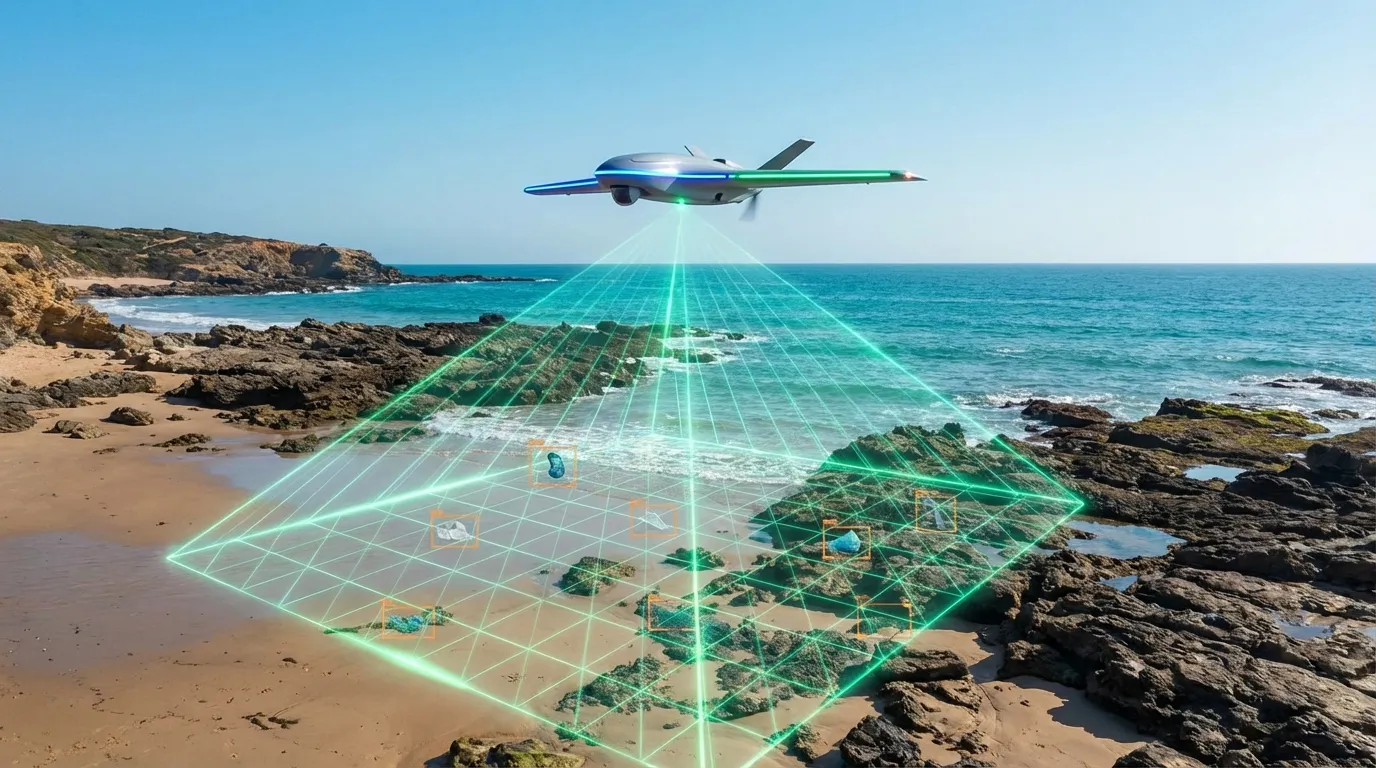
The technology is expected to be trained to identify additional types of waste. In the coming years, integration with drones is anticipated, enabling automatic scanning of vast and hard-to-reach areas. This will lead to the creation of a publicly accessible interactive map showing the environmental condition of Russia’s coastlines.
Beyond that, AI systems will be able to forecast the risk of new illegal dumps by analyzing seasonal patterns, weather conditions, and proximity to roads, making it possible to prevent pollution before it appears.
Russian technologies have shown that they can address not only virtual challenges but also very tangible, “dirty” problems. The combination of human commitment and artificial intelligence is giving rise to a new model of environmental responsibility, one that is systematic, technology-driven, and remarkably effective.