The Seedlings of the Future: The Environmental Agenda Becomes Part of Educational Programs
The environmental topic is increasingly becoming a part of educational programs, from schools to universities. Climate is not seen as an abstract problem, but as an integral part of future professions and management decisions.

A Focus on Green
“Ecology should not be limited to environmental preservation tasks. A person lives not only in a natural environment but also in one shaped by the culture of their ancestors and themselves,” stated Dmitry Likhachev, a Soviet and Russian literary scholar, philologist, and art historian. Time has only confirmed the validity of the scientist's words, and today the environmental agenda is not just a topic for public debate but is becoming a part of educational programs.
Interest in environmental education in Russia is still developing unevenly. According to a survey by the Laboratory of Innovations in Education at the Higher School of Economics (HSE) and Ultimate Education, 12% of Russian innovators and 14% of students, mainly in major cities, consider the environmental topic important. While these numbers are modest, the very existence of such data indicates that there is a growing demand for new educational formats, gradually extending beyond the narrow circle of specialists.
Where Storms and Tornadoes Are Increasing
“AI in climatology is not a replacement for scientists or hydrodynamic models. It is just another tool in addition to the existing ones. It helps to test hypotheses faster, build complex simulations, and make forecasts, which are especially important in a world where forests are burning, seas are rising, and storms and tornadoes are becoming more frequent and intense,” says Mikhail Krinitsky, senior researcher and head of the machine learning laboratory for Earth sciences at Moscow Institute of Physics and Technology (MIPT).

Climate modeling is one of the most resource-intensive tasks in science. Classical models, based on physical equations, require weeks of computation on supercomputers. They are accurate but slow and expensive, limiting the speed of forecasts and experiments. AI offers an alternative—using statistical methods based on data: satellite observations, measurements, and simulation results. Neural networks identify patterns, accelerate calculations, and help uncover complex phenomena.
The next step is foundational climate models. These large universal architectures, trained on vast data sets, can replicate the dynamics of the atmosphere and oceans and serve as platforms for various tasks—from weather forecasting to analyzing the impact of CO₂. There are still only a few such models globally: GraphCast, ClimaX, Pangu-Weather, AIFS, and others.


A fully universal model doesn’t yet exist, but its need is already being recognized. In Russia, discussions are underway about combining efforts from research centers to create a domestic architecture.
Soil, Water, and Crop
In business education, the climate topic is increasingly embedded in specific courses and modules. At the Moscow School of Management SKOLKOVO, it is integrated into the MBA and Executive MBA programs through modules on sustainable business models and climate risk management.
At HSE, the “Climate Change Economics” program is being developed: relevant courses are offered in the master’s program and additional education programs. Leading global business schools, such as INSEAD, London Business School, and Harvard Business School, also integrate environmental metrics into strategic and corporate analysis.
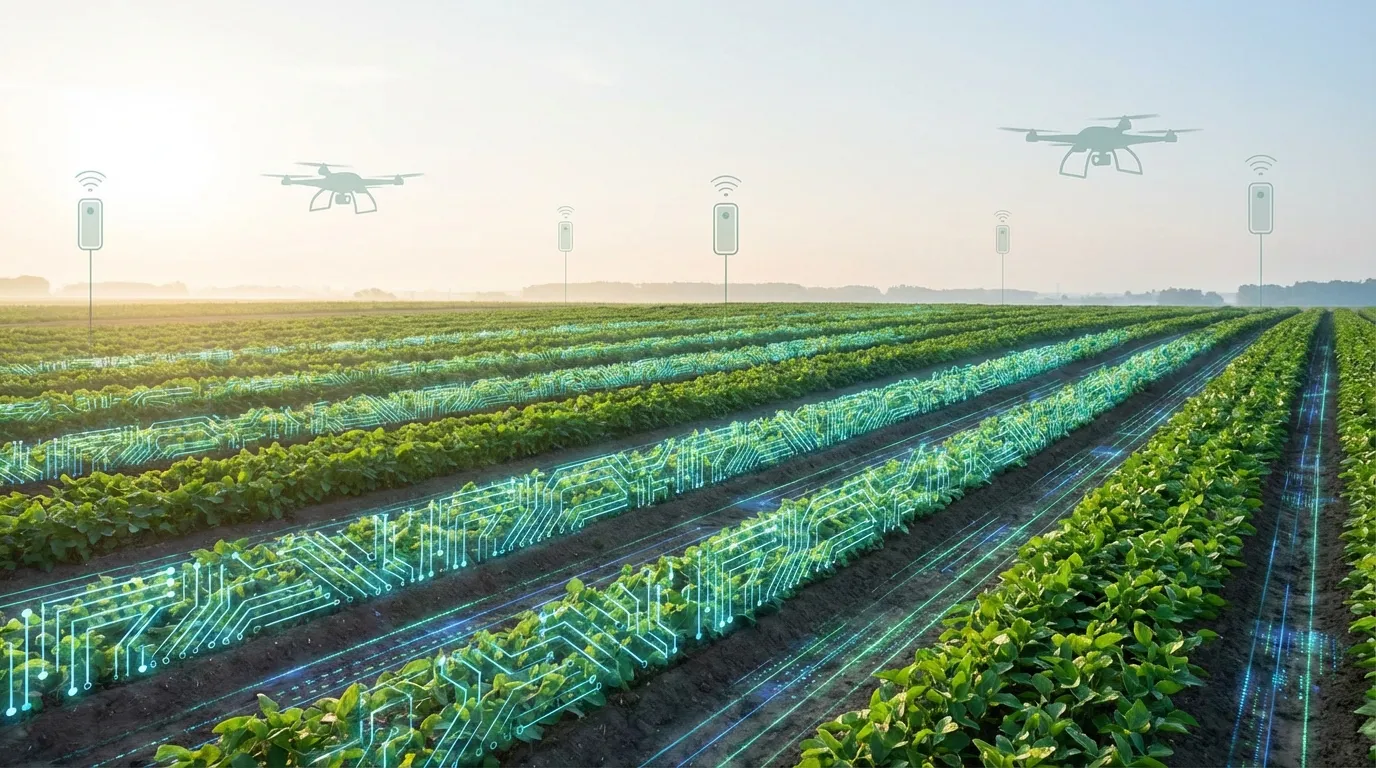
For agricultural education, climate is not a theory but a daily reality. The Russian State Agricultural University (Timiryazev Moscow Agricultural Academy) offers programs in organic farming and agroecology, with an emphasis on reducing the use of chemical plant protection agents.
A similar approach is taken by foreign universities. At Wageningen University & Research, climate change is studied in relation to food security, soil health, and water resource management, working with real agricultural landscapes and production challenges.

Moving Toward Understanding
Not long ago, environmental education was limited to nature conservation and basic ecology courses. In Russian universities, these were often standalone subjects, not connected to students' future professions. Gradually, the focus has shifted: climate has become a standalone topic. Today, the climate agenda is part of interdisciplinary courses—from economics to urban studies.
This shift reflects a broader process: education is beginning to respond to real changes in the economy and society. Ecology is no longer a “later” topic; it is now part of the conversation about how we learn, work, and make decisions today. As Mikhail Krinitsky says: “In the 20th century, we learned to model the Earth. In the 21st century, with AI, we may take a couple of steps closer to understanding it.”