Carved in Code: How Digital Technology Is Helping Preserve Russia’s Historical Heritage
Russian researchers are using digital technologies to restore historical monuments. Neural networks are now able to “fill in” even elements that have been lost over time.

A Monument Made of Points
A researcher from Tver, Mikhail Babaitsev, has developed a technology designed to preserve the appearance of architectural monuments and reconstruct lost archaeological sites. Put simply, large volumes of digital material – photographs and video footage captured from multiple angles – are processed using computing tools. The result is an accurate model built from a point cloud. This is not a complex digital twin but rather a precise “cast” that records the condition of an object at a specific moment in time.
“We took existing solutions, studied a vast body of methodological literature, reviewed many software products, and through experimentation developed a dedicated methodology for each type of object. Selecting specific equipment settings, accounting for weather conditions and lighting levels – there are around a hundred parameters that can influence the process,” Babaitsev explains.
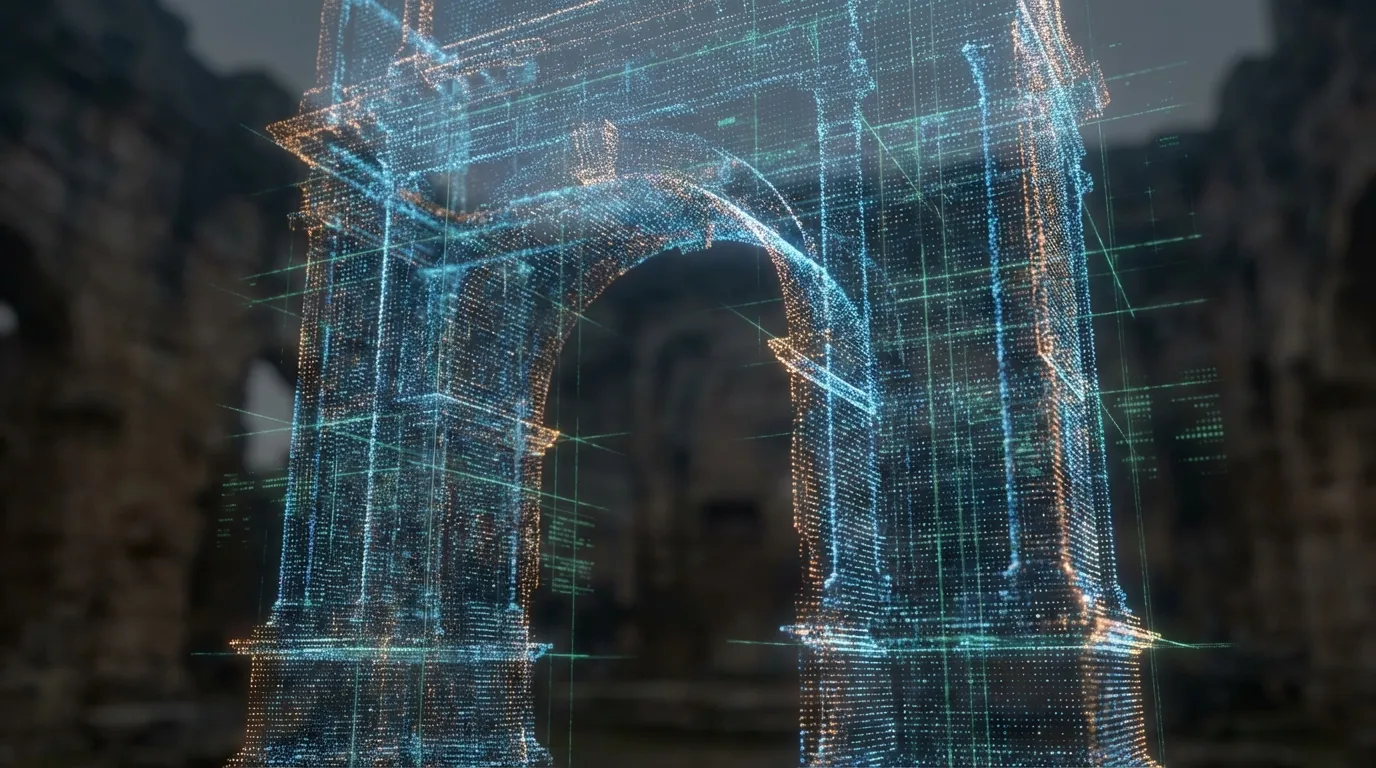
The complex technological chain has been adapted so that it can be used by anyone in their own projects – relying on free, open-source photogrammetry software and relatively simple equipment. The simplified methodology makes it possible to efficiently digitize a wide range of objects.


Museums and Education
One of the most challenging projects undertaken by the Tver research team was the facade of Mir Castle in Belarus. Creating a digital copy required processing around 30,000 photographs using photogrammetry, a process that took nearly two weeks. According to the specialists, the resulting digital model captures both flaws and unique features of the object with maximum accuracy.
“The resulting point cloud, as a digital artifact, can be used in a wide range of fields. At present, we create numerous models based on these clouds – reconstructing lost architectural forms using historical sources and, where possible, producing physical models through rapid prototyping technologies such as 3D printing, laser cutting, and traditional model-making methods. These data are also integrated into interactive projects, including game scenarios, indie games, 360-degree panoramas, and even virtual reality. This adds a new level of interactivity to museum work and educational programs,” Babaitsev notes.
Preserving Historical Accuracy
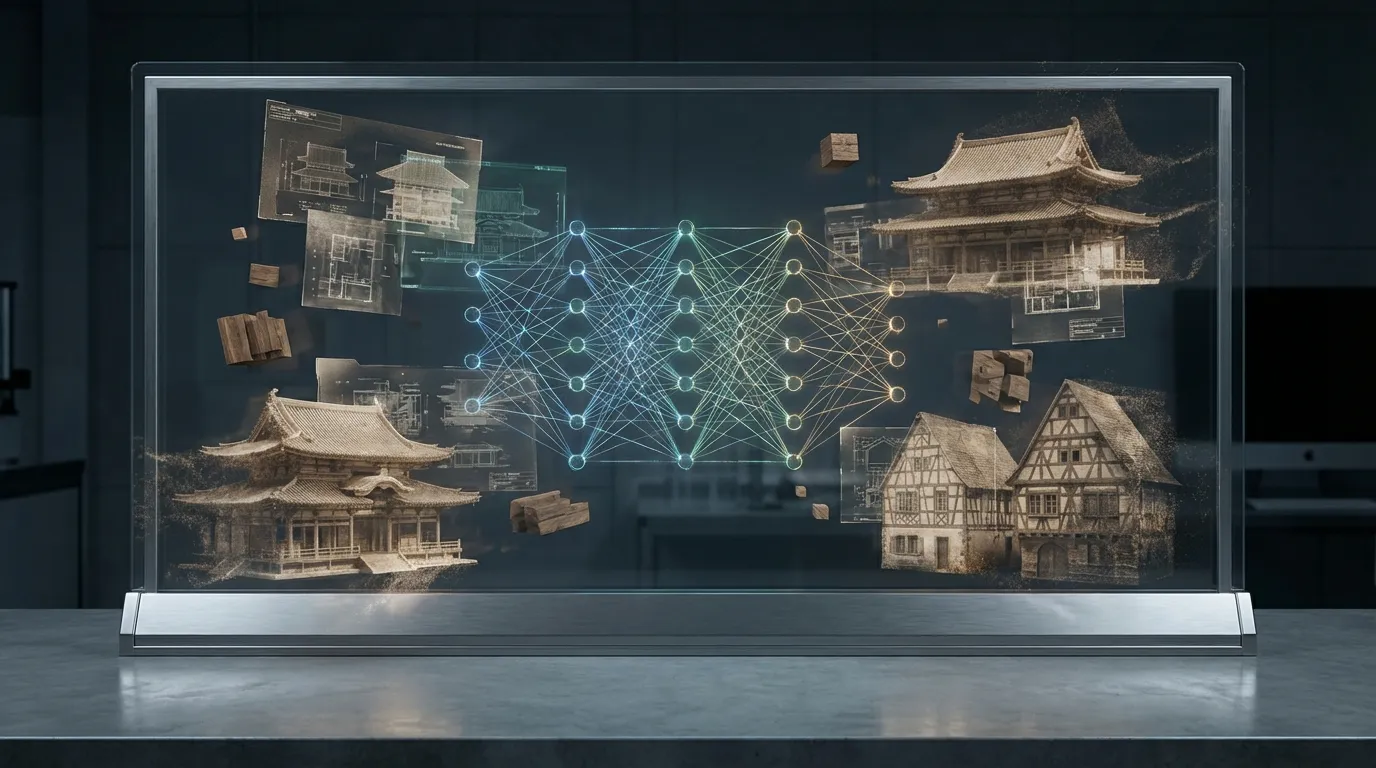
The next stage in the technology’s development involved the use of neural networks. Researchers succeeded in creating an algorithm capable of generating typical wooden houses with a high degree of historical accuracy, based on official sources – archival plans, descriptions, and construction practices of specific historical periods. These standardized digital models were actively used in the project Pod Revolyutsionnym Toroptsom to recreate a lost urban environment. In the future, the neural network is expected to independently recognize and classify architectural details without human involvement.
When Digitization Becomes Critical
The creation of “digital shells” for historical monuments is an approach that can be easily scaled from the regional level to national and even international use. It requires tools capable of capturing reality with the highest possible accuracy and recording the external condition of an object in detail at a specific point in time. This is particularly relevant for Russia, where a large number of heritage sites are made of wood.